1
7-3-3. Bolt tightening torque characteristics
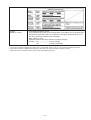
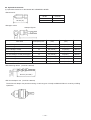
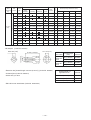
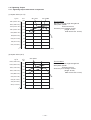
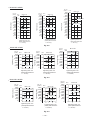
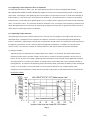
Figures 5-1 and 5-2 show relationships between time and tightening torque for individual bolt types and sizes.
While the data are useful for handy reference, actual tightening torque will vary depending on tightening
conditions and other variables. For details, please refer to Para. 8-3, "Tightening Torque Variation".
(Note)
• The term "tightening time" indicates the impact time after the lower surface of the bolt has come in contact with
the material into which it is being tightened.
• In the tightening conditions shown in Figs. 5-1 to 5-4, the screws are being tightened directly into a steel plate;
accordingly, the torque goes up very abruptly in comparison with ordinary bolt tightening conditions.
* The following bolts were utilized:
Ordinary bolt; strength grade 4.8
High-strength bolt; strength grade
12.9
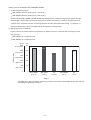
Strength grade is read as follows:
4.8
Yield point or durable force:
(45,500 psi)
Tensile strength of the bolt:
(56,900 psi)
• Model WH 14DMR
kgf . cm
.
(in-lbs.) N m
M10 x 30
1600
(1389)
160
1400 140 High-strength bolt
(1215)
1200 120
(1042)
1000 100
(868)
Tightening torque
Tightening torque
1600
(1389)
N. m
160
80
600
(521)
60
40
400
(347)
200
(174)
20
0
0
80
600
(521)
60
400
(347)
Ordinary bolt
0
1
2
3
Tightening time: sec.
(Steel plate thickness
t = 10 mm))
1600
(1389)
High-strength bolt
1400 140
(1215)
1200 120
(1042)
1000 100
(868)
800
(694)
800
(694)
kgf . cm
(in-lbs.)
M12 x 45
Tightening torque
kgf . cm
(in-lbs.)
N. m
High-strength bolt
1400 140
(1215)
1200 120
(1042)
1000 100
(868)
800
(694)
80
600
(521)
60
40
400
(347)
40
200
(174)
20
200
(174)
20
0
0
0
0
Ordinary bolt
0
1
2
3
Tightening time: sec.
(Steel plate thickness
t = 25 mm))
Fig. 5-1
--- 18 ---
M14 x 50
160
Ordinary bolt
0
1
2
3
Tightening time: sec.
(Steel plate thickness
t = 25 mm))