1
SENR7733-09
11
Systems Operation Section
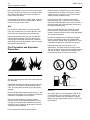
Dispose of used ether cylinders properly. Do not
puncture an ether cylinder. Keep ether cylinders
away from unauthorized personnel.
Do not spray ether into an engine if the machine is
equipped with a thermal starting aid for cold weather
starting.
Lines, Tubes and Hoses
Do not bend high pressure lines. Do not strike high
pressure lines. Do not install any lines that are bent
or damaged.
Repair any lines that are loose or damaged. Leaks
can cause fires. Consult your Caterpillar dealer for
repair or for replacement parts.
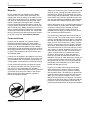
Illustration 10
g00704135
Gases from a battery can explode. Keep any open
flames or sparks away from the top of a battery. Do
not smoke in battery charging areas.
Never check the battery charge by placing a metal
object across the terminal posts. Use a voltmeter or
a hydrometer.
Improper jumper cable connections can cause an
explosion that can result in injury. Refer to the
Operation and Maintenance Manual for specific
instructions.
Do not charge a frozen battery. This may cause an
explosion.
Fire Extinguisher
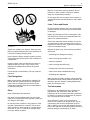
Make sure that a fire extinguisher is available. Be
familiar with the operation of the fire extinguisher.
Inspect the fire extinguisher and service the fire
extinguisher regularly. Obey the recommendations
on the instruction plate.
Ether
Ether is flammable and poisonous.
Use ether in well ventilated areas. Do not smoke
while you are replacing an ether cylinder or while you
are using an ether spray.
Do not store ether cylinders in living areas or in the
operator compartment of a machine. Do not store
ether cylinders in direct sunlight or in temperatures
above 49 °C (120 °F). Keep ether cylinders away
from open flames or sparks.
Check lines, tubes and hoses carefully. Do not use
your bare hand to check for leaks. Use a board or
cardboard to check for leaks. Tighten all connections
to the recommended torque.
Replace the parts if any of the following conditions
are present:
• End fittings are damaged or leaking.
• Outer coverings are chafed or cut.
• Wires are exposed.
• Outer coverings are ballooning.
• Flexible part of the hoses are kinked.
• Outer covers have embedded armoring.
• End fittings are displaced.
Make sure that all clamps, guards, and heat shields
are installed correctly. During machine operation, this
will help to prevent vibration, rubbing against other
parts, and excessive heat.
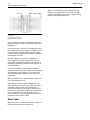
Tire Information
Explosions of air inflated tires have resulted from
heat-induced gas combustion inside the tires.
Explosions can be caused by heat that is generated
by welding, by heating rim components, by external
fire, or by excessive use of brakes.
A tire explosion is much more violent than a
blowout. The explosion can propel the tire, the rim
components, and the axle components as far as
500 m (1500 ft) or more from the machine. Both the
force of the explosion and the flying debris can cause
property damage, personal injury, or death.