1
Access to Apprenticeship
Workplace Support Services Branch, Ontario Ministry of Training, Colleges and Universities
Revised
2011
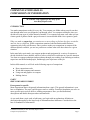
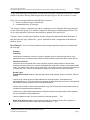
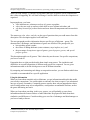
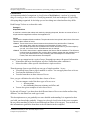
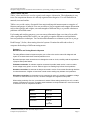
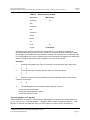
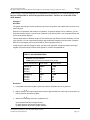
Table 1 below is a selection chart. Before you start, read the headings to see what features,
functions or problems are compared. Also, read the footnote. Cover all the details.
Look at how Table 1 is organized and what it compares. Answer the questions that follow.
Answers are at the end of this skills manual.
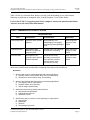
Table 1: COMPARISON OF FILLERS vs. PUTTIES
Conventional Fillers
Filler
Composition
Characteristics
Application
Heavyweight fillers
Polyester resins and talc
particles
Smooth sanding: fine
featheredging; non-sagging;
less pinholing than lightweight
fillers
Dents, dings and
gouges in metal
panels
Lightweight fillers
Microsphere glass
bubbles; fine grain talc;
polyester resins
Spreads easily; non-shrinking;
homogenous; no settling
Dings, dents and
gouges in metal
panels
Premium fillers
Microspheres; talc;
polyester resins; special
chemical additives
Sands fast and easily;
spreading is creamy and
moist; spreads smoothly
without pinholes; dries
tack-free; will not sag
Dings, dents and
gouges in metal
panels
Note: The advantages and disadvantages of any filler are related directly to its application. Any decision
about which is better should be made after considering every aspect of its intended use.
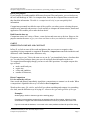
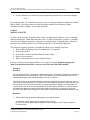
Questions:
1. Which is not common to both lightweight and heavyweight fillers?
a) polyester resins; used on dents, dings; used on metal panels
b) talc particles; used on dents, dings; non-shrinking
2. Which of the following describes premium and heavyweight fillers?
a) non-sagging; used on metal panels
b) polyester resins; some pinholing
c) used on dings; spreads easily
3. Which fillers have best spreading characteristics?
a) heavyweight and lightweight
b) lightweight and premium
c) all about the same
4. Which filler would you choose to avoid pinholing on metal panels?
a) heavyweight
b) lightweight
c) premium
d) heavyweight or premium
Communication Skills for The Auto Body Repair Trades
Comparison of Information
Page 6