1
Ride-On™
•
•
•
Tire Protection System – Reference Manual
Passenger & Light Truck (PLT) Formula – Exclusively manufactured for passenger and light trucks.
The Ride-On PLT formula is the only known product in the world capable of being balanced on
dynamic spin balancers. The PLT formula offers excellent protection for cars and light trucks against
punctures from objects up to 1/8” (3.2 mm) in diameter.
Motorcycle Formula – A high-speed formulation for motorcycles, dirtbikes and scooters.
Ride-On TPS for Bikes (Bike-On™) – Designed especially for bicycles.
REGULAR DUTY & SEVERE DUTY:
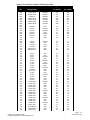
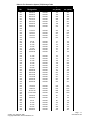
Our Dosage Tables include columns for Regular Duty and Severe Duty dosages. The Regular Duty
dosages are prescribed for vehicles operating in normal conditions, i.e., vehicles used in non-extreme
or mostly on-road environments. The Severe Duty dosages are recommended if a vehicle is expected
to encounter a large number of puncturing objects, i.e., construction vehicles, vehicles operating in
landfills, street sweepers, etc.
For vehicles in dual use – highway and off-road conditions (i.e. trash hauler delivering to landfills), the
Severe Duty dosage is recommended. The Regular Duty dosages are recommended for vehicles
designed to operate at high speeds where tire balance is an issue. When tire balance is not a
concern, the Severe Duty dosages are recommended.
TUBE TIRES:
The Ride-On Tire Protection System is designed to work in tube and tubeless applications. For tube
passenger car and light truck tires (designated LT), it is recommended that you use the Severe
dosage. For example, for a P235/75 15 tire, use 21 ounces of the Commercial High-Speed
formulation.
Identifying Tires Containing Ride-On
Always identify the tires that contain Ride-On to prevent double treatment. You can mark the tires by
using a permanent tire marker, by spray-painting valve stems, or by using Ride-On’s special vehicle
stickers or o-rings (available through your Ride-On dealer).
Troubleshooting
Air pressure, vehicle weight and centrifugal force are all needed for Ride-On to work effectively. When
a puncture does not seal properly, check for the following:
1) Lack of sufficient amount of Ride-On TPS;
2) Rips, tears, or belt/cord damage;
3) Tread separation;
4) Valve leaks;
5) Oily or lubricated puncturing object;
6) Sidewall puncture;
7) Puncturing object larger than what the sealant is designed to seal;
8) Contamination of Ride-On inside of the tire due to excessively wet air source and/or
contaminants inside tire;
9) Puncturing object has been in tire for a long time. If an object has been in a tire for a long time,
the rubber takes the shape of the object. This occurs because rubber loses elasticity, and
when the object is removed, an open hole remains instead of a closed injury. This is one
reason why it is so important to check tires regularly for puncturing objects. To help seal such
a puncture, re-air tire and drive until tire warms up. This will aid in the tire regaining elasticity.
The re-airing/driving process may need to be repeated up to three times.
10) Was the vehicle driven (minimum 3 miles for on-the-road vehicles) once the object was
removed? If the vehicle is not driven immediately, the tire may lose air pressure and the
puncture may not seal properly.
Version 13.0; February 2007
© 2007 Inovex Industries, Inc.
Dosage Table Introduction– II