1
Fork Scale Troubleshooting And Repair
13.6
105
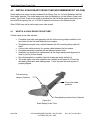
FORK SCALE EVALUATION TESTS
The tests listed below will help identify and locate any problem you may encounter with your
Vulcan fork scales.
Leakage Test
Tare Test
Resistance Test
13.6.1 LEAKAGE TEST PROCEDURE
Required Equipment: Digital Multi-Meter With Conductivity Scale
Isopropyl Alcohol
Cotton Swabs
Hair Dryer
Optional Equipment:
Vulcan Check-Out Box
The Leakage Test detects the presence of moisture that could cause erratic meter readings.
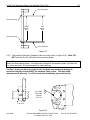
The way to measure leakage is to use a digital multi-meter that has a conductivity scale.
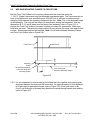
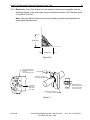
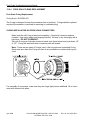
Electrical isolation is measured between any pin and an unpainted clean surface on the fork
scale or the connector body. Electrical isolation must not exceed 2.0 nS (nano-siemens) or
be less than 500 Meg Ohms. Nano-siemens and Meg Ohms are two different units of
measure for evaluating electrical leakage.
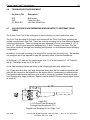
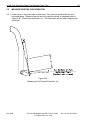
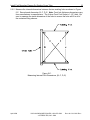
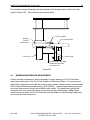
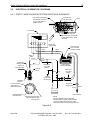
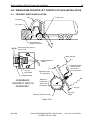
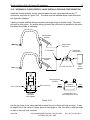
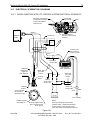
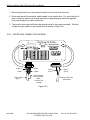
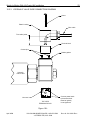
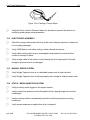
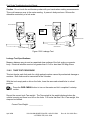
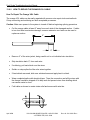
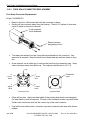
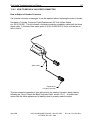
Refer to Figure 13-B for the Leakage Test equipment setup.
For proper operation, the power and signal leads from the fork scale must have a very high
resistance to the fork scale body. An electrical path between the wires and the body would
indicate moisture in the fork or shorting to the body. This would result in erratic, fluctuating,
or even out of range weight displays.
If the fork scale fails (electrical isolation is greater than 2.0 nS or is less that 500 Meg Ohms),
check the inside of the fork scale connector with a dry cotton swab to make sure it is clean
and dry. If not, clean with isopropyl alcohol, dry with a hair dryer, and check the electrical
isolation again.
If the fork scale cannot be brought to Vulcan specifications, contact Vulcan customer service
or your Vulcan dealer.
April 2008
VULCAN ON-BOARD SCALES 1-800-237-0022
© STRESS-TEK, INC. 2008
Doc. 44-10112-001 Rev. -