1
180MM MULTIPOINT RECORDER INSTALLATION AND OPERATION MANUAL
STATIC ELECTRICITY
High voltages (tens of kilovolts) can be generated on the human skin through a number of mechanisms, such as friction
between different materials (e.g. nylon and skin), and separation of similar materials (e.g. masking tape, nylon sheet).
The gate-oxide region of all metal oxide semiconductors (MOS) is extremely thin, and can be damaged by voltages as
low as 60 Volts. Modern MOS devices have built-in clamp diodes which reduce the incidence of obvious static damage
considerably. It is possible however, even with such clamping diodes, to produce a small rupture in the oxide layer.
This might not destroy the device immediately, but it m ay result in a gradual reduction in the performance of the device until, eventually, it fails.
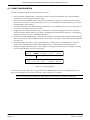
For this reason, the following precautions should be taken when handling any recorder circuit board.
1. Personnel handling MOS devices, or circuit boards containing them, should wear anti-static materials such as cotton. Nylon clothing should be avoided.
2. All bench tops should be covered with conductive material (104 to 105 Ohms per square) maintained at the recorder
chassis potential.
3. Circuit boards removed from the recorder should be placed into a static-safe bag, initially at the recorder chassis
potential, for storage. Before re-fitting the board, the containing bag should again be returned to the recorder chassis potential.
4. Personnel handling MOS devices, or boards containing them, should wear a wrist strap connected (via a safety
resistor) to the bench top, or if appropriate, to a suitable grounding point on the rack.
5. Leads of MOS devices removed from circuit should be shorted together using conductive foam or similar.
6. MOS devices should not be extracted from or inserted into circuit whilst the circuit board has power applied.
TERMINOLOGY
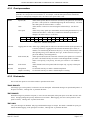
Anti-static
This term means that the material in question does not of itself generate static electricity. Such materials do not afford
protection against external electric fields.
Static safe
This means that the material in question a) does not generate static electricity, and b) any device enclosed in such material is safe from the effects of external electric fields.
Section i
Page i - 4
HA247645
Issue 10 Nov 98