1
!
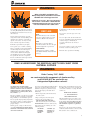
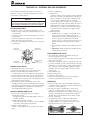
Warning
when using Binks equipment with
Methyl Ethyl Ketone Peroxide in Plasticizer
OBSERVE the following precautions
corrosive to the eyes – may cause blindness.
may be fatal if swallowed. strong irritant.
contamination or heat may lead to fire or
explosive decomposition. combustible.
Do not handle or use until safety precautions
concerning Methyl Ethyl Ketone Peroxides in
the Manufacturer’s literature have been read
and understood.
Contact with foreign materials, especially
strong mineral acids, metals (including certain
equipment and containers) or metal salts, or
exposure to heat above 135° F (57° C) may
lead to violent decomposition, releasing
flammable vapors which may self-ignite.
Do not get into eyes or on skin or clothing.
Wear eye and skin protection when handling.
Avoid breathing mist. Use with adequate
ventilation. Store only it in the original
closed container. Wash hands thoroughly
after handling. Protect from direct sunlight,
heat, sparks and other sources of ignition.
Prevent contamination with foreign materials.
Do not add to hot materials.
FIRST AID
EYES
Wash immediately (seconds count) with
water and continue washing for at least
15 minutes. Obtain medical attention.
SKIN
Wash with soap and water. Remove
contaminated clothes and shoes and again
wash thoroughly with soap and water.
SWALLOWING
Administer large quantities of milk or
water. Obtain immediate medical attention
for lavage.
To maintain the chemical activity store below
100° F (38° C).
In case of fire, use water spray, foam or dry
chemical.
In case of spill or leak, absorb or blend with
inert, non-combustible material. Put in suitable
container. Dispose of immediately in
accordance with federal, state and local
regulations.
Do not reuse container as some of the original
hazardous contents may still be present.
Follow the above precautions in handling.
READ & UNDERSTAND THE MATERIAL SAFETY DATA SHEET FROM
MATERIAL SUPPLIER
!
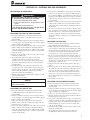
Warning
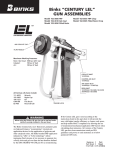
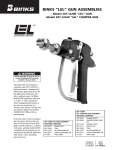
Binks Century "LEL" GUNS
are constructed with components of aluminum alloy
and SHOULD NOT be used with any
Halogenated Hydrocarbon solvents.
Halogenated hydrocarbon
solvents can cause an explosion
when in contact with aluminum
components of a pressurized or
closed fluid system (pumps, heaters, filters, etc.)
The same possibility of an explosion is possible
with the galvanized coatings in pressure tanks.
The possibility of a non-flammable explosion
increases greatly at high operating temperatures.
The explosion could be of sufficient strength to
cause bodily injury, death, and substantial
property damage.
Cleaning agents, coatings, or adhesives may
contain halogenated hydrocarbon
solvents. Check with your solvent
and paint supplier.
If you are now using a Halogenated Hydrocarbon
Solvent in a pressurized fluid system with
aluminum components or galvanized wetted
parts, the following steps should be taken
immediately:
1. Remove all pressure; drain and disconnect
the entire system.
2. Inspect and replace all corroded parts.
3. Contact your solvent supplier for a
non-halogenated solvent to
flush and clean the system of all residues.
Halogenated Solvents are defined as any
hydrocarbon solvent containing any of the
following elements:
Chlorine “Chloro” (Cl)
Bromine“Bromo” (Br)
Fluorine“Fluoro” (F)
Iodine“Iodo” (I)
Of those listed, the Chlorinated Solvents will
most likely be the type used as a cleaning agent
or solvent in an adhesive or coating. The most
common are:
Methylene Chloride
1,1,1, Trichlorethane
Perchlorethylene
Although stabilizers have been added to some
of the solvents to reduce their corrosive effect,
we are aware of none that will prevent these
solvents from reacting under all conditions
with aluminum components or galvanized
coatings.
Previous use of the solvents under pressurized
conditions, without incident, does not necessarily
indicate that it can be considered safe.
3