1
USING THE VG SYSTEM
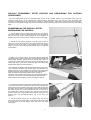
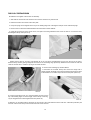
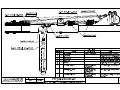
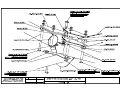
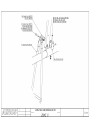
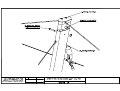
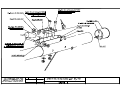
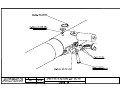
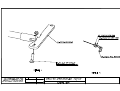
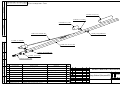
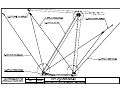
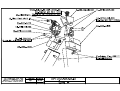
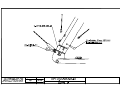
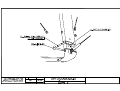
The Discus-C VG system uses a reduction system of pulleys between the central part of the crossbar and the kingpost
channel and also inside the downtube to enable a wide VG range. The change in airframe nose angle from VG loose to tight
is over 2 degrees. Tightening the VG increases the spanwise tension which the airframe places on the sail, reducing the
spanwise twist and the sail elasticity. The result is an increase in L/D performance and a reduction in roll control authority and
roll control response.
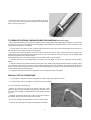
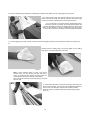
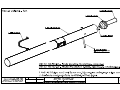
The VG is activated by pulling laterally on the VG rope and then moving the rope to set the rope in the cleat. The
recommended procedure for increasing VG tension is to grasp the rope firmly at the cleat, and pull along the basebar.
VG full loose is for maximizing roll control authority and roll rate.
Between VG full loose and VG one half, the glider retains good lateral control authority and response.
Tighter than VG one half, the glider’s roll pressures increase significantly and the roll rate becomes significantly slower.
Tighter VG settings are recommended for straight line gliding, or for flying in smoother conditions when well clear of both the
terrain and of other gliders. The stall characteristics of the Discus-C at tighter VG settings are more abrupt and less forgiving
and the glider is more susceptible to spinning. Full breaking stalls and accelerated stalls at tighter VG settings are not
recommended.
LANDING THE DISCUS-C
Under ideal conditions, landing approaches are best done so as
to include a long straight final into the wind at a speed above best
L/D speed. In a very limited field, or a field which slopes slightly
downhill, when landing in light wind, you may need to make your
final approach at a slower speed, perhaps as slow as minimum
sink, in order to be able to land within the field.
In winds of less than 5 km/h (3 mph), if the landing area slopes
downhill at more than 10:1, you should seriously consider landing
downwind and uphill; or crosswind, across the slope. Landing
attempts, which require slow speed approaches, maneuvering
around obstacles or into a restricted area, or downwind or
crosswind landings are not recommended for pilots below an
advanced skill level.
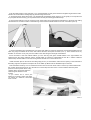
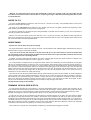
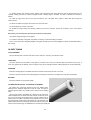
Photo 21
We recommend that you make your approach with the VG set between full loose and 1/3 on. A full loose VG setting will
reduce glide performance, making it easier to land on a target or within a small field. It will also ensure maximum control
authority during the approach, and especially when flying very slowly on final. At VG full loose, however, there is some loss of
aerodynamic efficiency and flare authority, For this reason, in very light winds, at higher wing loadings or at higher density
altitudes, it is recommended that a setting of VG 1/4 be used. A full loose VG setting will also increase the glider’s roll
sensitivity, and some pilots have had difficulty with roll / yaw oscillations on final. The best way to avoid this is to fly your
entire approach at a constant airspeed, and to control your touchdown point by making adjustments to the shape of your
pattern. You should choose your approach speed based on the amount of wind and turbulence present - in stronger wind and
more turbulent air, fly faster. In any case, however, try to fly a constant airspeed throughout the approach.
Once established on a straight final approach, with wings level and flying directly into the wind, you should fly the glider
down to where the basebar is about 1 m (3 ft) off the ground. At this altitude, let the control bar out just enough to “round out”
so that your descent is arrested and your flight path parallels the ground. The remainder of your approach will consist of
bleeding off excess speed while paralleling the ground and keeping the wings level and the nose pointed in your direction of
flight until it is time to “flare” for landing.
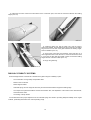
Prior to the landing flare your body position should be generally upright, but slightly inclined forward, with your head and
shoulders forward of your hips and your legs and feet trailing slightly behind (Photo 21).
Many pilots make the mistake of trying to get too upright at this stage of the landing, which actually reduces your flare
authority and makes it harder to land on your feet. Your hands should be at shoulder width and shoulder height on the
uprights.
You should be relaxed, with a light grip on the bar, and your weight should be fully supported in your harness and not at all
by your arms. (If your harness does not allow you to hang in the proper semi-upright landing position “hands off,” without
supporting your weight on the control bar, you will have a lot more difficulty making good landings.
12