1
1 Mechanical face seals basics
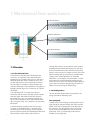
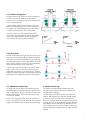
Full film lubrication
Mixed film lubrication
Boundary lubrication
1.3 Function
1.3.1 The lubrication film
The thickness of the lubrication film between the
seal faces is an important factor determining the
performance of a mechanical face seal. A seal with a
thick lubrication film suffers virtually no wear, since
the film takes up most of the load from the closing
force and there is virtually no contact between the
seal faces themselves. This would mean a long life, but
leakage would be high. This is referred to as ”full film
lubrication.”
If the lubrication film is too thin, the seal faces
themselves take up most of the load in direct contact
with each other and without much help from the
lubrication film. In this case, leakage would be very
low, but the expected life of the seal would be short
due to excessive wear. This is referred to as ”boundary
lubrication.”
6
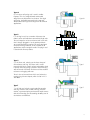
A well-functioning mechanical face seal has what
is known as ”mixed lubrication.” This means that
the closing force from the spring and the hydraulic
pressure is borne by both the hydrodynamic lubrication
film and direct contact between the seal faces.
Perfectly flat seal faces are not able to create a proper
hydrodynamic lubrication film between the seal faces,
but the inevitable microscopic deviations from perfect
flatness of the seal faces is enough to create such a film.
With increasing load on the seal faces, the lubrication
changes from “mixed lubrication” to “boundary
lubrication.” At some point, the load reaches a critical
point where the increased material contact pressure
causes the seal to seize. This critical load point depends
on the seal face material, the balancing ratio and the
ability of the seal’s design to dissipate heat.
1.3.2 Loading factors
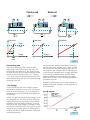
The face load is determined by two parameters: the
spring load and the balancing ratio.
The spring load
To keep the seal from leaking, the spring load must be
high enough to overcome the dynamic forces and the
friction force of the semi-dynamic secondary seals. At
the same time, the spring load must not be so high
that it causes unacceptable levels of wear and heat
generation. There is, consequently, little room for
variation in the spring load.