1
You need to remove the inner race of the bearing next to the slip ring, and the
slip ring itself, from the armature in order to access the heads of the two long
screws that hold the brass end pieces to the bobbin of the armature, so that the
brass end-piece containing the old condenser can be separated from the bobbin.
You may find techniques described on the internet for removing the inner race
without any special tools. However, with them, and on a K-series magneto
especially, there is a great risk of damaging the CB-end brass piece and
rendering it useless. Universal 2- or 3-legged pullers are unsuitable for the job,
because there is no space between the inner race and the oil flinger into which
the feet of such a puller can engage. A special bearing puller is required, such
as is included in the Brightspark Toolpack available for hire from us for the Kseries instruments. Alternatively, you can make the required pullers from the
drawings available for download at www.brightsparkmagnetos.com
It is sometimes possible to remove the slip ring by hand without damaging it, but it is far safer to use a special
puller as is also included in the Toolpack.
The Toolpack comprises a clamp puller profiled to fit the CB-end bearing's inner race, a larger clamp to pull the
slip ring, a cone to protect the internally tapered end of the armature shaft where the cb unit sits, and a bridge
and screw which operate both clamps.
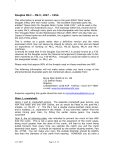
The pictures left and right show the components used for
pulling the bearing inner race.
The clamp halves are secured to the inner race. The bridge is
secured to the studs on the clamp halves, with the end of the
extractor screw bearing against the cone which is placed in the
internally-tapered end of the armature. Turning the extractor
screw draws off the inner race and the small collar outboard of
it.
Possibly one or more shim washers can then
be removed (note and keep safe), as too can
the oil flinger which prevents any oil getting onto the slip ring.
The slip ring can then be removed in a similar fashion using the larger
clamp in the Toolpack. In the picture, note the use of the cone to
protect the armature shaft, as for the bearing puller. Often there is no
need for a puller, but in the case of original Lucas armatures which
have never been stripped, shellac can make extraction
extremely delicate.
With the slip ring pulled, note the spike of the HT
coil, which fits into a very snug hole in the boss on
the rear of the slip ring. Take extreme care not to
bend the HT spike unintentionally.
The particular slip ring in the picture is in generally good condition, being neither broken on its flanges (through
being removed without the safety screws having been fully withdrawn) nor heavily 'tracked' where the HT pickup brushes have run against it. It should be serviceable for a good while yet. A clean and polish will be enough.
In some cases, the lightest possible skim in a lathe is recommended, or replacement in cases of deep scoring or
any breakage. Chips or other damage to the outer edges of the flange of a slip ring can cause surprising amounts
of spark-tracking when the magneto is working hard, and should not be accepted.
6