1
4.6
Operating precautions
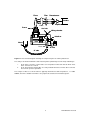
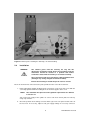
1. The fuel gases used in the flame photometers are inflammable and therefore potentially
hazardous. Cylinders of fuel gas should always be stored and used in line with the
supplier’s recommendation.
2. It is possible that a small quantity of fuel will escape from the instrument during the
ignition sequence. The amount of fuel is harmless although may smell slightly. If the
smell of fuel gas persists the instrument should be immediately shut down and the
source of the leakage determined by using a soap solution on the hose joints.
3. Do not leave the instrument running unattended while the flame is alight.
4. The top of the instrument chimney unit becomes very hot when running and can cause
severe burns if touched.
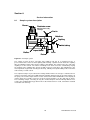
5. The exhaust gases from the flame are very hot and the area approximately 1 metre
above the chimney must be avoided. Never attempt to look down the chimney whilst the
flame is running. Always use the inspection window.
6. The instrument uses potentially hazardous electrical supplies. Never remove covers
from the instrument without first ensuring that it has been isolated completely from the
AC mains supply.
7. If the instrument is used in a pathology laboratory, all samples should be handled with
the caution normally accorded to those known to contain pathogenic organisms. Care
should also be taken when undertaking maintenance on instruments that have been
used in these environments. A bactericidal agent should be used when cleaning parts
during routine maintenance.
4.7
Good practice guidelines
1. It is most important that the nebuliser, mixing chamber and burner are kept clean by
carrying out the correct shutdown procedure and by periodic maintenance. If high salt
solutions are aspirated, correspondingly longer periods should be spent aspirating
deionised water prior to shutdown.
2. It is recommended that blank and standard solutions should have a wetting agent (e.g.
1
Triton X-100 or Decon 90) added to promote good stability and self cleaning. Any such
wetting agent should be non-ionic and used at a concentration of less than 3ppm. It
should be added to the blank, standards and samples at the same concentration.
3. Take care when preparing standards. The performance of the instrument depends upon
the accuracy and purity of the calibration standards.
4. If standard solutions are required to be stored for any length of time or at an elevated
temperature, a suitable mould inhibitor e.g. azide should be added. However if this
contains the element to be measured (e.g. sodium) it is important that the samples also
contain an equivalent amount.
5. Always sample from the top half of the sample container. The bottom half may contain
sediment or particulate matter which could easily block the fine tubing used in the
nebuliser.
6. Always use recommended spares. Even where an alternative part may be obviously
suitable there may be good reasons for not using it.
7. Never use glass containers to store calibration standards.
1
Triton X-100 is a registered trademark of Union Carbide Chemicals and Plastics Co. Inc.
20
PFP7/REV C/01-08
PFP7MkII/Rev
A/12-08