1
GENERAL CARBURETOR INFORMATION
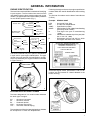
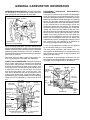
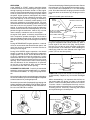
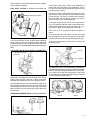
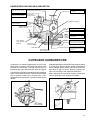
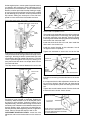
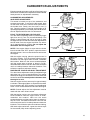
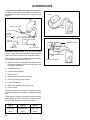
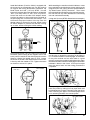
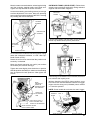
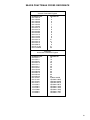
CARBURETOR IDENTIFICATION. Tecumseh carburetors
are identified by a manufacturing number and code
date stamped on the carburetor as illustrated.
ALTERNATE LOCATION
FOR MANUFACTURING NUMBER
F5
89 4
89
CARBURETOR
MANUFACTURING NUMBER
4F5
CARBURETOR
CODE DATE
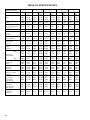
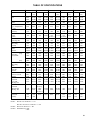
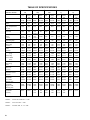
When servicing carburetors, you may use either the
engine model specification number or the manufacturing
number on the carburetor to properly identify. Information
regarding replacement parts or kits are available in
the master parts manual, microfiche catalog or electronic
parts look-up systems.
Tecumseh uses two basic types of carburetors for
their 2 cycle engines, float-type and diaphragm.
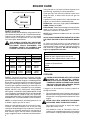
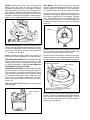
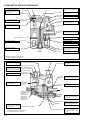
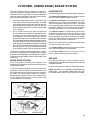
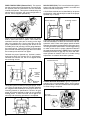
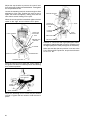
FLOAT-TYPE CARBURETORS. Float-type carburetors
use a hollow metal float to maintain the operating
level of fuel in the carburetor. As the fuel is used, the
fuel level in the carburetor bowl drops and the float
moves downward. This actuates the inlet needle valve,
to allow fuel to flow into the fuel bowl. As the fuel
level in the bowl again rises, so will the float. This
float action adjusts the fuel flow and keeps the fuel
at the proper mixture level. Some carburetors are of
the fixed main type. On these models, the main adjusting
screw and nut are replaced by a fixed main jet bowl
nut.
THROTTLE
SHUTTER
SECONDARY IDLE
DISCHARGE
PRIMARY
IDLE DISCHARGE
*IDLE
ADJUSTMENT
SCREW
IDLE FUEL
TRANSFER
PASSAGE
REDUCTION ROD
IDLE FUEL
CHAMBER
IDLE AIR
BLEED
CHOKE
SHUTTER
AIR
BLEED
INLET
SEAT
INLET
NEEDLE
FLOAT
IDLE FUEL
*MAIN ADJUST
TRANSFER PASSAGE
*Both jets may be fixed - non adjustable
6
DIAPHRAGM (PRESSURE DIFFERENTIAL)
CARBURETORS
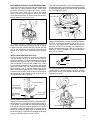
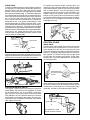
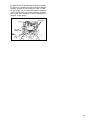
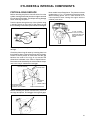
This type of carburetor uses a rubber-like diaphragm
which is exposed to intake manifold pressure on one
side and to atmospheric pressure on the other. Tecumseh
diaphragm carburetors use the diaphragm as a metering
device. As the intake manifold pressure decreases
due to downward piston travel, the atmospheric pressure
on the vented side of the diaphragm moves the
diaphragm against the inlet needle. The diaphragm
movement overcomes the spring tension on the inlet
needle and moves the inlet needle off the seat. This
permits the fuel to flow through the inlet valve to maintain
the correct fuel volume in the fuel chamber. The inlet
needle return spring closes the inlet valve when the
pressure on the diaphragm equalizes or a pressure
higher than atmospheric exists on the intake side
(upward piston travel). The diaphragm meters a correct
fuel volume in the fuel chamber to be delivered to
the mixing passages and discharge ports.
A main or idle adjustment needle may be replaced
by an internally fixed jet on some models.
The main nozzle contains a ball check valve. The
main purpose of this ball check is to eliminate air being
drawn down the main nozzle during idle speeds and
leaning the idle mixture.
An advantage of the diaphragm carburetor over the
float system is that the diaphragm carburetor increases
the angle that the engine may be operated at.
AIR
BLEED
CHECK
BALL
IDLE AND
INTERMEDIATE
PORTS
CHOKE
SHUTTER
THROTTLE
SHUTTER
IDLE
ADJUST
FUEL
INLET
MAIN
ADJUST
DIAPHRAGM
INLET
NEEDLE
AND
SEAT