1
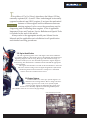
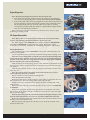
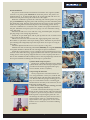
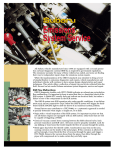
The HLAs used in the 2.2L engine are very small in size. Compare them to the
size of the 1800cc and 2700cc HLAs. One advantage of these HLAs is the reduction
of reciprocating weight. The HLAs are installed in the rocker arms while the
1800cc /2700cc HLAs are installed in the cylinder head. The HLAs directly contact
the valve stem instead of contacting the rocker arm as in the 1800cc/2700cc engines.
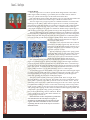
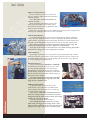
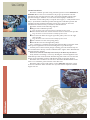
The head gaskets are carbon composition with a metal hooked core. O-rings
are used to seal the oil passages. The entire gasket surface is silicone coated to
Hydraulic Lash Adjusters (HLAs)
improve sealing characteristics during initial installation. This also eliminates the
need for re-torquing the cylinder head bolts after the engine has been operated.
The N/A cylinder head gaskets are interchangeable from side to side.
The turbo engine cylinder head gaskets have been modified to match the closed
deck design of the turbo crankcase. The gaskets are not interchangeable from side
to side or with the gaskets from the N/A engine.
The water ports have been repositioned to match the passages in the heads
and crankcase. The grommet area around the cylinder has been increased for
improved sealing.
The gaskets can be identified by the number of notches:
• N/A: two notches
• TURBO: three notches
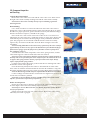
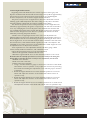
Crankcase
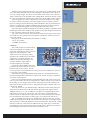
The crankcase has five main bearings
which provide high case rigidity and
improved crank support which increases
engine life and performance. The
crankcase uses an open deck casting
design for the cylinder liners. The Turbo
engine uses a closed deck design. In
Crankcase
addition, the flywheel housing is cast
with the crankcase which adds to
increased rigidity and strength.
Oil jets have been added to the lower
Crankshaft
portion of the turbo crankcase in order to
lubricate and cool the pistons. The jets
are not operative at lower RPM because they are pressure controlled to open at 57
psi. The jets can be cleaned.
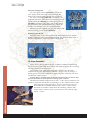
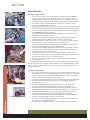
The balanced forged crankshaft has fillet rolled micro-polished journals for
increased strength and reduced friction. Due to the “Boxer” design, a counterbalance shaft is not required.
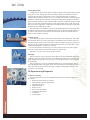
Due to increased material used to strengthen the large end of the rod, the rod
bolts are pressed into the rod. In comparison, the 1800cc rod bolts are pressed into Pistons
the bearing cap. An oiling notch is located on the large end of the rod below the
FUJI symbol. This provides oil flow to the piston pin and the cylinder walls. The
rods are not drilled.
The 2.2L pistons are cast aluminum alloy and feature a 2mm offset piston pin.
The pistons are directional for the left and the right side of the engine and are
stamped with an “L” or “R”. In addition, each piston is stamped with an arrow
which must point to front of the engine. The valve reliefs for the intake and
exhaust valves are different sizes to prevent valve contact with the piston should
the cam belt break. The pistons use three rings, two compression and one oil.
The 1st and 2nd ring land groove thickness has been increased to provide
additional strength due to the increased combustion pressures of the turbo engine.
The piston ring’s width and depth have also been increased to improve the cooling
efficiency of the top of the piston. In addition, the top of the ring is coated with
molybdenum to prevent metal disposition with the piston. The material itself has
been changed to hard chrome for increased resistance to wear.
7