1
PROGRESS AND OUTCOMES OF THE ILO’S PROGRAMME IN THE REGION
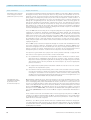
2.1.3. Abolition of forced labour
Recommendation: “We see a need for new programmes of assistance that will help
to abolish forced labour and discrimination, enhance freedom of association and
guarantee full collective bargaining rights.”
The discussion that was held in June 2001 on the second Global Report entitled
Stopping forced labour has led to the approval of an action programme setting out the
activities that the ILO intends to undertake to contribute to the elimination of current
forms of forced labour.
This special programme to combat forced labour began at the beginning of 2002.
Under the programme, assistance has been provided to a large number of national
initiatives against forced labour throughout the world; in Latin America, assistance
has gone above all to programmes to combat abusive recruitment schemes.
The ILO’s recent Report entitled A global alliance against forced labour estimates that
1,320,000 people in Latin America and the Caribbean are engaged in forced labour.
The above reports point out that forced labour in the region goes hand-in-hand with
discrimination, especially discrimination against indigenous peoples, but a series of
meetings held since 2002 have pointed to other difficulties: coercion in privatized
mines, the abuse of compulsory military service, coercion in the assembly industry and
forced domestic service.
As the 2005 Global Report indicates, the most prevalent form of forced labour in the
region is that of economic exploitation in the private sector (75 per cent), followed by
forced labour imposed by the State (16 per cent) and forced labour for purposes of
commercial sexual exploitation (9 per cent).
The elimination of this problem is a major concern of governments in the region
which, in the Plan of Action recently adopted by the Heads of State and Government at
the Fourth Summit of the Americas, stipulate, as the first national commitment, the
elimination of forced labour before 2010 by strengthening measures and policies, with
the support of the ILO.
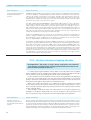
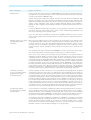
Areas of intervention
Progress and outcomes
Creation of national
institutions to combat
forced labour
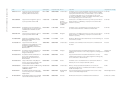
Under the project “Combating forced labour in Brazil” which began in 2002, the ILO is assisting the Brazilian Government to combat abusive recruitment practices that lead to virtual
slavery. The project helped to strengthen the National Commission to Eradicate Forced Labour
established in July 2003, to develop a database on forced labour, to launch public awareness
campaigns at the national and departmental level, to train key actors in the fight against
forced labour and to run programmes to return rescued workers to the labour market.
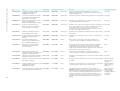
The Office has carried out two studies documenting such practices: one on forced labour in
the wood extraction industry in the Peruvian Amazon and the other on debt bondage in
Bolivia. These studies have done much to increase public awareness of the problem in Peru
and Bolivia, with the results of that government bodies dealing with forced labour have been
strengthened. Peru has established an inter-sectoral committee for the eradication of forced
labour composed of representatives of the Ministers of Labour and Employment Promotion,
Agriculture, Energy and Mines, the Interior, Justice and Women and Social Development, and
by a representative of the Ombudsperson.
A ministerial agreement has been signed in Bolivia between the Ministers of Labour, Sustainable Development, Indigenous and African-Origin Peoples Affairs and the Vice-Minister of
Justice (November 2004) which has been promoting the ratification of Convention No. 29
(2005), and is currently setting up a national commission to deal with the problem.
In Paraguay, the Ministry of Justice and Labour has opened an office in the Chaco region to
investigate situations of forced labour.
(continued overleaf)
ILO ACTIVITIES IN THE AMERICAS, 2003-2006
11