1
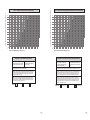
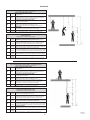
2.2 Personal Fall Arrest System: A PFAS is an assembly of components and subsystems used to arrest a person during a fall event. A PFAS typically consists of an anchorage, a deceleration device such as a Shock Absorbing Lanyard (SAL) or Self Retracting Device (SRD), or a Fall Arrester Connecting Subsystem (FACSS), and a properly fitted Full Body Harness (FBH). Maximum permissible free fall in a typical PFAS is 6'. PFAS used in conjunction with this equipment must meet ANSI Z359 requirements and applicable OSHA 1926.502 regulations. When used in accordance with OSHA regulations, the SRD will limit free fall to 2 feet or less. See Figure 2. The SRD maintains a lifeline reserve wrapped around the drum to activate the brake in the event of a fall. These reserve wraps are encased in red tubing as shown in Figure 2. If red tubing is visible at the lifeline aperture, the lifeline is extended too far. Allow the lifeline to retract back into the housing until the red tubing is within the housing. 2.3 Rescue: Rescue operations require specialized equipment that is beyond the scope of this manual. The employer must have a written rescue plan, the means to implement it and the ability to communicate that plan to users, authorized persons, and to rescuers. See ANSI Z359. 2.4 Application Limits: Take action to avoid moving machinery, sharp edges, abrasive surfaces, as well as chemical, thermal, and electrical hazards, including the arc from welding applications, as contact may cause serious injury or death. Do not use the SRD in severe cold. The SRD is not designed for use in restraint, personnel riding, suspension, or work positioning. Do not use the SRD for these applications except as a back‐up PFAS. The SRD discussed in this manual is not designed for Leading Edge applications. If there is a Leading Edge hazard, use an SRD specifically designed for Leading Edge applications. The SRD is designed for overhead use only. Only one PFAS may be attached to an anchorage at one time. Only one person may connect to the SRD at a time. See paragraph 3.1 for capacity information. DO NOT use the SRD to lift tools, materials, or personnel. 3. SYSTEM REQUIREMENTS 3.1 Capacity: The SRD is designed for use by personnel with a total combined weight (tools, clothing, etc.) of 130 – 310 lbs. 3.2 Compatibility of Connectors: Connectors are considered to be compatible with connecting elements when they have been designed to work together in such a way that their sizes and shapes do not cause their gate mechanisms to inadvertently open regardless of how they become oriented. Contact FallTech if you have any questions about compatibility. Connectors must be compatible with the anchorage or other system components. Do not use equipment that is not compatible. Non‐compatible connectors may unintentionally disengage. Connectors must be compatible in size, shape, and strength. Self‐closing, self‐locking snap hooks and carabiners are required by ANSI and OSHA. 3.3 Compatibility of Components: Equipment is designed for use with approved components and subsystems only. Substitutions or replacements made with non‐approved components or subsystems may jeopardize compatibility of equipment and may affect the safety and reliability of the complete system. 3.4 Making Connections: Only use self‐locking snap hooks and carabiners with this equipment. Only use connectors that are suitable to each application. Ensure all connections are compatible in size, shape, and strength. Do not use equipment that is not compatible. Visually ensure all connectors are fully closed and locked. Connectors (snap hooks and carabiners) are designed to be used only as specified in each product’s user’s instructions. See Figure 13 in Appendix B. 3.5 Personal Fall Arrest System: A PFAS is an assembly of components and subsystems used to arrest a person during a fall event. See paragraph 2.2. 3.5.1 PFAS Anchorage Strength: An anchorage selected for PFAS must have a strength able to sustain a static load applied in the direction permitted by the PFAS of at least: a) Two times the maximum arrest force permitted when certification exists, or b) 5,000 lbs. (22.2 kN) in the absence of certification. Table 2 provides test data on typical performance attributes of the three principal parameters (see paragraph 1.1) for FallTech self‐retracting devices, listed by model number and class. In certain situations, the qualified person can determine that a given structure is a suitable anchor point based on a tested arrest distance and tested maximum arrest force, with a safety factor of two. 3.6 Definitions: The following are definitions of terms. Authorized Person: A person assigned by the employer to perform duties at a location where the person will be exposed to a fall hazard (otherwise referred to as “user” for the purpose of these instructions). Certified Anchorage: An anchorage for fall arrest, positioning, restraint, or rescue systems that a qualified person certifies to be capable of supporting the potential fall forces that could be encountered during a fall or that meet the criteria for a certified anchorage prescribed in this standard. Competent Person: One who is capable of identifying existing and predictable hazards in the surroundings or working conditions which are unsanitary, hazardous, or dangerous to employees, and who has authorization to take prompt corrective measures to eliminate them. Harness Stretch: Amount of vertical travel of the Full Body Harness D‐ring during a fall arrest. Qualified Person: A person with a recognized degree or professional certificate and with extensive knowledge, training, and experience in the fall protection and rescue field who is capable of designing, analyzing, evaluating and specifying fall protection and rescue systems to the extent required by this standard. Rescuer: Person or persons other than the rescue subject acting to perform an assisted rescue by operation of a rescue system. 4. INSTALLATION AND OPERATION WARNING Do not alter or intentionally misuse this equipment. Consult FallTech when using this equipment in combination with components or subsystems other than those described in this manual. Do not use rebar hooks, large carabiners or large snap hooks to connect to the FBH dorsal D‐rings or to any small diameter non‐compatible anchor point as this may cause a roll‐out condition and/or unintentional disengagement. The SRD discussed in this manual is not intended for Leading Edge applications. Do not insert extra connectors between the SRD lifeline connector and the FBH dorsal D‐ring, except an approved D‐ring extender. Use caution and take action to avoid sharp and/or abrasive surfaces and edges. 4.1. Install the SRD: Examine the work area and take action to address hazards. Falls are a serious hazard when working at height. There are several closely related facets of fall hazard management with a PFAS; Anchor location Minimum Required Fall Clearance (MRFC) Swing Fall Expanded Work Zone 091415