1
English
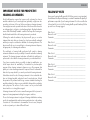
Owner Information
Wireless information
Serial Number(s)
Battery Size(s)
Left:Left:
Right:Right:
Technical information for wireless function with operating frequencies: flow = 115
kHz, fhigh = 120 kHz; Rated H-field strength (maximum): - 11.5 dB µA/m at 3
meters.
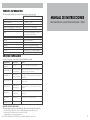
Features
This Category II radiocommunication device complies with Part 15 of the FCC
Rules and Industry Canada Standard RSS-210. Operation is subject to the following
conditions: (1) this device may not cause interference, and (2) this device must accept
any interference , including interference that may cause undesired operation of the
device.
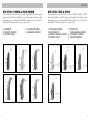
Wireless VC
Left
Right
VC With On/Off
Left
Right
VC With Non-Stop
Left
Right
Toggle Volume Control
Left Right
Automatic Volume Control
Left Right
Memory Button On/Off
Left
Right
Memory Button
Left Right
Memory Alert Tone
Left Right
Directional Microphone
Left Right
Low Battery Alert Tone
Left Right
Telecoil
LeftRight
Switchless Telecoil
Left
Right
Technical information for wireless function with operating frequency: Fc = 3.28 MHz;
Maximum field strength: - 7 dB µA/m at 10 meters.
This Class B digital apparatus II radiocommunication device complies with Part
15 of FCC Rules and Industry Canada Standard RSS-210. Operation is subject to
the following two conditions: (1) this device may not cause interference, and (2) this
device must accept any interference , including interference that may cause undesired
operation of the device.
This equipment has been tested and found to comply with the limits for a Class B
digital device, pursuant to Part 15 of the FCC Rules. These limits are designed to
provide reasonable protection against harmful interference in a residential installation.
This equipment generates, uses and can radiate radio frequency energy and, if not
installed and used in accordance with the instructions, may cause harmful interference
to radio communications. However, there is no guarantee that interference will not
occur in a particular installation. If this equipment does cause harmful interference
to radio or television reception, which can be determined by turning the equipment off
and on, the user is encouraged to try to correct the interference by one or more of the
following measures:
• Reorient or relocate the receiving antenna.
• Increase the separation between the equipment and receiver.
• Connect the equipment into an outlet on a circuit different from that to which the
receiver is connected.
• Consult the dealer or an experienced radio/TV technician for help.
Recycle your hearing instrument according to national regulations.
32
33