1
PRINCIPLE
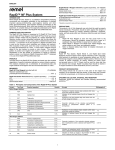
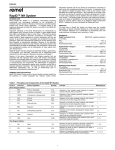
The tests used in the RapID™ Yeast Plus System are based upon
the microbial degradation of specific substrates detected by various
indicator systems. The reactions employed are a combination of
conventional tests and single-substrate chromogenic tests and are
described below in Table 1.
RapID™ Yeast Plus System
(English)
REAGENTS*
RapID™ Yeast Plus Reagent A (provided with kit)
(15 ml/Btl.)
Reactive Ingredient per Liter:
Potassium Hydroxide...........................................................16.0
INTENDED USE
Remel RapID™ Yeast Plus System is a qualitative micromethod
employing conventional and chromogenic substrates for the
identification of medically important yeast, yeast-like, and related
organisms isolated from human clinical specimens. A complete
listing of the organisms addressed by the RapID™ Yeast Plus
System is given in the RapID™ Yeast Plus Differential Chart.
g
RapID™ Yeast Plus Reagent B (provided with kit)
(10 ml/Btl.)
Reactive Ingredient per Liter:
p-Dimethylaminocinnamaldehyde..........................................0.06 g
SUMMARY AND EXPLANATION
RapID™ Inoculation Fluid (REF 8325106 supplied separately)
(2 ml/Tube)
KCl .........................................................................................6.0 g
CaCl2......................................................................................0.5 g
Demineralized Water .......................................................1000.0 ml
The RapID™ Yeast Plus System is comprised of (1) RapID™ Yeast
Plus Panels, (2) RapID™ Yeast Plus Reagent A and (3) RapID™
Yeast Plus Reagent B. Each RapID™ Yeast Plus Panel has several
reaction cavities molded into the periphery of a plastic disposable
tray. Reaction cavities contain dehydrated reactants and the tray
allows the simultaneous inoculation of each cavity with a
predetermined amount of inoculum. A suspension of the test
organism in RapID™ Inoculation Fluid is used as the inoculum which
rehydrates and initiates test reactions. After incubation of the panel,
each test cavity is examined for reactivity by noting the development
of a color. In some cases, reagents must be added to the test
cavities to provide a color change. The resulting pattern of positive
and negative test scores is used as the basis for identification of the
test isolate by comparison of test results to reactivity patterns stored
in a database or through the use of a computer-generated Code
Compendium.
*Adjusted as required to meet performance standards.
PRECAUTIONS
This product is For In Vitro Diagnostic Use and should be used by
properly trained individuals. Precautions should be taken against the
dangers of microbiological hazards by properly sterilizing specimens,
containers, media, and test panels after their use. Directions should
be read and followed carefully.
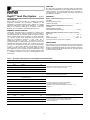
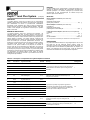
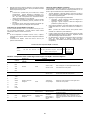
Table 1. Principles and Components of the RapID™ Yeast Plus System
Cavity #
Test Code
Reactive Ingredient
Quantity
1
GLU
Glucose
1.0%
2
MAL
Maltose
1.0%
3
SUC
Sucrose
1.0%
4
TRE
Trehalose
1.0%
5
RAF
Raffinose
1.0%
6
LIP
Fatty acid ester
1.0%
7
NAGA
p-Nitrophenyl-N-acetylβ,D-galactosaminide
0.05%
8
αGLU
p-Nitrophenyl-α,D-glucoside
0.05%
9
βGLU
p-Nitrophenyl-β,D-glucoside
0.05%
10
ONPG
o-Nitrophenyl-β,D-galactoside
0.05%
11
αGAL
p-Nitrophenyl-α,D-galactoside
0.05%
12
βFUC
p-Nitrophenyl-β,D-fucoside
0.05%
13
PHS
p-Nitrophenyl phosphate
0.05%
14
PCHO
p-Nitrophenyl phosphorylcholine
0.05%
15
URE
Urea
0.3%
16
PRO
Proline-β-naphthylamide
0.01%
17
HIST
Histidine β-naphthylamide
0.01%
18
LGY
Leucyl-glycine β-naphthylamide
0.01%
2
Principle
Bibliography #
Utilization of the carbohydrate produces acidic products
which lower the pH and change the indicator.
1
Hydrolysis of the fatty acid ester releases acidic products
which lower the pH and change the indicator.
2
Enzymatic hydrolysis of the colorless aryl-substituted
glycoside or phosphoester releases yellow o- or
p-nitrophenyl which is detected with RapID™ Yeast Plus
Reagent A.
3-8
Hydrolysis of urea produces basic products which raise
the pH and change the indicator.
9
Enzymatic hydrolysis of the arylamide substrate releases
free β-naphthylamine which is detected with RapID™
Yeast Plus Reagent B
10