1
dgps_e_n.qxd
02.03.99 08:21
Seite 36
NMEA 0183 COMMANDS AND MESSAGES
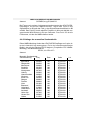
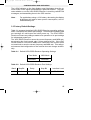
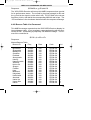
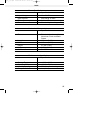
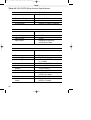
The response of this message is a table composed of six columns. The
first column is the beacon entry number from 1 to 20. The second column is the name of the beacon, followed by columns containing the respective frequency, MSK rate, and byte format. The VDO DGPSReceiver uses the last column internally, and it has no significant meaning with respect to operation and configuration of the receiver.
The data type for all beacons in this listing is RTCM with the 6/8 byte format.
4.4.7 Beacon Table Modify Command
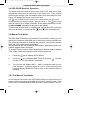
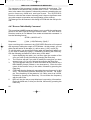
This proprietary NMEA command allows you to modify the entries contained in the VDO DGPS-Receiver beacon table. The VDO DGPSReceiver must be in Full Manual Tune mode to initiate this command. It
has the following format:
$PCSI ,4,M<CR><LF>
Response:
[(L)ist, (1-20) Edit entry, (Q)uit] ?
Upon receiving this command, the VDO DGPS-Receiver will respond
with a prompt, halting the output of RTCM data. At this prompt, you can
either list the entries in the table (L), edit an entry (1-20), or quit (Q).
To edit this table, you should first list the table and determine which entry you wish to modify by typing L, followed by pressing the Enter key.
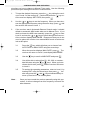
Use the following procedure to edit an entry in this table:
1.
Upon displaying the table, you can then type the number of the
entry you wish to edit, followed by pressing the Enter key.
2.
The receiver will ask if you wish to modify the entry that you have
entered, type <Y> for yes, followed by pressing the Enter key.
3.
The next prompt asks you to enter the name of the beacon, by a
BEX NAME prompt (limited to ten characters). Enter the new
name of the beacon entry in the table, followed by pressing the
Enter key.
4.
FREQ will then be displayed, requesting the new frequency for this
entry. The frequency must be entered in Hz, not kHz. For example, if the frequency of the station is 311.5 kHz, enter it as 311500,
followed by pressing the Enter key. Do not follow the frequency
with the unit of Hz.
5.
BPS will be the last prompt displayed requesting information.
Enter the MSK rate, in bits per second, followed by pressing the
Enter key.
80