1
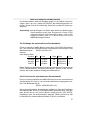
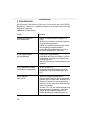
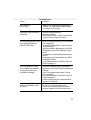
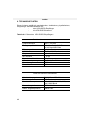
Montage- und Bedienungsanleitung
Installation and Operating Instructions
VDO DGPS-Receiver
VDO Kienzle Vertrieb und Service GmbH
Montage- und Bedienungsanleitung
Seite 2 - 44
Installation and Operating Instructions
Page 45 - 88
1
INHALT
Inhaltsverzeichnis
Liste der Abbildungen
Liste der Tabellen
Vorwort
Elektromagnetische Verträglichkeit
Verwendung des Handbuches
Aufbau des Handbuches
Service
Verwendete Symbole
Anmerkungen und Warnungen
1.
1.1
1.2
1.3
1.4
1.5
1.6
1.7
2.
2.1
2.1.1
2.1.2
2.2
2.2.1
2.3
2.3.1
2.3.2
2.3.3
2.4
2.5
2.6
2.6.1
2.6.2
2.6.3
2.6.4
2.6.5
2
EINLEITUNG
GPS
Echtzeit-Differential-GPS
Einflussgrössen der Positionsgenauigkeit
Der DGPS-Sender
Der DGPS-Empfänger
Die DGPS-Antenne
VDO DGPS-Empfänger Anschlüsse
INSTALLATION
Installation des VDO DGPS-Empfängers
Umgebungsbedingungen
Spannungsversorgung
Montage der Antenne
Die VDO DGPS-Antenne
Verlegung und Anschluss des Antennenkabels
Verlegung des Antennenkabels
Befestigung des Antennenkabels
Anschluss des Antennenkabels
Montage der Antenne zur Vermeidung
von Störungen
Anschluss des Empfängers an externe Geräte
Anschluss der Spannungsversorgung
Spannungsquellen
Einbau von Sicherungen
Anschluss der Spannungs- und Massekabel
Anschluss des Empfängers an VDO Logic Map
Anschluss an VDO Logic GPS Navigator
4
4
5
5
5
5
6
6
7
7
7
8
9
10
11
11
12
13
13
13
14
14
15
15
15
16
16
16
17
18
18
18
19
19
19
INHALT
3.
3.1
3.2
3.3
3.4
3.5
3.5.1
3.6
3.7
3.7.1
3.7.2
3.7.3
EINSTELLUNG UND BETRIEB
Schnittstellen-Protokolle
Bedientasten und Display
Werkseinstellungen
Betrieb des Empfängers
Manuelle Abstimmung
Vollmanuelle Abstimmung
Automatische Sendersuche (ABS)
Globale Suche
ABS-Betrieb
Menüstruktur
Beschreibung der Menüstruktur
20
20
20
21
22
22
23
24
24
25
26
27
4.
NMEA 0183 KOMMANDOS
UND MELDUNGEN
4.1
4.2
4.3
4.4
4.4.1
4.4.2
4.4.3
4.4.4
4.4.5
4.4.6
4.4.7
4.4.8
4.4.9
Beschreibung der NMEA 0183-Norm
Aufbau der NMEA-Datensätze
Vom Empfänger unterstützte Meldungen
Standard NMEA Kommandos und Abfragen
Kommando zur vollmanuellen Abstimmung
Kommando zur teilmanuellen Abstimmung
Kommando zur automatischen Sendersuche
Abfrage der Betriebsart
Abfrage der Empfangsparameter
Abfrage der manuellen Sendertabelle
Änderung der Sendertabelle
Abfrage der automatischen Sendertabelle
Löschen der automatischen Sendertabelle
31
31
31
32
33
33
33
34
34
34
35
36
37
37
5.
FEHLERSUCHE
38
6.
TECHNISCHE DATEN
40
7.
SICHERHEITSHINWEISE
7.1
7.2
Sicherheitshinweise zur Montage
Sicherheitshinweise zur Wartung
43
43
44
3
INHALT
Liste der Abbildungen
Bild 1-1
Darstellung der Kabelanschlüsse
12
Bild 2-1
Verbindungskabel DGPS-Empfänger / Logic Map
19
Bild 3-1
Bedientastenfeld und Display
20
Bild 3-2
Menüstruktur
26
Lise der Tabellen
Table 2-1
Datenport-Pinbelegung des Empfängers
RS-232C Interface Level
17
Table 2-2
Leistungsaufnahme des Empfängers
18
Table 2-3
DGPS-Empfänger an Logic GPS Navigator
19
Table 3-1
Werkseinstellungen des Empfängers
21
Table 3-2
Werkseinstellungen des Empfängers (Port)
21
Table 4-1
NMEA-Datenelemente
31
Table 4-2
Vom Empfänger unterstützte
NMEA-Datensätze
32
Table 5-1
Fehlersuche
38
Table 6-1
Technische Daten des Empfängers
40
Table 6-2
Technische Daten der Antenne
42
4
VORWORT
Vorwort
Wir gratulieren Ihnen zum Kauf dieses Differential-GPS-Empfängers.
Dieses Handbuch soll Sie mit der richtigen Installation, Konfiguration
und dem Betrieb Ihres neuen Empfängers vertraut machen.
Der VDO DGPS-Empfänger ist ein äusserst empfindlicher 300 kHz-MSK
(Minimum Shift Keying) Demodulator, der Differentialkorrekturen empfängt, wie sie von den Leitstrahlsendern gesendet werden, welche die
Standards der International Association of Lighthouse Authorities (IALA)
einhalten.
Aufgrund seiner hohen Funktionalität ist das Gerät leicht mit der Tastatur
auf der Frontplatte und dem Display zu konfigurieren. Der VDO DGPSEmpfänger arbeitet im Frequenzbereich von 283,5 kHz bis 325 kHz und
verwendet einen erprobten, vollautomatischen Sender-Suchalgorithmus.
© Copyright 1998 by VDO Kienzle. Alle Rechte vorbehalten.
Elektromagnetische Verträglichkeit (EMV)
Der VDO DGPS-Empfänger erfüllt die Emissionsanforderungen für digitale Geräte der Klasse A gemäss Teil 15, Abschnitt J der Richtlinien der
Federal Communitions Commission (FCC) für kommerzielle, gewerbliche und industrielle Umgebungen, sowie CE EN-60945
Verwendung des Handbuches
Dieses Handbuch enthält spezifische Informationen zur Installation und
zum Betrieb des VDO DGPS-Empfängers.
Wir empfehlen Ihnen, die Zeit zum Studium des Handbuches zu nehmen, bevor Sie das Produkt verwenden. Das Dokument ist für Leser gedacht, die Differential-GPS (DGPS) einsetzen möchten, aber nicht über
Hintergrundkenntnisse verfügen. Erfahrene GPS-Benutzer können die
entsprechenden Abschnitte des Kapitels 1, in denen die Grundlagen
von GPS und DGPS vermittelt werden, überspringen.
Aufbau des Handbuches
Dieses Handbuch umfasst die folgenden Teile:
Kapitel 1: Einleitung - Einführung in die Technologie von GPS und
DGPS, Vorstellung des VDO DGPS-Empfängers und der Antenne.
5
SERVICE
Kapitel 2: Installation - Beschreibung der Installation des VDO DGPSEmpfängers und der Antenne, und Grundlagen zum Anschluß des VDO
DGPS-Empfängers an differentialfähige GPS-Empfänger.
Kapitel 3: Konfiguration und Betrieb - Erklärung, wie der VDO DGPSEmpfänger zu konfigurieren und zu betreiben ist.
Kapitel 4: NMEA 0183 - Befehle und Meldungen - Beschreibung der
Befehle und Meldungen von NMEA 0183, die zur Kommunikation mit
dem VDO DGPS-Empfänger dienen.
Kapitel 5: Fehlersuche - hier werden Diagnose-Informationen zur Hilfe
bei der Suche nach Fehlerursachen gegeben.
Kapitel 6: Technische Daten - eine Kurzfassung der technischen Daten
des VDO DGPS-Empfängers und der Antenne.
Kapitel 7: Sicherheitshinweise
Service
Der folgende Abschnitt gibt weitere Informationen über Support und
Service für Ihren VDO DGPS- Empfänger und seine Antenne.
Kundendienst:
Im Falle von Schwierigkeiten bei der Installation oder beim Betrieb dieses Produktes, oder wenn Sie notwendige Informationen nicht finden,
nehmen Sie bitte Kontakt mit Ihrem Fachhändler oder mit dem MarineService der VDO Kienzle auf. Die Kontaktnummern sind:
Telefon: +49 (0)69 / 40805-0
Fax:
+49 (0)69 / 40805-177
Zur Beschleunigung des Support-Verfahrens bitten wir Sie, ProduktModell und Seriennummer bereitzuhalten, wenn Sie mit dem technischen Kundendienst der VDO Kienzle Kontakt aufnehmen.
Verwendete Symbole
Dieses Symbol bedeutet, dass Sie die Taste „Pfeil nach unten“ der
Tastatur auf der Empfängerfront drücken sollen.
Dieses Symbol bedeutet, dass Sie die Taste „ENTER“ der Tastatur
auf der Empfängerfront drücken sollen.
6
EINLEITUNG
Dieses Symbol bedeutet, dass Sie die Taste „Pfeil nach oben“ der
Tastatur auf der Empfängerfront drücken sollen.
Anmerkungen und Warnungen
Anmerkung, Achtung und Warnung betonen wichtige Informationen zur
Installation, Konfiguration und zum Betrieb des DGPS-Empfängers.
Bitte beachten Sie auch die Sicherheitshinweise (Seite 43).
Anmerkung - wichtige Informationen allgemeiner Art
Achtung informiert über mögliche Ursachen von Schwierigkeiten
oder Situationen, die das Produkt beschädigen können
Warnung - informiert über Situationen, in denen Sie sich verletzen
können
1. EINLEITUNG
Der kompakte, leichte, aber robuste VDO DGPS-Empfänger wurde für
einen breiten Bereich von Anwendungen entwickelt und wird Ihnen viele
Jahre mit zuverlässigem Betrieb dienen.
Dieses Kapitel gibt einen kurzen Überblick über die Technologie von
GPS und DGPS, und enthält eine Beschreibung des VDO DGPS-Empfängers.
1.1 GPS
Das amerikanische Verteidigungsministerium (United States Department of Defense = DoD) ist der Betreiber des zuverlässigen, täglich 24
Stunden verfügbaren Global Positioning Systems (GPS).
Navstar - dies war der ursprüngliche Name dieses geographischen
Positions- und Navigationssystems - besteht aus einer Konstellation von
24 Satelliten, welche die Erde in einer Höhe von etwa 22 000 km in
sechs getrennten Ebenen umkreisen. Diese „Space Vehicles“ (SV) senden Radiosignale mit genauer Satellitenzeit und -position. Der Empfang
von vier oder mehr solchen Signalen ermöglicht einem GPS-Rechner
die Berechnung seiner Koordinaten, bezogen auf das „World Geodetic
System, 1984“ (WGS-84). Software-Algorithmen können dem Benutzer
auch für verschiedene Anwendungen notwendige alternative Bezugssysteme liefern.
Die Positions-Genauigkeit des Navstar-GPS ist abhängig von der Art
des Dienstes und der Ausrüstung, auf die der Benutzer Zugriff hat. Aus
7
EINLEITUNG
Gründen nationaler Sicherheit gibt es GPS in zwei unterschiedlichen
Formen, den Standard Positioning Service (SPS) und den Precise
Positioning Service (PPS). Das US Department of Defense (DoD) begrenzt den PPS auf sein Personal, berechtigte Bundesbehörden und
NATO-Partner. SPS wird vom DoD kostenfrei weltweit allen zivilen
Benutzern zur Verfügung gestellt.
Um einen strategischen Vorteil zu behalten, verschlechtert das US DoD
künstlich die Leistung des SPS, so dass eine Positionsgenauigkeit von
100 Metern (2-DRMS) erreicht werden kann. Anders ausgedrückt, wird
95 % der Zeit die zweidimensionale für zivile Nutzung zur Verfügung stehende Positionsgenauigkeit in der horizontalen Ebene besser als 100 m
sein.
Für viele Positions- und Navigationsaufgaben ist eine Genauigkeit von
100 m oder mehr nicht ausreichend, und Differential-Positionsmethoden
müssen eingesetzt werden.
1.2 Echtzeit Differential-GPS
Das Ziel des Differential-GPS (DGPS) ist die Beseitigung oder sehr starke Reduzierung des Einflusses von SA, Atmosphäre und Satellitenfehlern. Hierfür wird an einem Punkt mit bekannten Koordinaten ein
GPS-Empfänger aufgestellt. Dieser Empfänger führt PseudorangeMessungen zu jedem GPS-Satelliten durch, der über einen bestimmten
Elevationsmasken-Winkel sichtbar ist, und berechnet eine nichtdifferential korrigierte dreidimensionale GPS-Position. Der Empfänger berechnet auch anhand seiner bekannten Position genaue Entfernungen und
die Lage jedes verfolgten Satelliten. Der Betrag, um den die echte
Entfernung zu einem Satelliten von der beobachteten Entfernung abweicht, ist die Differentialkorrektur.
Diese Korrekturen werden zur Lösung einer DGPS-Position in Echtzeit
an einen getrennten Empfänger gesendet, unter der Annahme, dass die
Fehlerquellen an beiden Stationen die gleichen sind. Der entfernte
Empfänger korrigiert seine Entfernungsmessungen anhand dieser
Differentialkorrekturen, wodurch eine viel genauere Positionierung erreicht wird.
Dies ist die wichtigste DGPS-Strategie, die für die meisten Echtzeitanwendungen verwendet wird.
8
EINLEITUNG
1.3 Einflussgrössen der Positionsgenauigkeit
Viele Faktoren beeinflussen die Positioniergenauigkeit, die der Benutzer
von einem DGPS-System erwarten kann. Die wichtigsten Einflüsse sind:
Die Entfernung des Empfängers vom Sender
Das Alter der empfangenen Differentialkorrekturen
Atmosphärische Bedingungen in der Umgebung des Senders und
des Empfängers
Satellitengeometrie, (DOP) Dilatation of Precision genannt
Grösse des Multipath an der entfernten Station
Qualität des verwendeten GPS-Empfängers, sowohl in der Referenzstation wie der entfernten Station
Die Entfernung zwischen dem Empfänger und der Referenzstation ist
bei 300 kHz-DGPS-Sendern oft beträchtlich. Die Sendungen können
Entfernungen bis 450 km erreichen; dies hängt hauptsächlich von der
Sendeleistung ab. Dadurch ergibt sich, dass einige der GPS-Fehler an
der Referenzstation etwas von denen des entfernten Benutzers abweichen. Der typische Wert dieses Fehlers liegt bei 1 m je 100 km zwischen
Basisstation und entferntem Empfänger.
Ebenso beeinflusst die Latenz der vom Leitstrahl übertragenen Differentialkorrekturen die erreichbare Positionsgenauigkeit der entfernten
Station. Die Latenz ist eine Funktion der Zeit, die die Basis-Station zur
Berechnung der Messungs-Korrekturen braucht, der Datenrate der
Radioverbindung, der Zeit, bis das Signal den Benutzer erreicht, und der
Zeit, die der entfernte Leitstrahlempfänger braucht, um das Signal zu
demodulieren und an den GPS-Empfänger weiterzuleiten. Die meisten
dieser Zeiten liegen unter einer Sekunde, in einigen Fällen, je nach
Menge der zu übertragenden Informationen, können auch Intervalle von
drei bis fünf Sekunden beobachtet werden (je nach Anzahl der erreichbaren Satelliten). Eine merkliche Verschlechterung der Genauigkeit
dürfte nicht auftreten, wenn die gesamte Korrektur-Latenz unter acht bis
zehn Sekunden gehalten werden kann.
Zur Berücksichtigung dieser Latenz und des schnell wechselnden SAFehlers verwendet ein GPS-Empfänger die Änderungsrate der Korrekturen der einzelnen Satelliten zur zeitlichen Voraussage der berechneten Korrektur. Die Berechnung der Differentialkorrektur für eine neue
Zeitspanne unter Verwendung der alten Korrektur führt zu einer leichten
Ungenauigkeit, da der SA-Fehler eine hohe Änderungsrate hat. Die
Gültigkeit dieser Methode nimmt mit der Zeit ab, so dass sich eine
schlechtere Positionsgenauigkeit ergibt, bis der GPS-Empfänger wieder
neue Korrekturen erhält.
Der Zustand der Atmosphäre kann zwischen Basisstation und entfern9
EINLEITUNG
tem Empfänger sehr starke Unterschiede aufweisen; dies kann in der
entfernten Station zu signifikanten Positionierfehlern führen. Vor allem
die Dekorrelation der ionosphärischen Bedingungen ist eine Funktion
der Entfernung in Luftlinie zwischen Bezugspunkt und entferntem Empfänger.
Die Anzahl der sichtbaren Satelliten und ihre Geometrie im Weltraum
beeinflusst die Positioniergenauigkeit. Je mehr Satelliten sowohl für den
Referenzempfänger wie für den entfernten Empfänger sichtbar sind, desto höher kann die erreichbare Genauigkeit sein. Wenn allerdings alle
oder der grösste Teil der Satelliten in einem Teil des Himmels zusammenliegen, verringert diese schwache Geometrie die Genauigkeit und
vergrössert den DOP.
Vom GPS-Empfänger über verschiedene Wege (Multipath) empfangene
Satellitensignale können zu einer Senkung der Positionsgenauigkeit
führen. Diese reflektierten Signale vergrössern die Messstrecke zum
Satelliten, da das Multipath-Signal einen längeren Weg zum Empfänger
hat. Es können Vorkehrungen getroffen werden, um die Empfindlichkeit
der GPS-Antenne für diese reflektierten Signale zu senken. Der Betrieb
ohne grosse reflektierende Flächen in der Nachbarschaft, wie Gebäude,
oder multipath-reduzierende Masseebenen, Drosselringe, oder spezielle
GPS-Empfänger-Software und -Hardware helfen bei der Senkung des
Multipath-Einflusses.
1.4 Der DGPS-Sender
Die Reichweite eines 300 kHz-Senders hängt von verschiedenen
Faktoren ab, wie Sendeleistung, Verlust im freien Raum, Zustand der
Ionosphäre, Oberflächen-Leitfähigkeit, Umgebungsrauschen und atmosphärische Dämpfung.
Die Stärke des Signals sinkt mit der Entfernung zur Sendestation, zum
grössten Teil durch Verluste im freien Raum (Streuverluste). Dieser Verlust entsteht dadurch, dass das Signal bei wachsender Entfernung der
Wellenfront von der Sendeantenne über eine immer grösser werdende
Fläche verteilt ist. Dieser Verlust kann durch eine höhere Sendeleistung
kompensiert werden.
10
EINLEITUNG
1.5 Der DGPS-Empfänger
Der VDO DGPS-Empfänger empfängt und demoduliert RTCM SC-104 Differentialkorrekturen eines 300 kHz-Senders, der die Sendenormen
der International Association of Lighthouse Authorities (IALA) einhält.
Der VDO DGPS-Empfänger kann sowohl manuell wie auch automatisch
arbeiten. Die Steuerung erfolgt über Anzeige und Steuertastatur an der
Front, oder durch einen Subset der NMEA 0183-Befehle und eigener,
gemäß NMEA formatierter Befehle, die von einem PC-Rechner ausgegeben werden. Der Empfänger unterstützt bidirektionale Kommunikation, so dass Differentialkorrekturen und Konfigurationsbefehle über
den gleichen Port gesendet und empfangen werden können. Ein Satz
von Ausgabe-Baudraten steht zur Verfügung, die Baudrate kann mit den
Steuertasten an der Front gewählt werden.
1.6 Die DGPS-Antenne
Die Antenne empfängt die elektrische Komponente der
Leitstrahlsendung. Ein in den Fuss der VDO DGPSAntenne integrierter rauscharmer Verstärker verstärkt
die Frequenzen im Band von 283,5 kHz bis 325 kHz.
Die VDO DGPS-Antenne ist mit Standard-MarineGewindefüssen kompatibel. Zur optimalen Leistung
sollte sie geerdet werden. Der Antennenfuss hat ein
Nylongewinde, der Peitschenteil ist aus glasfaserverstärktem Kunststoff hergestellt.
Einzelheiten zur Antenneninstallation sind in Abschnitt 2.4 zu finden.
11
EINLEITUNG
1.7 VDO DGPS-Empfänger Anschlüsse
Der VDO DGPS-Empfänger ist leicht zu installieren. Es sind nur Spannungsversorgung, Daten-, Antennen- und Masseanschluss notwendig.
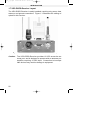
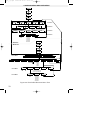
Bild 1-1 stellt die Anschlüsse des Empfängers dar.
Bild1-1 : Anschlüsse des VDO DGPS-Empfängers
Achtung -
12
Der VDO DGPS-Empfänger führt 12 V DC am Antennenanschluss. Er ist für den Betrieb mit einem 12 V DC
Antennenvorverstärker vorgesehen. Ein Anschluss an
nichtkompatible Geräte kann zu Geräteschäden führen.
EINLEITUNG
2. INSTALLATION
Dieses Kapitel enthält Anweisungen und Empfehlungen zur Installation
des VDO DGPS-Empfängers und seiner Antenne.
2.1 Installation des VDO DGPS-Empfängers
Um einen optimalen Betrieb und eine einfache Verwendung zu erzielen,
müssen beim Einbau des VDO DGPS-Empfängers bestimmte Aspekte
berücksichtigt werden:
Der VDO DGPS-Empfänger erfordert einen Stromanschluss am
Einbauort, wobei die Länge des Versorgungskabels berücksichtigt
werden muss. Die Sicherung im Stromversorgungskabel muss für
Kontrolle und Austausch zugänglich sein.
Zur Verwendung der Frontanzeige und der Tastatur des Empfängers den Empfänger so einbauen, dass Sie die Anzeige sehen
und die Tastatur an der Empfängerfront bedienen können.
Hinter dem Empfänger sollte ein ausreichender Freiraum vorgesehen werden, damit die Kabel für Stromversorgung, Daten und
Antenne nicht geknickt werden. 5 cm sind normalerweise auch für
Anschluss und Trennen ausreichend.
Der VDO DGPS-Empfänger wird mit einem Universal-Montagebügel geliefert. In diesem Bügel kann der Empfänger gekippt werden, um das
Display für bessere Sicht nach oben oder nach unten zu drehen. Der
Bügel wird mit vier Schrauben an der Montagefläche befestigt.
Den Universalbügel als Schablone für die Bohrung der vier MontageSchraubenlöcher verwenden.
2.1.1 Umgebungsbedingungen
Der VDO DGPS-Empfänger ist für Betrieb in einem geschlossenen
Raum vorgesehen, in dem die Temperatur zwischen -30°C und +70°C
bleibt. Der Lagertemperaturbereich des Empfängers ist -40°C bis
+80°C. Der Empfänger darf keinen Extremtemperaturen und keiner
Feuchtigkeit ausgesetzt werden. Eine direkte Sonnenstrahlung auf den
Empfänger während längerer Zeit ist zu vermeiden.
13
EINLEITUNG
2.1.2 Spannungsversorgung
Der Empfänger ist zwar für den Betrieb bei einer Spannung von 10 bis
35 V DC vorgesehen, aber die beste Leistung wird erreicht, wenn die
Spannung konstant und sauber ist. Leistungsschwankungen können
durch an die gleiche Stromversorgung angeschlossenes elektrisches
Zubehör entstehen.
Bei einer verrauschten Stromversorgung kann die Empfängerleistung
durch einen in die Leitung eingebauten Filter verbessert werden.
2.2 Montage der Antenne
Für die Antenne einen Standort wählen, an dem sie nicht beschädigt
werden kann und von Störungsquellen entfernt ist. Die folgenden
Vorsichtsmassnahmen sind bei der Wahl einer Antennenanordnung zu
berücksichtigen:
Eine Stelle finden, die von allen Sendeantennen und von Kommunikationseinrichtungen möglichst einen Meter oder mehr entfernt
ist.
Sicherstellen, dass die Antenne möglichst weit von Geräten entfernt ist, die elektromagnetische Störungen abgeben. Solche Geräte sind unter anderen Gleichstrommotoren, Wechselstromgeneratoren, Spulen, Radios, Leistungskabel, Anzeigeeinheiten und
andere elektronische Geräte.
Wenn ein Radar vorhanden ist, die Antenne so montieren, dass
sie nicht im Radarstrahl liegt.
Die Antenne nicht an Orten montieren, an denen die Umgebungsbedingungen den in Anhang A gegebenen Rahmen überschreiten.
Achtung -
In einen Adapter eingeschraubte Antennen dürfen nur
handfest angezogen werden. Keine Werkzeuge verwenden, die die Antenne beschädigen könnten.
Die folgenden Informationen beziehen sich auf die richtige Installation
der Antenne.
14
INSTALLATION
2.2.1 Die VDO DGPS-Antenne
Für optimalen Betrieb sollte die Antenne an Masse angeschlossen werden. Die VDO DGPS-Antenne wird einfach mit einer Standard-MarineGewindebefestigung 1.0“ - 14 (1-14 UNS) montiert und hat ein 30 cm
(11 inch) langes Antennen-Anschlusskabel.
Für optimalen Betrieb muss die VDO DGPS-Antenne über ein Antennenkabel, wie RG-58U (bis 150 m / 492 ft Länge) angeschlossen werden.
Bemerkung - Ein guter Masseanschluss ist Voraussetzung für optimale
Empfängerleistung.
2.3 Verlegung und Anschluss des Antennenkabels
Die folgenden Abschnitte behandeln die Antennenkabelverlegung, die
Befestigung des Kabels und den Anschluiss an die Antenne.
Achtung -
Der VDO DGPS-Empfänger liefert 12 V DC über den
Antennenport und muss mit einem Antennenvorverstärker für einen 12 V DC - Eingang kombiniert werden. Ein
Anschluss an ein nichtkompatibles Gerät kann Schäden
der Geräte verursachen.
2.3.1 Verlegung des Antennenkabels
Bei der Verlegung des Antennenverlängerungskabels ist darauf zu achten, dass die Antenne oder das Kabel nicht beschädigt werden kann,
und dass Ihre Sicherheit nicht gefährdet ist. Die folgende Liste enthält
Empfehlungen für die Verlegung von Antennenkabeln.
Kabel nicht an Stellen mit starker Hitze verlegen.
Das Antennenkabel nicht korrosiven Chemikalien aussetzen.
Das Verlängerungskabel nicht über Tür- oder Fensterschwellen
verlegen.
Das Antennenkabel darf nicht mit rotierenden Teilen in Kontakt
kommen.
Das Antennenkabel nicht scharf biegen, knicken oder quetschen.
Das Kabel muss ohne mechanische Spannungen verlegt werden
15
INSTALLATION
2.3.2 Befestigung des Antennenkabels
Verdrehungen im Antennenkabel am Empfängerende korrigieren, ohne
Zugspannungen im Kabel zu erzeugen. Wir empfehlen, das Antennenkabel mit Kabelbindern zu befestigen.
Warnung -
Ein Kabel kann Gefahren bergen und Verletzungen verursachen, wenn es in der Nähe von Maschinen verlegt wird.
2.3.3 Anschluss des Antennenkabels
Der Antennenport auf der Rückseite des VDO DGPS-Empfängers ist
eine Standard-BNC-Buchse. Das Antennenkabel aufstecken und durch
Drehen des Verriegelungsringes im Uhrzeigersinn sichern.
Die VDO DGPS-Antenne hat eine BNC-Antennenbuchse. Für diese
Antenne ist ein Verlängerungskabel mit BNC-Steckern auf beiden
Seiten notwendig.
2.4 Montage der Antenne zur Vermeidung von Störungen
Die Wahl des richtigen Installationsortes der Antenne hat einen sehr
grossen Einfluss auf die Leistung des VDO DGPS-Empfängers.
Verfahren Sie wie folgt, um die beste Anordnung der Antenne zu finden:
1.
Die Antenne zentral auf dem Instrumententräger (Motorboot) oder
der Reling (Segelboot) in Cockpitnähe aufstellen.
2.
Den VDO DGPS-Empfänger so aufstellen, dass Sie die Steuerelemente auf der Front beobachten und bedienen können.
3.
Das ganze elektrische Zubehör an Bord abschalten.
4.
Die Antenne und die Stromversorgung des Empfängers anschliessen und das System einschalten.
5.
Den Empfänger auf die Frequenz und die MSK-Rate des lokalen
DGPS-Senders (siehe Anweisungen im VDO DGPS-Schnellstart
oder in Kapitel 3.5) einstellen.
6.
Die „Lock“-Lampe des Empfängers sollte aufleuchten. Mit den
Tasten
und
durch Ebene 1 des Menus weiterschalten, bis
der VDO DGPS-Empfänger die Signalstärke SS anzeigt (siehe
Kapitel 3.5).
7.
Den vom Empfänger angezeigten SS-Wert notieren.
8.
Den Schiffsmotor starten und das ganze elektrische Zubehör einschalten, das normalerweise während der Erfassung von GPS16
INSTALLATION
9.
10.
11.
12.
Daten oder der Navigation in Betrieb ist.
Den neuen vom Empfänger angezeigten SS-Wert notieren.
Eine andere Antennenanordnung, entfernt von erkennbaren elektrischen Störquellen (z.B. Radar, HF-Geräte, usw.) wählen.
Den neuen SS-Wert und die Beschreibung der Antennenanordnung notieren.
Die Schritte 10 und 11 an 5 bis 10 Stellen wiederholen. Damit können Sie die Antennenanordnung finden, die den niedrigsten SSWert bei laufendem Motor und eingeschalteten elektrischen Geräten erbringt.
Mit der so gefundenen Stelle müssten Sie, was die Antenne betriftt, die
beste Systemleistung erreichen.
2.5 Anschluss des Empfängers an externe Geräte
Der VDO DGPS-Empfänger unterstützt die Protokolle RS-232C und RS422 für die Kommunikation mit differentialfähigen GPS-Empfängern, die
diese Protokolle unterstützen. Er hat einen externen bidirektionalen Port
für die Übertragung der RTCM SC-104 - Differentialkorrekturdaten an einen getrennten GPS-Empfänger, und auch für Fernsteuerung und
Abfrage des Empfängers vom einem PC aus. Dieser Datenport befindet
sich auf der Rückseite des VDO DGPS-Empfängers. Es ist ein DB9Sockel.
Die Tabelle 2-1 beschreibt die Pinbelegung des Datenports des VDO
DGPS-Empfängers mit der RS-232C-Schnittstelle.
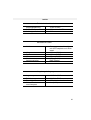
Tabelle 2-1:
VDO DGPS-Empfänger Datenport-Pinbelegung,
Schnittstelle RS-232C
DGPS-Empfänger Pin #:
Signal:
Beschreibung:
2
Senden
(Transmit)
RTCM SC-104
Statusangabe
3
Empfangen
(Receive)
Konfigurationseingabe
5
Signalmasse
Masse
17
INSTALLATION
Wenn Sie einen höheren RS-422- Schnittstellenpegel brauchen als
der Standard-RS-232C- Pegel, nehmen Sie bitte Kontakt mit VDO
Kienzle auf, da das Gerät geöffnet werden muss. Unter normalen
Bedingungen verfällt die Garantie, wenn der Empfänger geöffnet
wird, wenn VDO Kienzle nicht ausschliesslich für diesen Zweck die
Erlaubnis erteilt und Anweisungen gegeben hat.
2.6 Anschluss der Spannungsversorgung
Der Stromversorgungsstecker an der Rückseite des DGPS-Empfängers
ist ein runder zweipoliger, verriegelnder Stecker. Die entsprechende
Buchse am Stromversorgungskabel wird hier angeschlossen. Zur
Verriegelung der Steckverbindung den Verriegelungsring nach dem
Stecken im Uhrzeigersinn drehen.
2.6.1 Spannungsquellen
Der VDO DGPS-Empfänger arbeitet mit 12 VDC und 24 VDC. Er ist
verpolgeschützt, der Betriebsspannungsbereich ist 10 bis 35 VDC.
Die Tabelle 2.2 enthält die Leistungsaufnahme für den VDO DGPSEmpfänger mit Antenne.
Tabelle 2-2:
Leistungsaufnahme des VDO DGPS-Empfängers
Eingangsspannung
Stromaufnahme
Leistungsaufnahme
10 bis 35 VDC
250 mA bei 12 VDC
3.0 W bei 12 VDC
2.6.2 Einbau von Sicherungen
Eine seriell im Stromversorgungskabel angeordnete 1,5-A-Sicherung
schützt den VDO DGPS-Empfänger vor Spannungsspitzen. Das Stromversorgungskabel enthält diese Sicherung bei Lieferung in einem
Sicherungsfach. Nach Einbau des Empfängers sollte dieses Sicherungsfach zugänglich bleiben.
Achtung -
18
Auf keinen Fall darf der VDO DGPS-Empfänger mit überbrückter 1,5-A-Sicherung betrieben werden. Durch eine
derartige Änderung verfällt die Garantie.
INSTALLATION
2.6.3 Anschluss der Spannungs- und Massekabel
Die rote Leitung des Stromversorgungskabels an den positiven Pol der
Stromversorgung anschliessen, die schwarze Leitung an den negativen
Pol.
VDO Kienzle empfiehlt eine gemeinsame Masse für alle VDO KienzleKomponenten für optimale Empfängerleistung und zur Senkung des
HF-Rauschens zu erreichen. Die Rückseite des DGPS-Empfängers
trägt einen Erdungspunkt, an den Sie eine Litze anschliessen können.
Diese Erdungslitze kann an eine Erdungsplatte angeschlossen werden.
Dies kann auch das Chassis eines Fahrzeuges, oder bei einem nichtmetallischen Bootsrumpf eine Kupferplatte sein. Bei Einsatz der
Antenne ist es wichtig, die Erdung mit einem getrennten Kabel an die
gleiche Masse wie der VDO DGPS-Empfänger anzuschliessen.
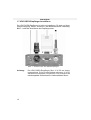
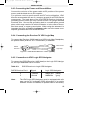
2.6.4 Anschluss des Empfänges an VDO Logic Map
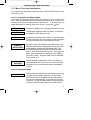
Für den Anschluss des DGPS-Empfängers (Übertragungsrate 9600
Baud) an einen Kartenplotter VDO Logic Map, ist das optional erhältliche Verbindungskabel (Bestell-Nr. X11.719/000/009) zu verwenden.
GPS-Sensor
DGPSEmpfänger
Logic Map
Bild 2-1: Verbindungskabel DGPS-Empfänger / Logic Map
2.6.5 Anschluss an VDO Logic GPS Navigator
Für den Anschluss des DGPS-Empfängers (Übertragungsrate 4800
Baud) an den Logic GPS Navigator muss das 9-polige Datenkabel aufgetrennt werden. Stellen Sie die Verbindung wie folgt her:
Tabelle 2-3:
DGPS-Empfänger an Logic GPS Navigator
DGPS-Empfänger Pin #:
2
5
Signal:
Logic GPS Navigator:
Senden
Masse
NMEA A in
NMEA B in
(weiss)
(grau)
19
EINSTELLUNG UND BETRIEB
Anmerkung- Der VDO Logic GPS Navigator muss mit Software der
Version 2.5 ausgerüstet sein, um DGPS Positionen anzuzeigen. Bei früheren Software Versionen ist ein Update
auf die Version 2.5 notwendig.
3. EINSTELLUNG UND BETRIEB
Die Tastatur der Frontplatte und das Display, sowie NMEA 0183Meldungen dienen zur Konfiguration und zum Betrieb des VDO DGPSEmpfängers.
Dieses Kapitel macht Sie mit den Steuerelementen der Frontplatte und
dem Display vertraut, der manuellen Abstimmung und der automatischen Sendersuche, sowie mit dem dazugehörenden Software-Menü.
NMEA 0183-Befehle und Anfragen, die von einem Terminal-Programm
auf einem PC-Rechner gesendet werden, behandelt Kapitel 4 vollständig.
3.1 Schnittstellen-Protokolle
Der VDO DGPS-Empfänger unterstützt die folgenden Daten-, Befehlsund Statusprotokolle:
RTCM SC-104 Differentialkorrekturmeldung
NMEA 0183 Standard-Befehls- und Statusmeldung
NMEA 0183 Proprietäre Befehls- und Statusmeldung
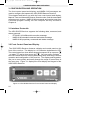
3.2 Bedientasten und Display
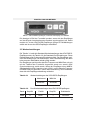
An der Frontseite des VDO DGPS-Empfängers befinden sich ein
Display und die Tastatur. Das Display ist eine zehnstellige alphanumerische LED-Anzeige. Die Tastatur besteht aus drei Tasten: Pfeil nach
oben
, Enter
, und Pfeil nach unten
. Im Menüsystem des
VDO DGPS-Empfängers kann man sich mit diesen drei Tasten für
Betrieb und Konfiguration des Empfängers bewegen. Display und
Tastatur erlauben ein schnelles Durchlaufen der einzelnen Punkte im
Menü. Bild 3-1 zeigt die Front mit Display und Tastatur des VDO DGPSEmpfängers.
20
EINSTELLUNG UND BETRIEB
Bild 3-1: VDO DGPS-Empfänger, Frontseite mit Display und Tastatur
Die Anzeige LOCK der Fronttafel leuchtet, wenn sich der Empfänger
auf das Signal eines bestimmten Senders synchronisiert hat. Damit
meldet sie, ob der VDO DGPS-Empfänger gültige RTCM-Meldungen
erhält und sie an den GPS-Empfänger weiterleitet.
3.3 Werkseinstellungen
Die Tabelle 3-1 stellt die Standard-Werkseinstellungen des VDO DGPSEmpfängers dar, die Tabelle 3-2 die Standard-Port-Einstellungen. Diese
Einstellungen sind für das erste Einschalten gültig. Der Empfänger speichert alle Änderungen von Betriebsart- oder Porteinstellung, die dann
beim erneuten Einschalten wieder gültig werden.
Der Empfänger speichert die aktuelle Frequenz und MSK-Rate, wie sie
mit der Tastatur der Fronttafel eingestellt wurde nur, wenn LOCK
(Synchronisierung) erzielt wurde. Wenn der Empfänger einen NMEAAbstimmbefehl erhält, braucht er kein LOCK, um die aktuelle Frequenz
und MSK-Rate zu speichern. Durch diese Vorkehrung wird vermieden,
dass sich die Empfängereinstellung verändert.
Tabelle 3-1
Werkseinstellungen des VDO DGPS-Empfängers
Tabelle 3-2
Abstimmart
MSK-Art
Automatic
Automatic
Port-Werkseinstellungen des VDO GPS-Empfängers
Baud
Stop Bit
Parität
Stop Bit
Schnittstelle
4800
8
keine
1
RS-232C
21
EINSTELLUNG UND BETRIEB
3.4 Betrieb des VDO DGPS-Empfängers
Mit den Pfeiltasten kann in Links-Rechts-Richtung und zurück durch die
Menüpunkte einer Ebene geschaltet werden. Mit ihnen kann auch für
den gewählten Menüpunkt eine Liste von Optionen durchlaufen werden.
Bild 3-2 zeigt die Anordnung der Menüstruktur.
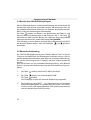
Die Taste
schaltet von Ebene 1 der Menüstruktur auf Ebene 2, und
dient zur Wahl von Menüpunkten in den Ebenen 2 bis 4. Die Taste
dient auch zur Wahl in einem Bereich von Optionen. Wenn die gewählte
Option bereits aktuell ist, meldet das Display NO CHANGE.
Zum Schalten von einer tieferen auf eine höhere Ebene den Punkt EXIT
der aktuellen Ebene wählen, oder die Pfeiltasten
und
gleichzeitig drücken.
3.5 Manuelle Abstimmung
Der VDO DGPS-Empfänger hat eine Funktion Manual Tune, in der Sie
Frequenz und MSK-Rate des Empfängers einstellen können. Die folgenden Abschnitte beschreiben zwei Arten der manuellen Abstimmung,
die mit der Steuerung auf der Fronttafel und dem Display eingestellt
werden.
Zum Umschalten von der Standard-Werkseinstellung „Auto Beacon
Search“ auf manuelle Abstimmung nach dem Einschalten wie folgt vorgehen:
1.
Die Taste
2.
Die Taste
drücken, es erscheint MAN.TUNE.
Die Taste
drücken.
Der Empfänger ist jetzt auf manuelle Abstimmung eingestellt.
3.
Der Empfänger zeigt WAIT. . . an, während er sich auf manuelle
Abstimmung konfiguriert. Er schaltet dann auf Ebene 1 der Menüstruktur zurück und meldet MANUAL FRQ anstelle des Namens
oder der Kennung des DGPS-Senders.
22
drücken, damit AUTO SRCH erscheint.
EINSTELLUNG UND BETRIEB
3.5.1 Vollmanuelle Abstimmung
Bei vollständig manueller Abstimmung müssen Sie am VDO DGPSEmpfänger sowohl die Frequenz wie die MSK-Rate wählen, auf die er
sich einstellen soll. Sollte der Empfänger noch auf automatische Sendersuche eingestellt sein, lesen Sie bitte die Anleitung unter 3.5 zur Umstellung auf manuelle Abstimmung. Nach Einstellung auf manuelle Abstimmung wie folgt vorgehen:
1.
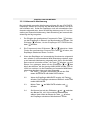
Zur Eingabe der gewünschten Frequenz die Taste
drücken,
um den Empfänger in Ebene 2 der Menüstruktur zu bringen. Die
Pfeiltaste
drücken, bis der Empfänger SET FREQ meldet,
dann
drücken.
2.
Die Frequenz mit den Pfeiltasten
und
einstellen. Nach
Finden der gewünschten Frequenz die Taste
drücken; der
Empfänger schaltet auf Ebene 1 zurück.
3.
Wenn der Empfänger auf automatische Sendersuche eingestellt
war, müsste er auf automatische MSK-Einstellung schalten, wenn
er auf manuelle Abstimmung eingestellt wird. Wenn Sie die MSKRate manuell einstellen wollen, die Taste
drücken, um auf
Ebene 2 zu gelangen, dann mit den Pfeiltasten
or
das
Menü durchlaufen, bis die Anzeige MSK MODE meldet. Um ein
LOCK zu erreichen, ist die Einstellung auf manuelle MSK-Rateneinstellung allerdings jetzt noch nicht notwendig.
3.1
Die Taste
drücken; jetzt können Sie mit den Pfeil
tasten AUTO RATE oder MAN RATE wählen.
3.2
Wenn der Empfänger MAN RATE anzeigt, die Taste
drücken. Der Empfänger schaltet auf Ebene 2 zurück und
meldet MSK MODE.
3.3
Mit der Taste
drücken.
3.4
Sie können jetzt mit den Pfeiltasten
und
zwischen
den Bitraten 50, 100, 200 und Nicht-Standardraten
wählen. Nach Wahl der Bitrate die Taste
drücken;
der Empfänger schaltet auf Menüebene 2 zurück.
auf MSK RATE schalten und
23
EINSTELLUNG UND BETRIEB
3.5
Zur Überwachung der Betriebsparameter auf Ebene 1
zurückschalten: mit den Pfeiltasten EXIT wählen, dann
drücken. Sie können auch die Pfeiltasten
und
gleichzeitig drücken, um in eine höhere Menuebene zu
schalten.
Bemerkung - Nach manueller Abstimmung mit diesem Verfahren schaltet der Empfänger nicht von dieser Frequenz zur Suche
auf andere Sender um.
3.6 Automatische Sendersuche (ABS)
Der VDO DGPS-Empfänger kann selbstständig für das jeweilige Gebiet
den stärksten Sender wählen und sich automatisch auf ihn abstimmen.
Für die Navigation empfehlen wir die Verwendung der automatischen
Sendersuche.
Zum Umschalten von der manuellen Abstimmung auf automatische
Sendersuche nach Einschalten des Empfängers wie folgt vorgehen:
1.
Die Taste
BCN.
drücken, der VDO DGPS-Empfänger meldet ALT
2.
Die Taste
drücken, um AUTO SRCH anzuzeigen, dann Taste
drücken. Damit ist der Empfänger auf automatische SenderSuche eingestellt.
3.
Der Empfänger zeigt WAIT. . . an, während er sich für automatischen Betrieb konfiguriert. Er schaltet dann auf Ebene 1 der
Menüstruktur zurück und meldet Frq XXX.XX, wobei XXX.XX die
aktuell abgestimmte Frequenz ist. Wenn eine gültige Auto-SearchTabelle gespeichert ist, führt der Empfänger keine globale Suche
durch, andernfalls löst er die Such-Sequenz aus.
3.7 Globale Suche
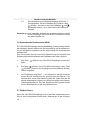
Wenn der VDO DGPS-Empfänger zum ersten Mal eingeschaltet wird,
führt er sofort eine globale Suche durch, während der er alle verfügba24
EINSTELLUNG UND BETRIEB
ren Frequenzen untersucht, die Signalstärke beurteilt und eine Tabelle
„Global Beacon“ erstellt. Nach Abschluss dieser Suche untersucht der
Empfänger alle Frequenzen, bei denen die Signalstärke nicht Null war,
mit den MSK-Raten 100 und 200 bps, um gültige RTCM-Daten zu identifizieren. Nachdem der VDO DGPS-Empfänger bestimmt hat, welcher
Leitstrahl das beste Gesamtsignal hat, stellt er sich auf diese Frequenz
und MSK-Rate ein, bevor er mit der Hintergrund-Suche beginnt.
Beim nächsten Einschalten befindet sich die Tabelle „Global Beacon“ im
Speicher. Der VDO DGPS-Empfänger führt dann keine globale Suche
mehr durch, bis die Tabelle ungültig wird; wenn dies der Fall ist, führt der
Empfänger eine neue globale Suche durch und erstellt die Tabelle neu.
In Gebieten mit voller Ausbreitung tritt dies nicht ein, denn das Ziel des
ABS ist es, eine kontinuierliche Quelle von Differentialkorrekturen zu geben. Wenn der Empfänger, ohne eingeschaltet zu sein, an einen anderen Ort mit einer anderen Leitstrahl-Ausbreitung gebracht wird, oder
nicht im Bereich der drei Leitstrahlen der Tabelle liegt, wird er eine neue
Suche durchführen.
Eine globale Suche kann, falls gewünscht, erzwungen werden. Hierfür in
Menuebene 4 ERASE AUTO wählen. Damit diese Funktion ausgeführt
wird, den Empfänger vor der Wahl von ERASE AUTO auf manuelle
Abstimmung stellen.
3.7.1 ABS-Betrieb
Während der Hintergrundsuche werden Alternativ-Sender identifiziert
und in der Tabelle Automatic Beacon gespeichert. Der VDO DGPSEmpfänger bleibt auf seiner Primärfrequenz, bis er feststellt, dass er
sich auf eine Alternativfrequenz mit höherer Signalstärke umstellen sollte.
In Betriebsart ABS bleibt der VDO DGPS-Empfänger mit dem PrimärSender synchronisiert, und verfolgt periodisch andere Frequenzen, um
andere Stationen zu finden, die jetzt in Reichweite sind. Die Schaltperiode ist von der Qualität des Primär-Sendesignals abhängig. Durch
die zeitweise Unterbrechung des LOCK ergibt sich etwa eine 10Sekunden-Korrekturdifferenz gegenüber der letzten empfangenen
RTCM-Meldung. Differenzen unter 10 Sekunden ergeben Positionsfehler von weniger als 1 m.
25
EINSTELLUNG UND BETRIEB
3.7.2 Menüstruktur
LAMP TEST
SW VERSION
RECEIVER S/N
RELOCK
Frequency
Identification
AUTO SRCH
BRIGHTNESS
DN
Performance
Sig/Noise Ratio
MAN. TUNE
I/O SETUP
UP
SETUP
ERASE AUTO
Signal Strength
Level 2 Auto
EXIT
SUBSCRIBE
Level 1 Auto
Level 3 Auto
EXIT
AUTO MODE
Must be in Manual Mode to Erase Table
INPUT
BAUD RATE
NMEA-0183
NONE
300 BAUD
1200 BAUD
2400 BAUD
4800 BAUD
9600 BAUD
19200 BAUD
Autosearch
Level 4 Auto
EXIT
LAMP TEST
Manual Tune
SW VERSION
RECEIVER S/N
RELOCK
Frequency
Level 1 Manual
ALT BEACON
SEL BEACON
SET FREQ
Level 2 Manual
Level 3 Manual
BRIGHTNESS
DN
Level 4 Manual
Identification
Performance
MSK MODE
MSK RATE
AUTO RATE
MAN. RATE
AUTO MODE
NON STD
50 B/S
100 B/S
200 B/S
I/O SETUP
ERASE AUTO
UP
Sig/Noise Ratio
SETUP
SUBSCRIBE
Signal Strength
AUTO SRCH
EXIT
ERASE???
Hit Arrow Key to Keep Table
Hit Enter Key to EraseTable
INPUT
BAUD RATE
NMEA-0183
NONE
300 BAUD
1200 BAUD
2400 BAUD
4800 BAUD
9600 BAUD
19200 BAUD
EXIT
Bild 3-2 Menüstruktur des VDO DGPS-Empfängers
26
EXIT
EINSTELLUNG UND BETRIEB
3.7.3 Beschreibung der Menüstruktur
Dieser Abschnitt beschreibt alle einzelnen Punkte der Menüstruktur.
Ebene (Level) 1: Automatischer und manueller Betrieb
Automatische und manuelle Betriebsart teilen sich die Ebene 1 der
Menüstruktur. Diese Ebene ist die Betriebsbasis des Empfängers, mit
aktuell eingestellter Frequenz und Leitstrahl. Um Ebene 2 aus automatischer oder manueller Betriebsart zu erreichen, die Taste
drücken.
Frequency
Frequency zeigt die Betriebsfrequenz in kHz an.
Identification
Identification zeigt den Namen oder die Kennung
des Senders an.
Performance
Performance meldet die Anzahl gültig dekodierter
RTCM-Meldungen als Prozentsatz der richtig empfangenen Meldungen über einen gegebenen Zeitabschnitt.
Signal to
Noise Ratio
Signal / Rauschen zeigt das Verhältnis des gewünschten Signals zum unerwünschten Rauschen
bei der gegebenen Frequenz, ausgedrückt in
Dezibel (dB). Der VDO DGPS-Empfänger erfordert
ein über 7 dB liegendes SNR um LOCK zu erzielen,
Dieses Verhältnis entspricht einer Bit-Fehlerrate
(BER) unter 1:1000. Höhere SNR-Werte sind besser.
Signal
Strength
Die in dB ausgedrückte Signalstärke ist eine numerische Darstellung von nahem Rauschen, fernem
Rauschen und Feldstärke des Signals bei der gewählten Frequenz.
Ebene (Level) 2: Automatischer Betrieb
Auto Srch
Die Betriebsart Automatic Beacon Search wählen,
um den Empfänger auf automatischen Betrieb einzustellen. In dieser Betriebsart werden Frequenz
und MSK-Rate automatisch vom Empfänger für beste Leistung gewählt. In dieser Betriebsart führt der
27
EINSTELLUNG UND BETRIEB
VDO DGPS-Empfänger eine globale Suche durch, indem er alle möglichen Frequenz- und MSK-Kombinationen untersucht, um eine Liste der
drei besten Sender zu erstellen. Der VDO DGPS-Empfänger prüft diese
drei Stationen periodisch, um sicherzustellen, dass er mit dem besten
Sender arbeitet. Einzelheiten zum ABS-Betrieb sind in Kapitel 3.6 zu finden.
Man Tune
Betriebsart manuelle Abstimmung wählen, um mit
einer bestimmten Frequenz zu arbeiten. In dieser
Betriebsart müssen Sie die Frequenz angeben, auf
die sich der Empfänger abstimmen soll. Sie können
dem Empfänger die automatische Wahl der MSKRate für die gewählte Frequenz überlassen, oder
eine MSK-Rate von Hand eingeben. Einzelheiten
zur manuellen Abstimmung sind in Kapitel 3.5 zu
finden.
Setup
Setup wählen, um zu Ebene 3 der Menüstruktur zu
gelangen.
Exit
Mit Exit kehrt der Empfänger auf Ebene 1 der
Menüstruktur zurück.
Ebene (Level 2): Manueller Betrieb
Alt Beacon
Mit der Funktion Alternate Beacon kann zwischen
dem aktuellen Sender und der Station, auf die vorher abgestimmt wurde, umgeschaltet werden.
Sel Beacon
Mit Select Beacon können Sie einen Sender anhand seines Namens aus einer Liste von 20 vom
Benutzer definierten, im Empfänger gespeicherten
Leitstrahlen wählen. Wenn Sie den VDO DGPSEmpfänger so einstellen, wählt der Empfänger die
richtige Frequenz und MSK-Rate für den gewählten
Sender. Die Liste der 20 Sender kann mit einem
Standard-PC-Terminalprogramm auf ein spezielles
geographisches Gebiet oder eine Anwendung angepasst werden. Kapitel 4 enthält weitere Informationen zu diesem Verfahren.
28
EINSTELLUNG UND BETRIEB
Set Freq
Mit Set Frequency können Sie die Frequenz wählen
auf die der Empfänger abgestimmt werden soll.
Frequenzbereich: 283,5 bis 325,0 kHz
MSK Mode
MSK Mode setzt den Empfänger in Betriebsart
Automatisch oder Manuell. In Betriebsart MSK automatisch stellt der Empfänger automatisch die
MSK-Rate für eine spezielle Sendestation ein.
Bei manuellem MSK muss die richtige MSK-Rate
für die aktuelle Sendestation von Hand eingegeben werden.
- Automatische MSK -Rate / Manuelle MSK-Rate
MSK Rate
Mit MSK Rate kann die MSK-Rate, mit der der gewünschte Leitstrahl arbeitet, von Hand eingestellt
werden. AUTO MODE wird angezeigt, wenn Sie
versuchen, die MSK-Rate einzustellen, während
sich der Empfänger in Betriebsart Automatisches
MSK befindet.
- Nichtstandard / 50 / 100 / 200
Setup
Auto Srch
Exit
Mit Setup gelangen Sie auf Ebene 3 der Menüstruktur.
Automatische Suche versetzt den Empfänger in die
Betriebsart automatische Sendersuche, und schaltet auf Menüebene 1 zurück.
Mit Exit kehrt der Empfänger auf Ebene 1 zurück.
Ebene (Level) 3: Automatischer und manueller Betrieb
Brightness
Mit Brightness können Sie die Helligkeit der LEDAnzeige einstellen. Mit der Taste
steigern Sie
die Helligkeit, mit der Taste
wird sie reduziert.
Bemerkung- Bei Einsatz einer Batterie kann Strom durch Senken der
Display-Helligkeit gespart werden, dadurch ergibt sich
eine längere Batterie-Lebensdauer.
29
EINSTELLUNG UND BETRIEB
I/O Setup
I/O Setup wählen, um die Eingangs- und Ausgangsparameter zu konfigurieren. Der Empfänger
schaltet auf Ebene 4 der Menüstruktur weiter.
Erase Auto
Mit dieser Funktion wird der Inhalt der drei bei der
globalen Suche des Empfängers gefundenen Sender in der Tabelle Automatic Beacon gelöscht. Bei
Wahl in Betriebsart ABS meldet der Empfänger
AUTO MODE, um zu warnen, dass sich der Empfänger immer noch in Betriebsart ABS befindet. Zur
Verwendung dieser Funktion müssen Sie in manuelle Abstimmung umschalten. Nach Wahl in Betriebsart manuelle Abstimmung erfolgt nach dem
Umschalten in Betriebsart ABS eine globale Suche.
Subscribe
Mit diesem Menupunkt können Sie einen Autorisierungscode eingeben, der den Betrieb dieses
Empfängers mit der Verschlüsselungstechnologie
erlaubt.
Exit
Schaltet zurück auf Ebene 2.
Ebene (Level) 4: Automatischer und manueller Betrieb
Input
Baud Rate
Exit
30
Erlaubt dem Leitstrahl-Empfänger den Empfang
oder die Ablehnung extern erzeugter NMEABefehle oder -Status-Anforderungen.
- NMEA 0183 / Keine
Die Baudrate stellt die Daten-Ausgaberate des
Empfängers ein. Die Baudrate des Empfängers
muss der des GPS-Empfängers entsprechen, damit
Differentialbetrieb stattfinden kann.
- 300 / 1200 / 2400 / 4800 / 9600 / 19200
Mit Exit kehrt der Empfänger auf Ebene 3 zurück.
NMEA 0183 BEFEHLE UND MELDUNGEN
4. NMEA 0183 BEFEHLE UND MELDUNGEN
Die Norm RTCM SC-104 sieht keine Bestimmungen für das Senden
oder Empfangen von Empfänger-Steuer- oder Status-Informationen vor.
Um diese Funktionen auszuführen, kann der Empfänger einen Teil der
NMEA 0183-Meldungen aus einer Reihe proprietärer (herstellerspezifischer) NMEA 0183-Meldungen verwenden.
4.1 Beschreibung der NMEA 0183-Norm
NMEA 0183 ist eine von der Marineindustrie entwickelte Kommunikationsnorm. Sie wird in vielen elektronischen Geräten für die Schiffahrt
verwendet, darunter Radarsysteme auf Schiffen, Loran-C-Navigationsgeräte, und in der jüngsten Zeit GPS. Die National Marine Electronic
Association hat eine Reihe von Meldungen speziell für GPS entwickelt.
Die National Marine Electronic Association veröffentlicht Aktualisierungen der Norm NMEA 0183. Die neueste Version ist erhältlich bei:
National Marine Electronics Association
NMEA Executive Director
P. O. Box 50040, Mobile, Alabama 36605, USA
Tel.: ++1 (205) 473-1793
Fax: ++1 (205) 473-1669
4.2 Aufbau der NMEA-Datensätze
Die Meldungen gemäss NMEA 0183 haben eine gemeinsame Struktur.
Sie bestehen aus einem Meldungskopf, Datenfeldern, einem Wagenrücklauf und einer neuen Zeile.
Beispiel:
$GPYYY,xxx,xxx,xxx…<CR><LF>
Die Tabelle 4-1 erklärt die Komponenten dieser allgemeinen Meldung.
Tabelle 4-1 Aufbau der NMEA-Datensätze
Element:
Beschreibung:
$GP
Meldungskennung, hier vom GPS
YYY
Typ der GPS-Meldung
xxx
Meldungsfelder mit variabler Länge
<CR>
Wagenrücklauf (Carriage Return)
<LF>
Neue Zeile (Line Feed)
31
NMEA 0183 BEFEHLE UND MELDUNGEN
Wenn keine Information für ein Feld vorhanden ist, wird es mit Nullen
gefüllt.
Zur Abgabe von NMEA-Befehlen ist ein Programm mit TerminalFähigkeit notwendig. Nach Anpassung der Kommunikationsparameter
zwischen Terminalprogramm und VDO DGPS-Empfänger können Sie
diese Befehle in das Terminal-Fenster eingeben. Sie müssen dafür sorgen, dass die ENTER-Taste <CR><LF> sendet, damit der Befehl abgesetzt werden kann. Wenn ein NMEA-Befehl nicht funktioniert, ist das
Terminal wahrscheinlich nicht richtig eingestellt. Fragen Sie Ihren
Händler oder den Kundendienst von VDO Kienzle.
4.3 Vom Empfänger unterstützte Meldungen
Die Tabelle 4-2 stellt die Standard- und die herstellerspezifischen
NMEA-Befehle und Anfragen dar, die der VDO DGPS-Empfänger unterstützt.
Table 4-2 Vom DGPS-Empfänger unterstützte Meldungen
Message:
Description:
$GPMSK Full Manual Tune
Stellt den Empfänger auf
vollmanuelle Abstimmung
$GPMSK Partial Manual Tune
Stellt den Empfänger auf
teilmanuelle Abstimmung
$GPMSK ABS Mode
Stellt den Empfänger auf
automatische Sendersuche
$GPCRQ Operation Query
Fragt den Empfänger nach
Betriebsparametern
$GPCRQ Performance Query
Fragt den Empfänger nach
Leistungsparametern
$PCSI,4,L
Zeigt Liste der internen
Sendertabelle
$PCSI,4,M
Erlaubt Änderungen der
internen Sendertabelle
$PCSI,4,S
Zeigt Liste für automatische Suche
$PCSI,4,ERASE
Löscht Liste für autom. Suche
32
NMEA 0183 BEFEHLE UND MELDUNGEN
4.4 Standard NMEA Befehle und Abfragen
Die folgenden Abschnitte beschreiben die NMEA-Befehle und -Anfragen
für den VDO DGPS-Empfänger und ihre Antworten im Detail.
4.4.1 Kommando zur vollmanuellen Abstimmung
Mit diesem Befehl können Sie manuell sowohl die Frequenz wie die
MSK-Rate des VDO DGPS-Empfängers einstellen. Er hat die folgende
Form:
$GPMSK,fff.f,M,ddd,M,n<CR><LF>
Der VDO DGPS-Empfänger gibt auf diese Meldung keine Antwort, stellt
sich aber sofort mit der vorgeschriebenen MSK-Rate auf die gewünschte Frequenz ein. In dieser Meldung ist fff.f die Frequenz in kHz, M bedeutet manuelle Frequenzwahl. Das Feld ddd enthält die gewünschte
MSK-Bitrate in Bit pro Sekunde (50, 100, 200 bps oder Nichtstandard),
das zweite M bedeutet manuelle Wahl der MSK-Rate.
Der Parameter n ist die Periode der vom Empfänger abgegebenen Leistungszustandsmeldung (0 bis 100 Sekunden).
Die mit diesem Befehl ausgelöste, vom VDO DGPS-Empfänger ausgegebene Statusmeldung ist die Antwort CRMSS. Sie wird in Abschnitt
4.4.5 beschrieben.
4.4.2 Kommando zur teilmanuellen Abstimmung
Mit diesem Befehl können Sie manuell die Frequenz des VDO DGPSEmpfängers einstellen. Die richtige MSK-Rate wählt der Empfänger
selbst aus. Der Befehl hat die folgende Form:
$GPMSK,fff.f,M,,A,n<CR><LF>
Der VDO DGPS-Empfänger gibt auf diese Meldung keine Antwort, stellt
sich aber sofort auf die gewünschte Frequenz und die richtige MKSRate ein. In dieser Meldung ist fff.f die Frequenz in kHz, M bedeutet manuelle Frequenzwahl. Das Feld A bedeutet automatische Wahl der
MSK-Rate. Der Parameter n ist die Periode der vom Empfänger abgegebenen Leistungszustandsmeldung (0 bis 100 Sekunden).
Die Statusmeldung ist wieder die Antwort CRMSS. Sie wird in Abschnitt
4.4.5 beschrieben.
33
NMEA 0183 BEFEKHLE UND MELDUNGEN
4.4.3 Kommando zur automatischen Sendersuche (ABS)
Mit diesem Befehl wird die Betriebsart ABS eingestellt, in welcher der
Empfänger autonom arbeitet und den am besten geeigneten Sender
auswählt.
$GPMSK,,A,,A,n<CR><LF>
Der VDO DGPS-Empfänger gibt auf diese Meldung keine Antwort, stellt
sich aber sofort auf den optimalen Leitstrahlsender ein, wenn eine gültige Tabelle für automatische Suche im Empfänger gespeichert ist, andernfalls führt der VDO DGPS-Empfänger eine globale Suche durch. In
dieser Meldung bezeichnet das erste A automatische Frequenzwahl,
das zweite A automatische Wahl der MSK-Rate. Der Parameter n ist die
Periode der vom Empfänger abgegebenen Leistungszustandsmeldung
(0 bis 100 Sekunden).
Die Statusmeldung des VDO DGPS-Empfängers ist CRMSS. Sie wird in
Abschnitt 4.4.5 beschrieben.
4.4.4 Abfrage der Betriebsparameter
Diese NMEA-Abfrage fragt den VDO DGPS-Empfänger nach seinem
Betriebszustand. Die Frage hat das folgende Format:
$GPCRQ,MSK<CR><LF>
Antwort:
$CRMSK,fff.f,X,ddd,Y,n*CS
Bei Frage nach seinem Betriebszustand antwortet der VDO DGPSEmpfänger mit dieser NMEA-Antwort, wobei fff.f die aktuelle Frequenz
in kHz ist. Das Feld X ist die Art der Abstimmung (A = automatisch, M =
manuell), und ddd ist die MSK-Bitrate. Das Feld Y enthält die MSKBetriebsart (A = automatisch, M = manuell), n ist die Ausgabeperiode
der CRMSS-Meldung Leistungsstatus. Das Feld *CS ist die Prüfsumme,
mit der die NMEA-Antwort endet.
4.4.5 Abfrage der Empfangsparameter
Diese NMEA-Abfrage fragt den VDO DGPS-Empfänger nach seinem
Leistungszustand. Die Frage hat das folgende Format:
$GPCRQ,MSS<CR><LF>
34
NMEA 0183 BEFEHLE UND MELDUNGEN
Antwort:
$CRMSS,xx,yy,fff.f,ddd*CS
Bei Frage nach seinem Leistungszustand antwortet der VDO DGPSEmpfänger mit dieser NMEA-Antwort, wobei das Feld xx die
Signalstärke in dB und das Feld yy das Signal/Rauschverhältnis in dB
enthält. Das Feld fff.f ist die aktuelle Frequenz in kHz und ddd die entsprechende MSK-Bitrate in Bit pro Sekunde. Das Feld *CS ist die
Prüfsumme, mit der die NMEA-Antwort endet.
4.4.6 Abfrage der manuellen Sendertabelle
Diese NMEA-Meldung fordert den VDO DGPS-Empfänger auf, seine interne Leitstrahl-Liste auszugeben. Es ist ein herstellerspezifischer
Befehl, der mit den Zeichen $PCSI beginnt („Proprietäre CSI“ NMEAMeldung). Das Befehlsformat ist:
$PCSI ,4,L<CR><LF>
Antwort:
Manuelle Sendertabelle:
Senderkennung
Freq.
Bjuroeklub
Skagsudde
Maentyluot
Oerskaer
Porkkala
Almagrunde
Hoburg
Hammerrodde
Wustrow
Kullen Svi
Skagen
Faerder
Lista
Blaavand
Helgoland
Hoekvholld
Ameland
Utsira Var
Utvaer Sko
Halten
303500
306500
298000
291500
285000
287000
302000
289000
314500
293500
298000
288000
301000
296500
313000
287500
299500
307000
300000
313500
Rate
Code
Lvl
100
100
100
100
100
100
100
100
200
100
100
100
100
100
200
100
100
100
100
100
RTCM 6/8
RTCM 6/8
RTCM 6/8
RTCM 6/8
RTCM 6/8
RTCM 6/8
RTCM 6/8
RTCM 6/8
RTCM 6/8
RTCM 6/8
RTCM 6/8
RTCM 6/8
RTCM 6/8
RTCM 6/8
RTCM 6/8
RTCM 6/8
RTCM 6/8
RTCM 6/8
RTCM 6/8
RTCM 6/8
1
1
1
1
1
1
1
1
1
1
1
1
1
1
1
1
1
1
1
1
35
NMEA 0183 BEFEHLE UND MELDUNGEN
Die Antwort auf diese Anfrage ist eine Tabelle mit sechs Spalten. Die erste Spalte ist die fortlaufende Nummer des Eintrages, von 1 bis 20. Die
zweite Spalte enthält den Namen des Leitstrahls, gefolgt von Spalten
mit der Frequenz, der MSK-Rate und dem Byteformat. Der VDO DGPSEmpfänger verwendet die letzte Spalte intern, sie hat im Zusammenhang mit Konfiguration und Betrieb des Empfängers keine Bedeutung.
Der Datentyp aller Sender in dieser Tabelle ist RTCM, mit Byteformat
6/8.
4.4.7 Änderung der Sendertabelle
Mit diesem herstellerspezifischen NMEA-Befehl können Sie die Einträge
in der Sendertabelle des VDO DGPS-Empfängers ändern. Der VDO
DGPS-Empfänger muss für die Ausführung dieses Befehls auf voll manuelle Abstimmung eingestellt sein. Das Befehlsformat ist:
$PCSI ,4,M<CR><LF>
Antwort:
[(L)ist, (1-20) Edit entry, (Q)uit] ?
Nach Empfang dieses Befehls antwortet der VDO DGPS-Empfänger mit
einer Frage und stoppt die Ausgabe der RTCM-Daten. Als Antwort können Sie die Tabelleneinträge auflisten (L), einen Eintrag ändern (1-20)
oder den Vorgang beenden (Q).
Zur Änderung der Tabelle sollten Sie zuerst die Tabelle auflisten und
feststellen, welchen Eintrag Sie ändern wollen, indem Sie L eingeben
und die Taste ENTER drücken. Zum Ändern eines Eintrages in der
Tabelle wie folgt vorgehen:
1.
Nach Anzeige der Tabelle können Sie die Nummer des zu ändernden Eintrages eingeben, dann ENTER drücken.
2.
Der Empfänger fragt, ob Sie die Eingabe ändern wollen. Mit <Y>
für „Yes“ antworten und ENTER drücken.
3.
Sie werden durch BEX NAME (auf 10 Zeichen begrenzt) aufgefordert, den Namen des Leitstrahls einzugeben. Den neuen Namen
des Leitstrahls in die Tabelle eintragen und ENTER drücken.
4.
Jetzt wird FREQ angezeigt und fordert eine neue Frequenz für
diesen Eintrag an. Die Frequenz muss in Hz, nicht in kHz, eingegeben werden. Wenn die Frequenz der Station beispielsweise
311,5 kHz ist, geben Sie 311500 ein. Dann ENTER drücken. Die
Dimensionsangabe Hz nicht eingeben.
5.
BPS ist die letzte Aufforderung, Informationen einzugeben. Tragen
Sie die MSK-Rate in Bit pro Sekunde ein. Dann ENTER drücken.
36
NMEA 0183 BEFEHLE UND MELDUNGEN
Um sicherzustellen, dass die Eingabe richtig ist, die Tabelle erneut anzeigen, dann mit <Q>, gefolgt von ENTER, den Änderungsmodus verlassen. Dieser Schritt ist notwendig, denn jetzt werden die Daten gespeichert.
Anmerkung - Bei der Eingabe von Daten beim Aufruf zur Änderung der
Sendertabelle muss jede Eingabe mit einem <CR>
(Wagenrücklauf) allein beendet werden, nicht <CR>
(Wagenrücklauf) und <LF> (Neue Zeile) wie es die
NMEA-Meldungen fordern.
4.4.8 Abfrage der automatischen Sendertabelle
Dieser proprietäre NMEA-Befehl fordert den VDO DGPS-Empfänger
auf, den Inhalt der automatischen Sendertabelle anzuzeigen. Das
Befehlsformat ist:
$PCSI,4,S<CR><LF>
Antwort:
Auto Beacon Table
Beacon ID
Freq.
Rate Code
Lvl
BX 635
BX 635
EMPTY
541
821
310000
324000
283000
100
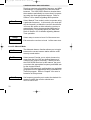
100
100
RTCM 6/8
RTCM 6/8
RTCM 6/8
3
2
0
Diese Tabelle mit drei Einträgen hat das gleiche Spalten-Format wie die
PCSI,4,Sendertabelle. Der obere Eintrag der Tabelle ist der PrimärSender, die beiden anderen Einträge sind Alternativen.
4.4.9 Löschen der automatischen Sendertabelle
Dieser herstellerspezifische NMEA-Befehl löscht die automatische
Sendertabelle. Er muss in voll manueller Betriebsart eingegeben werden. Das Befehlsformat ist:
$PCSI ,4,ERASE<CR><LF>
Wenn die automatische Sendertabelle gelöscht ist, führt der Empfänger
das nächste Mal, wenn er in Betriebsart ABS geschaltet wird, eine globale Suche durch. Auf diesen Befehl antwortet der VDO DGPSEmpfänger nicht. Um sicherzustellen, dass die Tabelle gelöscht ist, den
in Abschnitt 4.4.8 beschriebenen Befehl PCSI,4,S verwenden.
37
FEHLERSUCHE
5. FEHLERSUCHE
Die folgende Checkliste hilft bei der Fehlersuche am VDO DGPSEmpfänger. Tabelle 5-1 enthält Informationen zu Fehlern und eine Liste
möglicher Ursachen.
Tabelle 5-1 Fehlersuche
Fehler:
Ursache:
Empfänger lässt sich
nicht einschalten
- Kabel für Spannungsversorgung verpolt?
- Sicherung im Kabel zur Spannungsversorgung durchgebrannt?
- Kabel zur Spannungsversorgung richtig
am Empfänger angeschlossen?
- Liefert die Spannungsversorgung ausreichend “Startstrom”? (350 mA)
Keine Datenausgabe
des Empfängers
- Empfänger eingeschaltet?
- Empfängt das Gerät ein Signal? (LOCK)
- Datenkabel oder Kabel zur Spannungsversorgung lose?
- Nach Änderung der Sendertabelle nicht
quittiert?
Vom Empfänger werden
Zufallsdaten ausgegeben
- Ist der Sender o.k.?
- Unterschiedliche Baudraten zwischen
Empfänger und GPS-Empfänger, bzw.
PC?
Kein Empfang,
kein LOCK
- Antenne richtig angeschlossen?
- Falsche MSK-Rate für einen speziellen
Sender bei der manuellen Abstimmung?
- Falsche Frequenz für einen speziellen
Sender bei der manuellen Abstimmung?
- Antenne geerdet?
- Werden 12 V DC am Antennenende des
Antennenkabels gemessen, wenn das
Kabel an den eingeschalteten VDO
DGPS-Empfänger angeschlossen ist?
38
FEHLERSUCHE
Fehler:
Ursache:
Kein Empfang,
kein LOCK
- Betriebsart vollmanuelle Abstimmung
wählen, um Nichtstandard-MSK-Raten
zu wählen, z.B. 50 bps.
Schlechtes Signal/RauschVerhältnis
- Antenne angeschlossen?
- Antenne geerdet?
- Eine andere Stelle, entfernt von Rauschquellen für die Antenne suchen.
Der GPS-Empfänger erhält
vom DGPS-Empfänger
keine RTCM-Daten
- Wird ein differentialfähiger GPS-Empfänger verwendet?
- Ist der GPS-Empfänger in der Betriebsart Differential?
- Unterschiedliche Baudraten am DGPSEmpfänger und GPS-Empfänger eingestellt?
- Kompatible Kommunikationsparameter?
(8-N-1)
- Pinbelegung des Datenkabels am GPSEmpfänger richtig?
- Loser Datenstecker am DGPS- oder am
GPS-Empfänger?
DGPS-Empfänger nimmt
keine NMEA-Kommandos
an oder antwortet nicht
auf NMEA-Anfragen
- Stimmt die Baudrate des Terminalprogramms mit der des DGPS-Empfängers
überein?
- Ist im Terminalprogramm das Format
8-N-1 gewählt?
- Loser Datenstecker am DGPS- oder am
GPS-Empfänger?
- Ist die Pinbelegung für Kommunikation
mit dem PC Korrekt?
Höhere Signalstärke (SS)
als üblich
- Zu nahe an einer Rauschquelle?
- Näher am Leitstrahlsender als üblich?
- Andere Tageszeit, die SS beeinflusst?
39
DATEN
6. TECHNISCHE DATEN
Dieser Anhang enthält die mechanischen, elektrischen, physikalischen,
Umgebungs- und Betriebsdaten für:
den VDO DGPS-Empfänger
die VDO DGPS-Antenne
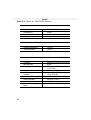
Tabelle 6-1: Daten des VDO DGPS-Empfängers
Betriebsdaten
Frequenzbereich
Einangsempfinlichkeit
Erfassungszeit
MSK-Bitrate
Frequenzwahl
AFC-Bereich
Dynamischer Bereich
Nebenkanalsperrung
Decodierung
Demodulation
283.5 - 325 kHz
2.5 mV/m für 10 dB SNR
bei 100 bps MSK-Rate
typisch < 1 sek.
25, 50, 100, 200, oder automatisch
manuell oder automatisch
± 10 Hz
100 dB
60 dB bei f0 ± 500 Hz und 100 bps
RTCM 6/8
MSK
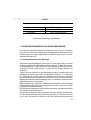
Daten der seriellen Schnittstelle
Schnittstellenpegel
Datenstecker
Baudrate Datenport
Daten- Ausgabeformat
Daten- Eingabeprotokoll
40
RS-232C und RS-422
DB9-Buchse
300, 1200, 2400, 4800, 9600,
oder 19200 Baud
RTCM SC-104
NMEA 0183
DATEN
Elektrische Anschlussdaten
Eingangsspannung
Stromaufnahme
Leistungsaufnahme
10 bis 35 VDC
250 mA bei 12 VDC
3W
Mechanische Daten
Gehäuse
Länge
Breite
Höhe
Gewicht
Antennenstecker
Stranggepresstes Aluminium
mit Alu-Frontplatte und -Rückwand
188 mm (7.38“)
115 mm (4.53”)
37 mm (1.46”)
0,7 kg (1.3 lb)
BNC-Stecker
Umgebungsbedingungen
Lagertemperatur
Betriebstemperatur
Feuchtigkeit
Sicherheitsabstand
zum Kompass
-40°C bis 80°C
-30°C bis 70°C
95% nichtkondensierend
1 m (3.3 ft)
41
DATEN
Table 6-2 Daten der VDO DGPS Antenne
Betriebsdaten
Frequenzbereich
Verstärkung
Vorverstärker
283.5 bis 325 kHz
20 dB
integriert
Elektrische Anschlussdaten
Eingangsspannung
Stromaufnahme
12 VDC
10 mA
Mechanische Daten
Gehäuse
Montagefuss
Montagegewinde
Länge
Durchmesser
Gewicht
Länge der Erdungsleitung
Antennenkabel
Antennenstecker
Antennen-Verlängerungskabel
42
glasfaserverstärkter Kunststoff
Nylon
1.0” - 14 x 1.25” Gewinde
(1-14 UNS)
371 mm (14.60”)
39 mm (1.54”)
176 g (0.39 lb)
1295 mm (51.00”)
297 mm (11.00”)
BNC-Stecker
RG-58U, < 150 m (450 ft)
DATEN
Umgebungsbedingungen
Lagertemperatur
Betriebstemperatur
Feuchtigkeit
-40°C bis 80°C
-30°C bis 70°C
100%, kondensierend
Technische Änderungen vorbehalten
7. SICHERHEITSHINWEISE VDO DGPS-EMPFÄNGER
Der Gebrauch des Empfängers entbindet Sie nicht von der Verantwortung über Ihr Schiff und verlangt gute Seemannschaft. Benutzen Sie zur
Interpretation der angezeigten Werte zusätzlich auch immer Ihre seemännische Erfahrung!
7.1 Sicherheitshinweise zur Montage:
Den Einbau des Empfängers sollten Sie von Ihrer Werft oder von einem
darauf spezialisierten Fachmann ausführen lassen. Tragen Sie geeignete Arbeitskleidung. Tragen Sie keine weite Kleidung. Sie kann von beweglichen Teilen erfaßt werden. Tragen Sie bei langen Haaren ein
Haarnetz.
Tragen Sie bei Arbeiten an der Bordelektrik keinen metallischen oder
leitfähigen Schmuck wie Ketten, Armbändern, Ringen o. ä. Vor Beginn
der Arbeiten ist der Minuspol der Batterie abzuklemmen, da sonst
Kurzschlußgefahr besteht. Kurzschlüsse können Kabelbrände,
Batterieexplosionen und Beschädigungen von anderen elektronischen
Speichersystemen verursachen.
Bitte beachten Sie, daß beim Abklemmen der Batterie alle flüchtigen
elektronischen Speicher ihre eingegebenen Werte verlieren und neu
programmiert werden müssen.
Bei Arbeiten im Motorraum muß bei Benzinmotoren der Motorraumlüfter
vor Beginn der Arbeiten laufen.
Achten Sie am Einbauort des Instruments auf den nötigen Freiraum hinter der Einbauöffnung. Einbauöffnung mit Bohrer vorbohren und mit
Loch- oder Stichsäge fertigstellen (auf die Sicherheitshinweise der
43
SICHERHEIT
Handwerkzeughersteller achten).
Bei notwendigen Arbeiten ohne Spannungsunterbrechung darf nur mit
isoliertem Werkzeug gearbeitet werden.
Die elektrischen Ausgänge des Empfängers und die daran angeschlossenen Leitungen müssen vor direkter Berührung und Beschädigung geschützt werden.
Dazu müssen die verwendeten Leitungen eine ausreichende Isolation
bzw. Spannungsfestigkeit besitzen und die Kontaktstellen berührungssicher sein.
Auch die elektrisch leitenden Teile der angeschlossenen Verbraucher
sind durch entsprechende Maßnahmen vor direkter Berührung zu schützen. Das Verlegen metallisch blanker Leitungen und Kontakte ist nicht
zulässig.
7.2 Sicherheitshinweise zur Wartung:
Reparaturen an den Komponenten des Empfängers dürfen nur durch
von VDO Kienzle autorisierte Fachkräfte durchgeführt werden.
Der VDO DGPS-Empfänger entspricht den einschlägigen Sicherheitsbestimmungen.
Hinweis: Kondensatoren im Gerät können noch geladen sein, selbst
wenn das Gerät von allen Spannungsquellen getrennt wurde.
Es ist sicherzustellen, daß nur Sicherungen vom angegebenen Typ und
der angegebenen Nennstromstärke als Ersatz verwendet werden. Die
Verwendung provisorisch reparierter Sicherungen oder ein Überbrücken
des Sicherungshalter ist unzulässig.
44
dgps_e_n.qxd
02.03.99 08:21
Seite 1
Installation and Operating Instructions
Page 45 - 88
45
dgps_e_n.qxd
02.03.99 08:21
Seite 2
CONTENS
Table of Contents
List of Figures
List of Tables
Preface
FCC Notice
Scope and Audience
Organization
Related Information
Document Conventions
Notes, Cautions, and Warnings
INTRODUCTION
1.
1.1
1.2
1.3
1.4
1.5
1.6
1.7
GPS
Real-Time Differential GPS
Factors Affecting Positioning Accuracy
Beacon Signal Information
Beacon Receiver Information
Antenna Information
VDO DGPS-Receiver Layout
2.
2.1
2.1.1
2.1.2
2.2
2.2.1
2.3
2.3.1
2.3.2
2.3.3
2.4
2.5
2.6
2.6.1
2.6.2
2.6.3
2.6.4
Installing the VDO DGPS-Receiver
Environmental Considerations
Power Considerations
Mounting the Antenna
VDO DGPS Electric Field Antenna
Routing and Connecting the Antenna Cable
Choosing an Antenna Cable Route
Securing the Antenna Cable
Connecting the Antenna
Antenna Placement To Minimize Interference
Connecting the Receiver To External Devices
Connecting the Power Source
Power Sources
Installing Fuses
Connecting the Power and Ground Wires
Connecting the Receiver To VDO Logic Map
46
INSTALLATION
48
48
49
49
49
49
50
50
51
51
51
52
53
54
54
55
56
57
57
57
58
58
58
59
59
60
60
60
61
62
62
62
62
63
dgps_e_n.qxd
02.03.99 08:21
Seite 3
CONTENS
CONFIGURATION AND OPERATION
3.
3.1
3.2
3.3
3.4
3.5
3.5.1
3.6
3.7
3.7.1
3.7.2
3.7.3
Interface Protocols
Front Control Panel and Display
Factory Default Settings
VDO DGPS-Receiver Operation
Manual Tune Mode
Full Manual Tune Mode
Automatic Beacon Search (ABS) Mode
Global Search
ABS Operational Mode
Menu Tree
Menu Tree Item Descriptions
4.
4.1
4.2
4.3
4.4
4.4.1
4.4.2
4.4.3
4.4.4
4.4.5
4.4.6
4.4.7
4.4.8
4.4.9
Description of NMEA 0183
NMEA Message Elements
VDO DGPS-Receiver Supported Messages
Receiver Standard NMEA Commands and Queries
Full Manual Tune Command
Partial Manual Tune Command
Automatic Beacon Search Mode Command
Receiver Operating Status Query
Receiver Performance Status Query
Beacon Table List Command
Beacon Table Modify Command
Automatic Beacon Table Display Command
Erase Automatic Beacon Table Command
75
75
75
76
77
77
77
78
78
78
79
80
81
81
5.
TROUBLESHOOTING
82
6.
TECHNICAL DATA
84
7.
7.1
7.2
SAFETY INSTRUCTIONS
.....concerning the installation
.....concerning the maintenance
87
87
88
NMEA 0183 COMMANDS AND MESSAGES
64
64
64
65
66
66
66
68
68
69
69
71
47
dgps_e_n.qxd
02.03.99 08:21
Seite 4
CONTENS
List of Figures
Illustration of VDO DGPS-Receiver
Cable Connectivity
56
Figure 2-1
Cable DGPS-Receiver / VDO Logic Map
63
Figure 3-1
VDO DGPS-Receiver Front Control Panel
and Display
64
VDO DGPS-Receiver Menu Tree
70
Figure 1-1
Figure 3-2
List of Tables
Table 2-1
VDO DGPS-Receiver Data Port Pin-out,
RS-232C Interface Level
61
Power Requirements of the
VDO DGPS-Receiver
62
Table 2-3
VDO DGPS-Receiver to Logic GPS Navigator
63
Table 3-1
Default VDO DGPS-Receiver
Operating Settings
65
Table 3-2
Default VDO DGPS-Receiver Port Settings
65
Table 4-1
NMEA Message Elements
75
Table 4-2
VDO DGPS-Receiver Supported
NMEA Messages
76
Table 5-1
Troubleshooting
82
Table 6-1
VDO DGPS- Beacon Receiver Specifications
84
Table 6-2
VDO DGPS Whip Antenna Specifications
86
Table 2-2
48
dgps_e_n.qxd
02.03.99 08:21
Seite 5
PREFACE
Preface
Welcome to the VDO DGPS-Receiver Reference Manual and congratulations on purchasing this high performance differential GPS product.
The purpose of this manual is to familiarize you with the proper installation, configuration and operation of your new receiver.
The VDO DGPS-Beacon Receiver is an extremely sensitive 300 kHz minimum shift keying (MSK) demodulator, that obtains differential corrections broadcast from radiobeacons adhering to the standards defined by
the International Association of Lighthouse Authorities (IALA). You can
easily configure it using the unique front keypad and display that offers a
high degree of functionality. The VDO DGPS-Receiver operates in the
frequency range of 283.5 to 325 kHz, and features a proven, fully automatic radiobeacon search algorithm.
© Copyright 1998 by VDO Kienzle. All rights reserved.
FCC Notice
The VDO DGPS- Beacon Receiver complies with CE EN 60945 and
Part 15, Subpart J Emission Requirement for Class A digital devices for
use in commercial, business, and industrial environments.
Scope and Audience
This manual contains information specific to the installation and operation of the VDO DGPS-Receiver revision 2.6. We recommend that you
take the time to examine the material contained within before attempting
to use this product. This document is intended for an audience with an
interest, but certainly not a background in GPS. More experienced
users of the GPS system may wish to skip those subsections of Chapter
1 that introduce the basic concepts of GPS and Differential GPS
(DGPS).
Organization
This manual contains the following parts:
Chapter 1: Introduction - provides an introduction to GPS and DGPS
49
dgps_e_n.qxd
02.03.99 08:21
Seite 6
RELATED INFORMATION
technology, the VDO DGPS-Receiver and antenna.
Chapter 2: Installation - describes how to install the VDO DGPSReceiver and antenna, and provides a foundation for interfacing the
VDO DGPS-Receiver with any differentially capable GPS receiver.
Chapter 3: Configuration and Operation - describes how to configure
and operate the VDO DGPS-Receiver.
Chapter 4: NMEA 0183 Commands and Messages - describes the subset of NMEA 0183 commands and messages used to communicate with
the VDO DGPS-Receiver.
Chapter 5: Troubleshooting - provides you with diagnostic information
to aid in determining a problem point for a particular installation.
Chapter 6: Specifications - outlines the technical characteristics of the
VDO DGPS-Receiver and antenna.
Chapter 7: Safety Instructions
Related Information
The following subsections provide other relevant information regarding
support and service of your VDO DGPS-Receiver and antenna.
Customer Service:
If you encounter problems with the installation or operation of this product, or cannot find the information you need, please contact the Marine
Customer Service Department at VDO Kienzle.
The contact numbers are:
Telephone number:
++49 (0)69/ 40 805-0
Fax number:
++49 (0)69/ 40 805-177
To expedite the support process, please have the product model and serial number available when contacting VDO Kienzle technical support
number.
Document Conventions
This icon indicates that you should press the down arrow button of
the keypad, located on the front of the receiver.
This icon indicates that you should press the Enter button of
the keypad, located on the front of the receiver.
50
dgps_e_n.qxd
02.03.99 08:21
Seite 7
INTRODUCTION
This icon indicates that you should press the up arrow button
of the keypad, located on the front of the receiver.
Notes, Cautions, and Warnings
Notes and Warnings stress important information regarding the installation, configuration, and operation of the VDO DGPS-Beacon Receiver.
Note -
Notes outline important information of a general nature.
Cautions - Cautions inform you of possible sources of difficulty or situations that may cause damage to the product.
Warning - Warnings inform you situations that may cause harm to yourself.
1. INTRODUCTION
Designed to function in a wide array of applications, the compact, lightweight, yet rugged VDO DGPS-Receiver will provide you with years of
reliable operation.
This chapter provides a brief overview of GPS and DGPS technology,
and a description of the VDO DGPS-Receiver and associated equipment.
1.1 GPS
The United States Department of Defense (DoD) has provided the world
with a reliable, 24 hour a day, all-weather Global Positioning System
(GPS).
Navstar, the original name given to this geographic positioning and navigation tool, includes a constellation of 24 satellites orbiting the Earth in
six distinct planes, approximately 22,000 km above the ground. These
Space Vehicles (SV’s) transmit radio signals containing precise satellite
time and position information. Reception of any four or more of these
signals allows a GPS receiver to compute its coordinates relative to the
World Geodetic System, 1984 (WGS-84). Software algorithms may also
provide the user with alternate reference frames required for different
51
dgps_e_n.qxd
02.03.99 08:21
Seite 8
INTRODUCTION
applications.
The positioning accuracy offered by the Navstar GPS, varies depending
upon the type of service and equipment to which a user has access. For
reasons of National Security, GPS exists in two distinct forms, the
Standard Positioning Service (SPS), and the Precise Positioning
Service (PPS). The US Department of Defense (DoD) reserves the PPS
for use by its personnel, authorized federal agencies, and NATO partners. The DoD provides the SPS free of charge worldwide, to all civilian
users.
In order to maintain a strategic advantage, The US DoD artificially degrades the performance of the SPS so that the positioning accuracy is
100 meters (2-DRMS*). In other words, 95% of the time, the two dimensional positioning accuracy available to civilian users will be better than
100 meters in the horizontal plane.For many positioning and navigation
applications, an accuracy of 100 meters or more is insufficient, and differential positioning techniques must be employed.
*
2-DRMS refers to twice the distance root mean squared. The root
mean square is a statistical value that is closely related to a standard deviation.
1.2 Real-Time Differential GPS
The purpose of differential GPS (DGPS) is to eliminate or dramatically
reduce the effects of SA, atmospheric, and satellite errors. To accomplish this, a reference GPS receiver is established at a point of known
coordinates. This receiver makes pseudorange measurements to each
of the GPS satellites visible above a certain elevation mask angle, and
computes an undifferentially corrected, three dimensional GPS position.
The receiver also calculates true ranges using its known position, and
the location of each tracked satellite. The amount by which the true range to one satellite and the observed range differ, is the differential correction.
These corrections are transmitted to a remote receiver in real-time to
permit the solution of a DGPS position, with the assumption that the
sources of error are the same at both stations. The remote receiver corrects its range measurements using these differential corrections, providing a much more accurate position.
This is the predominant DGPS strategy used for a majority of real-time
applications.
52
dgps_e_n.qxd
02.03.99 08:21
Seite 9
INTRODUCTION
1.3 Factors Affecting Positioning Accuracy
Many factors affect the positioning accuracy that a user may expect from
a DGPS system. The most significant of these influences include:
Proximity of the remote user to the transmitting beacon
Age of the received differential corrections
Atmospheric conditions in the vicinity of the beacon and remote
user
Satellite geometry, often expressed as a Dilution of Precision
(DOP)
Magnitude of multipath present at the remote station
Quality of the GPS receiver being used at both the reference
and remote stations.
The distance between a remote user and the reference station is often
considerable when using 300 kHz DGPS radiobeacons. Broadcast ranges may be as great as 450 km (280 miles), depending predominantly
on transmission power. As a result, some of the errors associated with
GPS at the base station differ somewhat from those at the remote user’s
location. This decorrelation of errors can result in a relative position offset from the absolute coordinates of the remote receiver. This offset is
typically on the order of one meter for every 100 km (62 miles) between
the base station and remote receiver.
The latency of the differential corrections broadcast by a radiobeacon
also affects the achievable positioning accuracy at the remote station.
Latency is a function of the time it takes the base station to determine
the measurement corrections, the data rate of the radio link, the time it
takes the signal to reach the user, and the time required for the remote
beacon receiver to demodulate the signal and communicate it to the
GPS receiver. Most of these delays require less than a second, though
in some instances, depending upon the amount of information being
transferred, delays of three to five seconds may be observed (dependent upon the number of satellites in view). Provided the total correction
latency is maintained at less than eight to ten seconds, no appreciable
accuracy degradation should occur.
To account for this latency and the rapidly changing SA error, a GPS receiver uses the rate of change of the corrections to each satellite to propagate the computed correction forward in time. Calculating the differential correction for a new epoch, using the old correction, leads to a
small amount of inaccuracy, due to the high rate of change of the SA error. The validity of this method decreases with time, resulting in degraded positional accuracy until the GPS receiver obtains new corrections.
53
dgps_e_n.qxd
02.03.99 08:21
Seite 10
INTRODUCTION
The state of the atmosphere can differ substantially between the base
station and remote user, which can result in significant positioning errors
at the remote station. The decorrelation of ionospheric conditions in particular, is a function of the baseline length between the reference and remote receivers.
The number of satellites visible and their geometry in the sky influences
positioning accuracy. Generally, the more satellites that are visible to
both the reference and remote receivers, the higher the potential for accuracy. However, if all or a majority of the satellites are gathered in one
portion of the sky, this weak geometry will serve to reduce accuracy, and
increase the DOP.
Satellite signals received by the GPS receiver via a different path (multipath) can cause decreased positional accuracy. These reflected signals
increase the measured range to a satellite as the multipath signal takes
a longer path to the receiver. Certain precautions can be taken to minimize a GPS antenna’s sensitivity to these reflected signals. Operating
away from large reflective structures such as buildings, or using multipath mitigating ground planes, choke rings, or specialized GPS receiver
software and hardware can help to reduce the impact of multipath.
1.4 Beacon Signal Information
The broadcasting range of a 300 kHz beacon is dependent upon a number of factors including transmission power, free space loss, ionospheric
state, surface conductivity, ambient noise, and atmospheric attenuation.
The strength of a signal decreases with distance from the transmitting
station, due in large part to free space loss (spreading loss). This loss is
a result of the signal’s power being distributed over an increasing surface area as the wave-front radiates away from the transmitting antenna.
Increasing the transmission power of the signal compensates for this
loss.
1.5 Beacon Receiver Information
The VDO DGPS-Receiver receives and demodulates RTCM SC-104 differential corrections transmitted by 300 kHz radiobeacons adhering to
the broadcast standards set out by the International Association of
Lighthouse Authorities (IALA).
The VDO DGPS-Receiver features both manual and fully automatic mo54
dgps_e_n.qxd
02.03.99 08:21
Seite 11
INTRODUCTION
des of operation. It is controlled via the front display/control panel, or by
a subset of NMEA 0183 and proprietary NMEA formatted commands, issued from a PC computer. The receiver supports bi-directional communications allowing differential corrections and configuration commands
to be sent and received through the same port. A range of output data
baud rates are available, and may be selected using the front control panel.
1.6 Antenna Information
This antenna, referred to as an E-field Whip antenna, is
sensitive to the electrical component of the radiobeacon
broadcast. An integral low noise amplifier, contained in
the base of the VDO DGPS Antenna, amplifies frequencies in the 283.5 to 325 kHz frequency band.
The VDO DGPS Antenna is compatible with standard
marine thread mounts, and should be grounded for optimum performance. The base of the antenna is threaded nylon, while the whip portion of the antenna is constructed of fiberglass.
For details regarding antenna installation, refer to Section 2.4.
55
dgps_e_n.qxd
02.03.99 08:21
Seite 12
INTRODUCTION
1.7 VDO DGPS-Receiver Layout
The VDO DGPS-Receiver is easily installed, requiring only power, data,
antenna, and ground connections. Figure 1-1 illustrates the cabling required for this receiver.
Figure 1-1 Illustration of VDO DGPS-Receiver Cable Connectivity
Caution - The VDO DGPS-Receiver provides 12 VDC across the antenna port, and is designed to operate with an antenna preamplifier requiring 12 VDC input. Connection to incompatible devices may result in damage to equipment.
56
dgps_e_n.qxd
02.03.99 08:21
Seite 13
INSTALLATION
2. INSTALLATION
This chapter contains instructions and recommendations for the installation of the VDO DGPS-Receiver and its antenna.
2.1 Installing the VDO DGPS-Receiver
There are certain considerations that you must observe, to ensure optimum performance and ease of use, when installing the VDO DGPS
Beacon-Receiver :
The VDO DGPS-Receiver requires a power hookup near the desi
red receiver installation point, taking into consideration the length
of the power cable. The in-line fuse of the power cable must be
accessible for its inspection and replacement if required.
To take advantage of the receiver’s front display and keypad, install the receiver such that you can see the display and use the
keypad on the front of the receiver.
Enough clearance should be available behind the receiver so that
the power, data, and antenna cables are not bent or crimped.
Typically two inches provides sufficient clearance, permitting
attachment and detachment if required.
The VDO DGPS-Receiver comes with a universal bracket for mounting.
This bracket allows the receiver to pivot, permitting the display to be
angled up or down for comfortable viewing. It is easily attached to the
intended mounting surface using four screws.
Use the universal bracket as a template to drill the four screw holes needed for mounting the receiver.
2.1.1 Environmental Considerations
The VDO DGPS-Receiver is designed to operate in an enclosed environment in which the temperature remains between -30 °C and +70 °C.
The receiver must be stored in an environment with a temperature between -40 °C and +80 °C. It is important that the receiver not be exposed
to extreme temperature or moisture conditions. Direct sunlight should
not fall on the receiver for extended periods of time.
57
dgps_e_n.qxd
02.03.99 08:21
Seite 14
INSTALLATION
2.1.2 Power Considerations
Though designed to operate at 10 to 35 VDC, for optimum receiver performance, the power supplied should be continuous and clean. Power
fluctuations may result from electrical accessories operating from the
same power system.
The installation of an in-line power filter may enhance receiver performance in the presence of a noisy power supply.
2.2 Mounting the Antenna
Choose a location for the antenna such that it not be exposed to damage, and is away from sources of interference. Take the following precautions into consideration when selecting a mounting location for the antenna:
Choose a location that is away from all forms of transmitting antennas and communication equipment, preferably one meter or
more.
Ensure that the antenna is as far as possible from all equipment
that emits Electromagnetic Interference (EMI). Such equipment
includes DC motors, alternators, solenoids, radios, power cables,
display units, and other electronic devices.
If a radar is present, mount the antenna outside the path of the radar beam.
Do not locate the antenna where environmental conditions exceed
those specified in Appendix A.
Caution - Antennas that are threaded onto an adapter should be tightened only by hand. Do not use any tools to tighten them as
this may cause damage to the antenna.
The following information pertains to the proper installation of each antenna.
2.2.1 VDO DGPS Electric Field Antenna
For optimum performance, connect the antenna to a counterpoise ground. The VDO DGPS Antenna is easily mounted with a standard 1.0”14 thread marine mount (1-14 UNS), and features a 30 cm (11 inch) pig
tail antenna cable.
58
dgps_e_n.qxd
02.03.99 08:21
Seite 15
INSTALLATION
The following list provides instructions on how to install the antenna on a
marine pole mount.
1.
Install the pole mount in the desired location.
2.
Feed the antenna extension cable through the pole mount.
3.
Connect the VDO DGPS Antenna to the antenna extension cable.
4.
Thread the antenna onto the mount.
The VDO DGPS Antenna requires a 50 W impedance antenna extension cable such as RG-58U (up to 150 m (492 ft) in length) for proper operation.
Note -
A good antenna ground connection is essential for optimum
receiver.
2.3 Routing and Connecting the Antenna Cable
The following subsections provide information on choosing an antenna
extension cable route, securing the cable, connecting the antenna, and
the termination of the antenna cable required for each antenna.
Caution - The VDO DGPS-Receiver provides 12 VDC across the antenna port, and must operate with an antenna pre-amplifier
requiring 12 VDC input. Connection to incompatible devices
may result in damage to equipment.
2.3.1 Choosing an Antenna Cable Route
When choosing a route for the antenna extension cable, be aware that
there is potential for damage to the antenna or cable, and may compromise your safety. The following list provides recommendations for routing antenna cables:
Avoid running cables in areas of excessive heat.
Keep antenna cables away from corrosive chemicals.
Do not run the extension cable through door or window jams.
Keep the antenna cable away from rotating machinery.
Do not bend or crimp the antenna extension cable.
Avoid running the cable such that there is tension on the cable.
59
dgps_e_n.qxd
02.03.99 08:21
Seite 16
INSTALLATION
2.3.2 Securing the Antenna Cable
Remove any slack in the run of the antenna cable by taking it out at the
receiver end, without causing tension in the cable. We recommend securing the antenna cable run using tie wraps.
Warning - A cable run can be dangerous, and can cause personal injury if improperly installed near machinery.
2.3.3 Connecting the Antenna
The antenna port on the back of the VDO DGPS-Receiver is a standard
BNC socket connector. To secure the antenna cable, rotate the locking
collar clockwise, once attached to the receiver’s antenna socket.
The VDO DGPS antenna features a BNC antenna socket. This antenna
requires an extension cable terminated at both ends with BNC plug
connectors.
2.4 Antenna Placement To Minimize Interference
Selecting an appropriate location for installation of the beacon antenna
will greatly influence the performance of the VDO DGPS-Beacon receiver. Use the following procedure to determine the best location for the
antenna:
1.
Place the antenna centrally, on the boat’s instrument carrier (power) or on the rail (sailboat) near in the cockpit area.
2.
Place the VDO DGPS-Receiver in a convenient location so that
you may observe and operate the front panel controls.
3.
Turn off all electrical accessories in the boat.
4.
Connect the receiver’s antenna and power cables, and apply power to the system.
5.
Tune the receiver to the frequency and MSK rate of a local beacon
station (refer to the instructions provided in the VDO DGPSReceiver Quick Start Guide or Section 3.5).
6.
The receiver lock light should illuminate. Scroll through Level 1 of
the menu tree using either the
or
keys until the VDO
DGPS-Receiver displays SS (refer to Section 3.5)
7.
Record the SS displayed by the receiver.
8.
Start the boat’s engine and turn on all electrical accessories that
will typically be operating while collecting GPS data or navigating.
60
dgps_e_n.qxd
02.03.99 08:21
Seite 17
INSTALLATION
9.
10.
11.
12.
Record the new SS displayed by the receiver.
Select a new antenna location on the boat away from any obvious
sources of electrical interference, for example, Radar , HF- equipment, etc.
Record the new SS value along with a description of the antenna’s
position on the boat.
Repeat steps 10 and 11 for 5 to 10 positions. This will allow you to
determine the antenna location providing the lowest SS value with
the engine running and electrical accessories powered.
The location identified using the above procedure should provide the
best system performance with respect to antenna location.
2.5 Connecting The VDO DGPS-Receiver
To External Devices
The VDO DGPS-Receiver supports RS-232C or RS-422 interface levels
for communication with any differentially capable GPS receiver supporting these levels. It features one external bi-directional data port used
for transmitting RTCM SC-104 differential correction data to a separate
GPS receiver, and also for remote control and querying of the receiver
from a PC. The location of this data port is on the back panel of the
VDO DGPS-Receiver and is a DB9 socket connector.
Table 2-1 provides pin-out information for the data port of the VDO
DGPS-Receiver, with the RS-232C interface level.
Table 2-1 VDO DGPS-Receiver Data Port Pin-out,
RS-232C Interface Level
DGPS-Receiver Pin #:
Signal:
Description:
2
Transmit
RTCM SC-104
Status Output
3
Receive
Configuration Input
5
Signal Ground
Signal Return
61
dgps_e_n.qxd
02.03.99 08:21
Seite 18
INSTALLATION
Please call VDO Kienzle if you need the RS-422 interface level over the
standard RS-232C level, as it involves opening the receiver. Under normal circumstances, opening the receiver will void the receiver’s warranty, unless VDO Kienzle provides authorization and instructions for this
sole purpose.
2.6 Connecting The Power Source
The power connector on the back panel of the VDO DGPS-Receiver beacon receiver is a circular 2-pin locking plug connector. The associated
socket connector on the end of the power cable attaches to the this
connector. To secure the connector, rotate the locking collar clockwise
after connecting it to the receiver.
2.6.1 Power Sources
The VDO DGPS-Beacon Receiver supports both 12 VDC and 24 VDC
power sources. It features reverse polarity protection, and can operate
between 10 and 35 VDC.
Table 2-2 displays the power specifications for the VDO DGPSReceiver beacon receiver with the VDO DGPS antenna:
Table 2-2 Power Requirements of the VDO DGPS-Receiver
Input Voltage
Input Current
10 - 35 VDC
250 mA @ 12 VDC
Input Power
3.0 W @ 12 VDC
2.6.2 Installing Fuses
A 1.5 A slow blow fuse, situated in-line of the power cable protects the
VDO DGPS-Receiver from power surges. The VDO Kienzle power cable as shipped, includes this fuse in an in-line fuse container, which
should remain accessible once you have installed the VDO DGPSReceiver.
Caution - Under no circumstances should the VDO DGPS-Receiver
be operated with the 1.5 A fuse bypassed. Such modification will void the product warranty.
62
dgps_e_n.qxd
02.03.99 08:21
Seite 19
INSTALLATION
2.6.3 Connecting the Power and Ground Wires
Connect the red wire of the power cable to DC positive of the power
source, and the black wire to DC negative.
For optimum receiver performance and RF noise mitigation, VDO
Kienzle recommends the use of a common ground for all VDO Kienzle
components. The back plate of the VDO DGPS-Receiver includes a
grounding point to which you may connect a basic 14+ gauge stranded
electrical wire. Secure this grounding lead to a counterpoise ground
plane, which may consist of a vehicle’s chassis, or in the case of a wooden boat vessel, a copper ground plate. When using the antenna it is
important that it be grounded via separate cable run to the same counterpoise ground as the VDO DGPS-Receiver.
2.6.4 Connecting the Receiver To VDO Logic Map
To connect the Receiver (9600 baud) to a VDO Logic Map Chartplotter,
an optional cable (order-no. X11.719/000/009 ) is available.
GPS-Sensor
DGPSReceiver
Logic Map
Figure 2-1 Cable DGPS-Receiver / VDO Logic Map
2.6.5 Connection to VDO Logic GPS Navigator
To connect the DGPS-Receiver (4800 baud) to the Logic GPS Navigator, the 9-pin datacable has to be used.
Table 2-3:
DGPS-Receiver to Logic GPS Navigator
DGPS-Receiver Pin #
2
5
Note -
Signal:
Logic GPS Navigator:
Transmit
Ground
NMEA A in
NMEA B in
(white)
(grey)
The VDO Logic GPS Navigator must be equipped with software version 2.5 to display DGPS information. If an earlier
software version is installed, an update shall be necessary.
63
dgps_e_n.qxd
02.03.99 08:21
Seite 20
CONFIGURATION AND OPERATION
3. CONFIGURATION AND OPERATION
The front control panel and display, and NMEA 0183 messages are
used to configure and operate the VDO DGPS-Beacon Receiver.
This chapter familiarizes you with the front control panel and display,
Manual Tune and Automatic Beacon Search modes, and the associated
software menu system. NMEA 0183 commands and queries sent from
a terminal program running on a PC computer are fully covered in
Chapter 4.
3.1 Interface Protocolls
The VDO DGPS-Receiver supports the following data, command, and
status protocols:
RTCM SC-104 differential correction message
NMEA 0183 standard command and status message
NMEA 0183 proprietary command and status message
3.2 Front Control Panel and Display
The VDO DGPS-Receiver features a display and control panel on the
front of the receiver. The display is a 10 character alphanumeric LED.
The control panel is a three button keypad composed of an up arrow
, an enter
, and a down arrow key
. You can easily navigate
the VDO DGPS-Receiver menu system using these three keys, to allow
operation and configuration of this receiver. The display and keypad allow you to move quickly and easily through the range of menu items in
the menu tree. Figure 3-1 displays the front display and keypad of the
VDO DGPS-Receiver.
Figure 3-1 VDO DGPS-Receiver Front Control Panel and Display
64
dgps_e_n.qxd
02.03.99 08:21
Seite 21
CONFIGURATION AND OPERATION
The LOCK indicator on the front display panel illuminates when the receiver locks on the signal transmitted by a particular beacon. This indicates whether or not the VDO DGPS-Receiver is receiving valid RTCM
messages, and transmitting them to the GPS receiver.
Note -
For applications using a 12 V battery, decreasing the display
brightness will lead to lower power consumption, and increased battery life.
3.3 Factory Default Settings
Table 3-1 presents the default VDO DGPS-Receiver operating settings,
while 3-2 displays the default port settings. These default operating and
port settings are valid upon the initial power-up. The VDO DGPSReceiver will save any changes made to its operation or its port settings
for subsequent power-ups.
The VDO DGPS-Receiver saves the current frequency and MSK rate,
as set using the front keypad, only if it has attained a lock. If the VDO
DGPS-Receiver receives a NMEA tune command, the receiver does
not need lock to save the current frequency and MSK rate. This safeguard ensures that configuration of the receiver does not change accidentally.
Table 3-1 Default VDO DGPS-Receiver Operating Settings
Tune Mode
MSK Mode
Automatic
Automatic
Table 3-2 Default VDO DGPS-Receiver Port Settings
Baud
Stop Bit
Parity
Stop Bit
4800
8
None
1
Interface Level
RS-232C
65
dgps_e_n.qxd
02.03.99 08:21
Seite 22
CONFIGURATION AND OPERATION
3.4 VDO DGPS-Receiver Operation
The arrow keys are used to move from right to left, and left to right,
through the menu items of each level in the menu tree. They are also
used to cycle through a list of available options for a selected menu item.
Figure 3-2 displays the layout of the menu tree.
The
key is used to move from Level 1 of the menu tree to Level 2,
and to select menu items in Level 2 through Level 4. The
key is also
used to select from a range of options. If the option selected is current,
the NO CHANGE message will appear on the display.
To move from a lower level to a higher level, choose the EXIT menu item
in the current level, or press both the
and
keys simultaneously.
3.5 Manual Tune Mode
The VDO DGPS-Receiver has a Manual Tune function, where you can
specify the frequency and MSK rate to which the receiver should tune.
The following subsections describe two Manual Tune modes initiated
using the front control panel and display.
We recommend the use of Manual Tune mode in applications where coordinate tagged data is collected.
To change from the factory default Auto Beacon Search mode to Manual
Tune mode, follow this procedure upon receiver power-up:
1.
Press the
key to display AUTO SRCH.
2.
Press the
key to display MAN. TUNE, then press
ces the receiver into Manual Tune mode.
3.
The receiver will display WAIT… while it configures itself for manual operation. It will then return to Level 1 of the software menu
tree and display MANUAL FRQ in place of the beacon name or
identifier.
. This pla-
3.5.1 Full Manual Tune Mode
In full manual tune mode, the VDO DGPS-Receiver requires that you
select both the frequency and MSK rate to which it should tune. If the
receiver is in Automatic Beacon Search mode, consult Section 3.5 for in66
dgps_e_n.qxd
02.03.99 08:21
Seite 23
CONFIGURATION AND OPERATION
structions on how to change to Manual Tune mode. Use the following
procedure upon starting the receiver in manual mode:
1.
To input the desired frequency, press the
key, taking the receiver to Level 2 of the menu tree. Continue to press the
key until the receiver displays SET FREQ, then press
.
2.
Use the
or
keys to set the frequency. When you have chosen the appropriate frequency using the arrow keys, press
and
the receiver will return to Level 1.
3.
If the receiver was in Automatic Beacon Search mode, it should
default to automatic MSK mode when set to Manual Tune. If you
wish to choose the MSK rate manually, press the
key to enter
Level 2, and use the
or
keys to scroll through the menu until the receiver displays MSK MODE. Please note that you do not
need to place the receiver into manual MSK mode to achieve a
lock at this point.
3.1
Press the
key, which will allow you to choose from
AUTO RATE or MAN. RATE using the arrow keys.
3.2
When the receiver displays MAN. RATE, press
. The
receiver will return to Level 2, and display MSK MODE.
3.3
Use the
3.4
You will be able to select from 50, 100, 200, or nonstandard bit rates using the
or
keys. When you have
chosen the bit rate, press
and the receiver will return
to Level 2.
3.5
To monitor the operating parameters, return to Level 1 by
locating EXIT using the arrow keys, then press
. You
also may press the
and
keys simultanneously to
move up one level in the menu system.
Note -
key to scroll to MSK RATE and press
.
Once you have tuned the receiver manually using this procedure, it will not change from this frequency to search for
other beacons.
67
dgps_e_n.qxd
02.03.99 08:21
Seite 24
CONFIGURATION AND OPERATION
3.6 Automatic Beacon Search (ABS) Mode
The VDO DGPS-Receiver is able to operate autonomously, selecting
and tuning to the most appropriate beacon for a certain area without
operator intervention.
We recommend that Automatic Beacon Search mode be used for navigation.
To switch from Manual Tune mode to Automatic Beacon Search mode,
the following list provides instructions for initiating ABS Mode upon receiver power-up:
1.
Press the
BCN.
key and the VDO DGPS-Receiver will display ALT
2.
Press the
key to display AUTO SRCH, followed by pressing
. This places the receiver into Automatic Beacon Search
mode.
3.
The receiver will display WAIT… while it configures itself for automatic operation. It will then return to Level 1 of the software menu
tree, and display Frq XXX.XX, where XXX.XX is the currently tuned frequency. The receiver will not conduct a Global Search if a
valid Auto Search Table is present in memory, otherwise it will initiate the search sequence.
3.7 Global Search
When powered for the first time, the VDO DGPS-Receiver immediately
initiates a Global Search during which it examines each available frequency assessing signal strength, and develops a Global Beacon Table.
Upon completion of this search, the receiver examines each of the nonzero signal strength frequencies at both 100 and 200 bps MSK rates in
order to identify valid RTCM data. Once the VDO DGPS-Receiver determines which beacon has the best overall signal, it will tune to that frequency and MSK rate, before initiating the background search.
Upon subsequent receiver power up, the Automatic Beacon Table remains in memory. The VDO DGPS-Receiver will not perform a Global
Search until this table becomes invalid. If this occurs, the receiver will
68
dgps_e_n.qxd
02.03.99 08:21
Seite 25
CONFIGURATION AND OPERATION
perform a new Global Search, thus rebuilding the table. This situation
will not occur in areas of continuous coverage as the goal of ABS is to
provide a continuous source of differential corrections. It will happen
only if the receiver is moved to a new location un-powered, that does not
have the same beacon coverage, or if it is out of range of the three beacons in this table.
You may force a Global Search, if desired, by selecting the ERASE
AUTO menu item in Level 4 of the software menu tree. For this function
to be executed, place the receiver in Manual Tune mode prior to selecting ERASE AUTO.
3.7.1 ABS Operational Mode
During the background search, alternate beacons are identified, and
stored in an Automatic Beacon Table. The VDO DGPS-Receiver remains locked to the primary frequency until it determines that it should
tune to an alternate frequency with a higher signal strength.
When in the ABS operational mode, the VDO DGPS-Receiver maintains
its lock on the primary beacon, and periodically scans other frequencies,
to track other stations that have come into range of the receiver. The
switching period is dependent upon the quality of the primary beacon
signal. The temporary release of lock from the primary beacon will contribute approximately a 10 second correction latency to the last received
RTCM message. Latencies of less than 10 seconds contribute positioning errors of less than 1 meter.
3.7.2 Menu Tree
Figure 3-2 (next page) provides the layout of the VDO DGPS-Receiver
Software Menu Tree.
69
dgps_e_n.qxd
02.03.99 08:21
Seite 26
CONFIGURATION AND OPERATION
LAMP TEST
SW VERSION
RECEIVER S/N
RELOCK
Frequency
Identification
AUTO SRCH
BRIGHTNESS
DN
Performance
Sig/Noise Ratio
MAN. TUNE
I/O SETUP
UP
SETUP
ERASE AUTO
Signal Strength
Level 2 Auto
EXIT
SUBSCRIBE
Level 1 Auto
Level 3 Auto
EXIT
AUTO MODE
Must be in Manual Mode to Erase Table
INPUT
BAUD RATE
NMEA-0183
NONE
300 BAUD
1200 BAUD
2400 BAUD
4800 BAUD
9600 BAUD
19200 BAUD
Autosearch
Level 4 Auto
EXIT
LAMP TEST
Manual Tune
SW VERSION
RECEIVER S/N
RELOCK
Frequency
Level 1 Manual
ALT BEACON
SEL BEACON
SET FREQ
Level 2 Manual
Level 3 Manual
BRIGHTNESS
DN
Level 4 Manual
Identification
Performance
MSK MODE
MSK RATE
AUTO RATE
MAN. RATE
AUTO MODE
NON STD
50 B/S
100 B/S
200 B/S
I/O SETUP
ERASE AUTO
UP
Sig/Noise Ratio
SETUP
SUBSCRIBE
Signal Strength
AUTO SRCH
EXIT
ERASE???
Hit Arrow Key to Keep Table
Hit Enter Key to EraseTable
INPUT
BAUD RATE
NMEA-0183
NONE
300 BAUD
1200 BAUD
2400 BAUD
4800 BAUD
9600 BAUD
19200 BAUD
EXIT
Figure 3-2 VDO DGPS-Receiver Menu Tree
70
EXIT
dgps_e_n.qxd
02.03.99 08:21
Seite 27
CONFIGURATION AND OPERATION
3.7.3 Menu Tree Item Descriptions
This subsection describes each item of the VDO DGPS-Receiver software menu tree.
Level 1: Automatic and Manual Mode
Automatic and manual modes share a common Level 1 of the menu
tree. This level provides the basic operational status of the receiver, including the currently tuned frequency and beacon. To access level 2 in
either automatic or manual mode from Level 1, press the
key.
Frequency
Frequency displays the operating frequency in kHz
Identification
Identification displays either the name or the beacon identifier of the station tuned.
Performance
Performance displays the number of valid decoded
RTCM messages as a percentage of the messages
received correctly over a given period of time.
Signal to
Noise Ratio
Signal to noise ratio displays the ratio between the
desired signal and the unwanted noise at the selected frequency, expressed in decibels (dB). The
VDO DGPS-Receiver requires an SNR of better
than 7 dB in order to achieve a lock. This signal to
noise ratio corresponds to a bit error rate (BER) of
less than 1:1000. A higher SNR is more desirable
than a lower one.
Signal
Strength
Signal strength, expressed in dB, is a numeric re
presentation of the near noise, far noise, and field
strength of the received signal at the selected frequency.
Level 2: Automatic Mode
Auto Srch
Select Automatic Beacon Search mode to place the
receiver into automatic operation. In this mode,
both the frequency and MSK rate are selected by
the receiver automatically, to provide the best per
formance. In this operating mode, the receiver will
conduct a Global Search where the VDO DGPS71
dgps_e_n.qxd
02.03.99 08:21
Seite 28
CONFIGURATION AND OPERATION
Receiver examines all possible frequency and MSK
combinations, to construct a list of the three best
beacons. The VDO DGPS-Receiver checks these
three stations periodically to ensure that it is operating using the most appropriate beacon. Refer to
Section 3.6 for details regarding ABS operation.
Man Tune
Setup
Exit
Select Manual Tune mode in order to operate using
a particular frequency. In this mode, you must specify the frequency to which the receiver should tune.
You have the option to either allow the receiver to
automatically select the appropriate MSK rate for
the frequency, or manually specify the MSK rate.
Refer to Section 3.5 for details regarding Manual
Tune operation.
Select setup to move to Level 3 of the menu tree.
Exit returns the receiver to Level 1 of the menu tree.
Level 2: Manual Mode
Alt Beacon
The Alternate beacon function allows you to toggle
between the current beacon station and the most
recently tuned station.
Sel Beacon
Select beacon Permits you to select a beacon by
name from the list of 20 user defined beacons re
corded in the receiver’s memory. When you tune
the VDO DGPS-Receiver in this manner, the receiver selects the appropriate frequency and MSK rate
for the chosen beacon.
The list of 20 beacons is configurable to a particular
geographic area or application using a standard PC
Terminal program. Refer to Chapter 4 for more in
formation on this process.
Set Freq
Set frequency permits you to select the desired frequency to which the receiver should tune.
283.5 to 325.0 kHz
72
dgps_e_n.qxd
02.03.99 08:21
Seite 29
CONFIGURATION AND OPERATION
MSK Mode
MSK mode places the receiver into either automatic
or manual MSK mode. In automatic MSK mode,
the receiver automatically adjusts the MSK rate for
a particular beacon station. In manual MSK mode,
you must specify the correct MSK rate for the current beacon station.
- Auto MSK rate
- Manual MSK rate
MSK Rate
MSK rate permits you to manually select the MSK
data rate at which the desired beacon is transmitting. AUTO MODE is displayed if you try to change
the MSK rate when the receiver is in automatic
MSK mode.
- Non Standard
- 50
- 100
- 200
Setup
Auto Srch
Select setup to move to Level 3 of the menu tree.
Automatic search places the receiver into
Automatic Beacon Search mode, and returns receiver to Level 1.
Exit returns the receiver to Level 1.
Exit
Level 3: Automatic and Manual Mode
Brightness
Note -
Brightness permits you to select the brightness of
the LED display Depressing the
key will increase the brightness, while the
key will decrease
the brightness.
For applications using a 12 V battery, decreasing the display
brightness will lead to lower power consumption, and increased battery life.
73
dgps_e_n.qxd
02.03.99 08:21
Seite 30
CONFIGURATION AND OPERATION
I/O Setup
Select I/O setup to configure the input and output
parameters. The receiver will move to Level 4 of
the menue tree.
Erase Auto
This function erases the contents of the three beacons in the automatic beacon table, generated during the receiver’s Global Search. If selected while
in ABS operation, the VDO DGPS-Receiver will display AUTO MODE to alert you that the receiver is
still in ABS mode. You need to tune the receiver in
Manual Tune mode to use this function. If selected
while in Manual Tune mode, the next selection of
ABS mode will result in a Global Search.
Subscribe
This menu item allows you to enter an authorization
code that enables the use of this receiver with encryption technology.
Exit
Returns the Receiver to Level 2.
Level 4: Automatic and Manual Mode
Input
Permits the beacon receiver to either accept or reject externally generated NMEA commands or status requests.
- NMEA 0183
- None
Baud Rate
Baud rate sets the output data rate of the receiver.
The baud rate of the VDO DGPS-Receiver must
match that of the GPS receiver for differential operation to occur.
- 300
- 1200
- 2400
- 4800
- 9600
- 19200
Exit
74
Exit returns the receiver to Level 3.
dgps_e_n.qxd
02.03.99 08:21
Seite 31
NMEA 0183 COMMANDS AND MESSAGES
4. NMEA 0183 COMMANDS AND MESSAGES
The RTCM SC-104 message standard contains no provision for the
transmission or reception of receiver control and status information. As
a result, in order to implement these functions, the VDO DGPS-Receiver
is capable of processing a subset of NMEA 0183 messages, among a
selection of proprietary NMEA 0183 messages.
4.1 Description of NMEA 0183
NMEA 0183 is a communication standard established by the marine industry. It has found use in a variety of marine electronics devices, including ship-borne radar systems, Loran-C navigation devices, and more
recently GPS. The National Marine Electronic Association has developed a significant number of messages specifically for use with GPS.
The National Marine Electronics Association publishes updates to the
NMEA 0183 standard. The latest version is available by contacting:
National Marine Electronics Association
NMEA Executive Director
P. O. Box 50040, Mobile, Alabama 36605, USA
Tel.: ++1 (205) 473-1793
Fax: ++1 (205) 473-1669
4.2 NMEA Message Elements
NMEA 0183 messages all have a common structure, consisting of a
message header, data fields, and a carriage return and line feed.
Example:
$GPYYY,xxx,xxx,xxx…<CR><LF>
Table 4-1 displays the components of this generic example message.
Table 4-1 NMEA Message Elements
Element:
Description:
$GP
Message Identifier Indicating a GPS Related Message
YYY
Type of GPS Message
xxx
Variable Length Message Fields
<CR>
Carriage Return
<LF>
Line Feed
75
dgps_e_n.qxd
02.03.99 08:21
Seite 32
NMEA 0183 COMMANDS AND MESSAGES
Null fields occur when no information is available for that field.
To issue NMEA commands, you will need a program with a terminal facility. You can type these commands into the terminal window once you
have matched the communication parameters between the terminal program and the VDO DGPS-Receiver. You must ensure that when you
press the Enter key to initiate the command, it represents both a carriage return and line feed. If a NMEA command is not working, this terminal facility option may not be set correctly. Please contact your dealer,
or VDO Kienzle Customer Service for more information.
4.3 VDO DGPS-Revceiver Supported Messages
Table 4-2 displays the standard and proprietary NMEA commands and
queries accepted by the VDO DGPS-Receiver.
Table 4-2 VDO DGPS-Receiver Supported NMEA Messages
Message:
Description:
$GPMSK Full Manual Tune
Sets the receiver into
Full Manual Tune Mode
$GPMSK Partial Manual Tune
Sets the receiver into
Partial Manual Tune Mode
$GPMSK ABS Mode
Sets the receiver into
Automatic Beacon Search Mode
$GPCRQ Operation Query
Queries the receiver for
operation parameters
$GPCRQ Performance Query
Queries the receiver for
performance parameters
$PCSI,4,L
Lists internal beacon table
$PCSI,4,M
Allows modification to the
internal beacon table
$PCSI,4,S
Lists the automatic search table
$PCSI,4,ERASE
Erases the automatic search table
76
dgps_e_n.qxd
02.03.99 08:21
Seite 33
NMEA 0183 COMMANDS AND MESSAGES
4.4 VDO DGPS-Receiver Standard NMEA Commands
and Queries
The following subsections describe the VDO DGPS-Receiver NMEA
commands and queries, and their responses in detail.
4.4.1 Full Manual Tune Command
This command allows you to manually tune both the frequency and MSK
rate of the VDO DGPS-Receiver. It has the following form:
$GPMSK,fff.f,M,ddd,M,n<CR><LF>
The VDO DGPS-Receiver will not provide a response to this message,
but it will immediately tune to the desired frequency, using the specified
MSK rate. In this message, fff.f is the frequency in kHz, and M designates manual frequency selection. The ddd field represents the desired
MSK bit rate in bits per second (50, 100, 200 bps, or non-standard), and
the second M designates manual MSK rate. The n parameter is the period of the performance status message, output by the receiver (0 to 100
seconds).The status message output by the VDO DGPS-Receiver, as
initiated using this command, is the CRMSS message response. It is discussed in Section 4.4.5
4.4.2 Partial Manual Tune Command
This command allows you to manually tune the frequency of the VDO
DGPS-Receiver, allowing the VDO DGPS-Receiver to automatically select the correct MSK rate. This command has the following form:
$GPMSK,fff.f,M,,A,n<CR><LF>
The VDO DGPS-Receiver will not provide a response to this message,
but it will immediately tune to the desired frequency and correct MSK
rate. In this message, fff.f is the frequency in kHz, and M designates
manual frequency selection. The A field designates automatic MSK
rate. The n parameter is the period of the performance status message,
as output by the VDO DGPS-Receiver (0 to 100 seconds).
Again, the status output is the CRMSS message response, discussed in
Section 4.4.5
77
dgps_e_n.qxd
02.03.99 08:21
Seite 34
NMEA 0183 COMMANDS AND MESSAGES
4.4.3 Automatic Beacon Search Mode Command
This command initiates ABS mode, where the receiver operates autonomously, selecting the most appropriate beacon station.
$GPMSK,,A,,A,n<CR><LF>
The VDO DGPS-Receiver will not provide a response to this message,
but it will immediately tune to the optimum beacon station, provided a
valid automatic search table is present in receiver memory. If one is not,
the VDO DGPS-Receiver will perform a Global Search. In this message, the first A designates automatic frequency selection, and the second
A designates automatic MSK rate. The n parameter is the output period
of the performance status message from the receiver (0 to 100 seconds).
CRMSS is the VDO DGPS-Receiver performance status message, output every n seconds, and is discussed in Section 4.4.5
4.4.4 Receiver Operating Status Query
This NMEA message queries the VDO DGPS-Receiver for its operational status. It has the following format:
$GPCRQ,MSK<CR><LF>
Response:
$CRMSK,fff.f,X,ddd,Y,n*CS
When queried for its operational status, the VDO DGPS-Receiver will return this NMEA response where fff.f is the current frequency in kHz. The
X field is the tune mode (A = automatic and M = manual), and ddd is the
MSK bit rate. The Y field is the MSK mode (A = automatic and M = manual), and n is the output period of the CRMSS performance status message. The *CS field is the checksum that terminates the NMEA response.
4.4.5 Receiver Performance Status Query
This NMEA message queries the VDO DGPS-Receiver for its performance status, and has the following format:
$GPCRQ,MSS<CR><LF>
78
dgps_e_n.qxd
02.03.99 08:21
Seite 35
NMEA 0183 COMMANDS AND MESSAGES
Response:
$CRMSS,xx,yy,fff.f,ddd*CS
The VDO DGPS-Receiver will return this NMEA response when queried
for its performance status. The xx field is the signal strength in dB, and
the yy field is the signal to noise ratio in dB. The fff.f field is the current
frequency in kHz, and ddd is the corresponding MSK bit rate in bps. The
*CS termination is the checksum that terminates the response message.
4.4.6 Beacon Table List Command
This NMEA message requests that the VDO DGPS-Receiver display its
internal beacon table. It is a proprietary command starting with the characters $PCSI , symbolizing a proprietary CSI NMEA message. The format of the command is:
$PCSI ,4,L<CR><LF>
Response:
Manual Beacon Table
Beacon ID
Freq.
Bjuroeklub
Skagsudde
Maentyluot
Oerskaer
Porkkala
Almagrunde
Hoburg
Hammerrodde
Wustrow
Kullen Svi
Skagen
Faerder
Lista
Blaavand
Helgoland
Hoekvholld
Ameland
Utsira Var
Utvaer Sko
Halten
303500
306500
298000
291500
285000
287000
302000
289000
314500
293500
298000
288000
301000
296500
313000
287500
299500
307000
300000
313500
Rate
Code
Lvl
100
100
100
100
100
100
100
100
200
100
100
100
100
100
200
100
100
100
100
100
RTCM 6/8
RTCM 6/8
RTCM 6/8
RTCM 6/8
RTCM 6/8
RTCM 6/8
RTCM 6/8
RTCM 6/8
RTCM 6/8
RTCM 6/8
RTCM 6/8
RTCM 6/8
RTCM 6/8
RTCM 6/8
RTCM 6/8
RTCM 6/8
RTCM 6/8
RTCM 6/8
RTCM 6/8
RTCM 6/8
1
1
1
1
1
1
1
1
1
1
1
1
1
1
1
1
1
1
1
1
79
dgps_e_n.qxd
02.03.99 08:21
Seite 36
NMEA 0183 COMMANDS AND MESSAGES
The response of this message is a table composed of six columns. The
first column is the beacon entry number from 1 to 20. The second column is the name of the beacon, followed by columns containing the respective frequency, MSK rate, and byte format. The VDO DGPSReceiver uses the last column internally, and it has no significant meaning with respect to operation and configuration of the receiver.
The data type for all beacons in this listing is RTCM with the 6/8 byte format.
4.4.7 Beacon Table Modify Command
This proprietary NMEA command allows you to modify the entries contained in the VDO DGPS-Receiver beacon table. The VDO DGPSReceiver must be in Full Manual Tune mode to initiate this command. It
has the following format:
$PCSI ,4,M<CR><LF>
Response:
[(L)ist, (1-20) Edit entry, (Q)uit] ?
Upon receiving this command, the VDO DGPS-Receiver will respond
with a prompt, halting the output of RTCM data. At this prompt, you can
either list the entries in the table (L), edit an entry (1-20), or quit (Q).
To edit this table, you should first list the table and determine which entry you wish to modify by typing L, followed by pressing the Enter key.
Use the following procedure to edit an entry in this table:
1.
Upon displaying the table, you can then type the number of the
entry you wish to edit, followed by pressing the Enter key.
2.
The receiver will ask if you wish to modify the entry that you have
entered, type <Y> for yes, followed by pressing the Enter key.
3.
The next prompt asks you to enter the name of the beacon, by a
BEX NAME prompt (limited to ten characters). Enter the new
name of the beacon entry in the table, followed by pressing the
Enter key.
4.
FREQ will then be displayed, requesting the new frequency for this
entry. The frequency must be entered in Hz, not kHz. For example, if the frequency of the station is 311.5 kHz, enter it as 311500,
followed by pressing the Enter key. Do not follow the frequency
with the unit of Hz.
5.
BPS will be the last prompt displayed requesting information.
Enter the MSK rate, in bits per second, followed by pressing the
Enter key.
80
dgps_e_n.qxd
02.03.99 08:21
Seite 37
NMEA 0183 COMMANDS AND MESSAGES
To ensure that you have modified the entry correctly, list the table one
more time, then quit by typing <Q>, followed by pressing the Enter key.
This step is necessary as it saves the changes.
Note -
To enter information at the prompt for beacon table modification, each entry must be followed by a carriage return only,
not a carriage return and line feed as NMEA messages require.
4.4.8 Automatic Beacon Table Display Command
This proprietary NMEA command requests that the VDO DGPSReceiver display the contents of the automatic beacon table. It has the
following format:
$PCSI,4,S<CR><LF>
Response:
Auto Beacon Table
Beacon
22
23
24
BX 635
BX 635
EMPTY
ID
Freq.
Rate
Code
Lvl
541
821
310000
324000
283000
100
100
100
RTCM 6/8
RTCM 6/8
RTCM 6/8
3
2
0
This three entry table has the same format, column by column, as the
PCSI ,4,L beacon table list command. The top entry in the table is the
primary beacon, while the second two entries are the two alternate beacons.
4.4.9 Erase Automatic Beacon Table Command
This proprietary NMEA command erases the automatic beacon table.
You must issue it in Full Manual Tune mode only. It takes the following
form:
$PCSI ,4,ERASE<CR><LF>
Upon erasing the automatic beacon table, the next time you set the receiver into ABS mode, it will conduct a Global Search. There is no response to this command from the VDO DGPS-Receiver. To ensure that
the table has been erased, list it using the PCSI ,4,S command discussed in Section 4.4.8.
81
dgps_e_n.qxd
02.03.99 08:21
Seite 38
TROUBLESHOOTING
5. TROUBLESHOOTING
Use the following checklist to troubleshoot the VDO DGPS-Receiver
operation. Table 5-1 provides information regarding a symptom, followed by a list of possible solutions.
Table 5-1 Troubleshooting
Symptom:
Possible Solution:
Receiver will not power up
- Polarity of power leads reversed?
- Inline fuse blown in the power cable?
- Power cable securely connected to po
wer terminal on VDO DGPS-Receiver?
- 12 VDC is measured at the receiver end
of the power cable, when connected to
the power source?
- Can the power supply provide enough
startup current for the receiver? (more
than 350mA)
No data output by the VDO
DGPS-Receiver
- Receiver powered up?
- Receiver attained a lock on a DGPS bea
con?
- Data connector or power connector loose?
- Failure to quit, after modifying the beacon table?
Random data output by
the VDO DGPS-Receiver
- Transmitting beacon healthy?
- Differing baud rate between VDO DGPSReceiver and GPS receivers, or PC computer?
No lock on signal
- Antenna connected properly?
- Wrong MSK rate for a particular beacon
in manual tune mode?
- Wrong Frequency for a particular beacon
in manual tune mode?
- MBA-3 whip antenna grounded?
- 12 VDC measured at the antenna end of
the antenna cable when connected to a
powered VDO DGPS-Receiver?
82
dgps_e_n.qxd
02.03.99 08:21
Seite 39
TROUBLESHOOTING
Symptom:
Possible Solution:
No lock on signal
- Select Full Manual Tune mode to permit
the selection of non-standard MSK rates,
ie. 50 bps.
Low SNR observed
- Antenna connected?
- Antenna grounded?
- Try a different antenna location away
from sources of noise.
GPS receiver not accepting - Using differentially capable
RTCM data from
GPS receiver?
VDO DGPS-Receiver
- GPS receiver in differential mode
- Differing baud rates between
VDO DGPS-Receiver and GPS receivers?
- Compatible communication parameters?
(8-N-1)
- Pin-out of data cable correct for the GPS
receiver?
- Data connector loose on either the VDO
DGPS-Receiver or GPS receiver end?
VDO DGPS-Receiver not
- Baud rate in terminal program matches
accepting NMEA commands that of the VDO DGPS-Receiver?
or responding to NMEA
- 8-N-1 communication format selected
queries
in terminal program?
- Data connector loose on either the
DGPS-Receiver or PC computer end?
- Pin-out correct for communication with
PC computer?
Higher SS than usual
- Too close to a source of noise?
- Closer to the beacon than usual?
- Different time of day, affecting SS?
83
dgps_e_n.qxd
02.03.99 08:21
Seite 40
DATA
6. TECHNICAL DATA
This appendix provides the operational, mechanical, electrical, physical,
and environmental specifications for:
the VDO DGPS-Beacon Receiver
the VDO DGPS Whip antenna
Table 6-1 VDO DGPS- Beacon Receiver Specifications
Item:
Operational Specifications
Specification:
Frequency Range
Input Sensitivity
283.5 - 325 kHz
2.5 mV/m for 10 dB SNR
@ 100 bps MSK Rate
Acquisition Time
< 1 Second Typical
MSK Bit Rate
25, 50, 100, 200, or Automatic
Frequency Selection
Manual or Automatic
AFC Range
± 10 Hz
Dynamic Range
100 dB
Adjacent Channel Rejection 60 dB @ f0 ± 500 Hz @ 100 bps
Decoding
RTCM 6/8
Demodulation
MSK
Item:
Serial Interface Specifications
Specification:
Interface Levels
Data Connector
Data Port Baud Rate
Data Output Format
Data Input Protocol
84
RS-232C and RS-422
DB9 Socket
300, 1200, 2400, 4800, 9600,
or 19200 Baud
RTCM SC-104
NMEA 0183
dgps_e_n.qxd
02.03.99 08:21
Seite 41
DATA
Item:
Power Specifications
Specification:
Input Voltage
Input Current
Power Consump.
Power Connector
Item:
Plug
Mechanical Characteristics
Specification:
Enclosure
Length
Width
Height
Weight
Antenna Connector
Item:
10 - 35 VDC
250 mA @ 12 VDC
3W
Circular 2-pin Locking
Extruded Aluminum with
Aluminum Front and Back
Plates.
188 mm (7.38“)
115 mm (4.53”)
37 mm (1.46”)
0.70 kg (1.3 lb)
BNC Socket
Environmental Specifications
Specification:
Storage Temperature
Operating Temperature
Humidity
Compass Safe Dist.
-40°C to 80°C
-30°C to 70°C
95% Non-Condensing
1 m (3.3 ft)
85
dgps_e_n.qxd
02.03.99 08:21
Seite 42
DATA
Table 6-2 VDO DGPS Whip Antenna Specifications
Item:
Operational Specifications
Specification:
Frequency Range
Gain
Pre-Amplifier
Item
Power Specifications
Specification
Input Voltage
nput Current
Input Power
Item
12 VDC
10 mA
Supplied by Receiver
via Antenna Cable
Mechanical Characteristics
Specification
Enclosure
Mounting Base
Mounting Thread
Length
Diameter
Weight
Ground Wire Length
Antenna Cable
Antenna Connector
Antenna Extension
Cable
86
283.5 - 325 kHz
20 dB
Integral Low Noise Amplifier
Fiberglass
Threaded Nylon
1.0” - 14 x 1.25” Thread
(1-14 UNS)
371 mm (14.60”)
39 mm (1.54”)
176 g (0.39 lb)
1295 mm (51.00”)
Pig Tail 297 mm
(11.00”) in Length
BNC Plug
RG-58U, < 150 m
(450 ft) in Length
dgps_e_n.qxd
02.03.99 08:21
Seite 43
DATA
Item:
Environmental Specifications
Specification:
Storage Temperature
Operating Temperature
Humidity
-40°C to 80°C
-30°C to 70°C
100% Condensing
Technical modifications reserved
7. SAFETY INSTRUCTIONS
The use of the VDO DGPS-Receiver does not relieve you of the responsibility for your ship, and requires good seamanship.
Always rely on your nautical experience for the interpretation of the indicated values.
7.1 Safety Instructions concerning the installation:
The receiver should be installed by your shipyard or by a specialist.
Use adequate working clothes if you install it yourself. Avoid loose clothing. Use a hair net if you have long hair. Clothing and hair may be
caught by moving parts.
Remove all metallic or electrically conducting jewelry, such as chains,
bracelets, rings, etc. when working on the on-board electrical system.
Disconnect the minus polarity of the battery before starting your work to
prevent the risk of a short-circuit. Short-circuits can cause harness fires,
battery explosions and damages of other electronic memory systems.
Please note that all volatile electronic memories will lose their contents,
and will have to be re-programmed if you disconnect the battery.
VDO instruments are not equipped with volatile memories.
Risk of explosion! Run the engine blower for a certain time before starting work in a gasoline engine compartment.
Check for sufficient clearance behind the mounting hole when selecting
the location for the indicating instrument. Pre-drill the hole and finish with
hole or keyhole saw (respect the safety instructions of the tool manufacturer).
87
dgps_e_n.qxd
02.03.99 08:21
Seite 44
SAFETY
Use insulated tools if you must work without disconnecting the power
supply.
The electrical connections of the receiver and the cables connected to
the unit must be protected against direct contact or damage.
Use cables with sufficient insulation thickness or voltage rating, and protect the connections against direct contact.
Electrically conducting parts of the connected consumers shall also be
protected against direct contact by adequate measures. The use of noninsulated wires and contacts is strictly forbidden.
7.2 Safety instructions concerning the maintenance:
Repairs of the compass system components shall only be made by specialists authorized by VDO Kienzle. The VDO Compass meets the corresponding safety regulations.
Capacitors in the equipment could still be charged, even if the power
supply of the unit has been disconnected.
88
X39.719/001/008
07/98
DGPS Receiver
VDO Kienzle Vertrieb und Service GmbH
Kruppstrasse 105
D-60388 Frankfurt am Main
Tel.:
+49 (0)69 / 40805-0
Fax:
+49 (0)69 / 40805-177
E-mail: [email protected]
Internet: www.vdokienzle.com/marine