1
Maritime Geothermal Ltd.
Feb-00
constant for 1 hour.
NOTE: If you use pressure gauges permanently installed
on the system as in the case of a demonstration situation etc.
be careful not to exceed the maximum pressure rating of the
gauges to avoid damage to their mechanism.
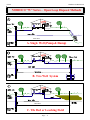
When satisfied all connections are leak free, release the
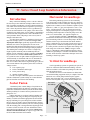
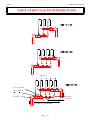
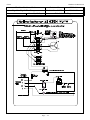
air pressure and connect a flush cart (see diagram) to the
flushing access ports at the pump station. A temporary flushing system can alternately be constructed
using a 170 litre barrel and a pump with
Typical
sufficient volume and head capability to
Flush
circulate fluid at a velocity of at least 1
Cart
cm/sec. through all parts of the loop. Begin pumping water through the earthloop
making sure that the intake of the pump
stays submerged at all times by continuously adding water from a hose etc. Water
flowing back on the return line should be
directed below the water level in the barrel
or flush tank to prevent air being mixed
with the outgoing water. Once the lines
have been filled and no more air bubbles
are appearing in the line, adjust the flow
valves to circulate water through the heat
pump using the same technique as described above. When all air is removed
reverse the flow of water through the lines
by interchanging the flush cart lines and
purge again. You will be able to visibly
tell when all air is removed.
Installing
Antifreeze
In most mid and northern areas of the US and in all of
Canada it is necessary to condition the loop fluid by the addition of some type of antifreeze solution so that it will not
freeze during operation in the winter months. This antifreeze
is required because the loop fluid will normally reach a low
entering temperature of –2.2°C to 0°C. and refrigerant temperatures inside the heat pump’s heat exchanger may be as
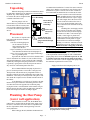
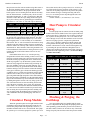
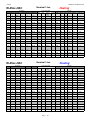
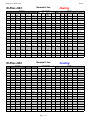
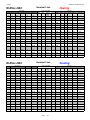
low as 11°C cooler. See the antifreeze concentration chart at
left for details of freeze protection afforded under different
concentrations.
NOTE: Add enough antifreeze to allow for a temperature 11°C lower than the expected lowest loop fluid
temperature entering the heat pump.
NOTE: Although many different antifreeze solutions
have been employed in geothermal systems, the alcohols such
as methanol or ethanol have the most desirable characteristics
for earthloop application. The overall heat transfer characteristics of these fluids remain high although care must be taken
when handling pure alcohols since they are extremely flammable. Once mixed in a typical 25% by volume ratio with water the solution is not flammable. In situations where alcohols
are not allowed as a loop fluid due to local regulations then
propylene glycol is a non-toxic alternative which can be substituted . Propylene glycol should only be used in cases where
alcohols are not permitted since the heat transfer characteristics are less desirable and it becomes more viscous at low
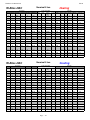
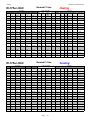
temperatures which increases pumping watts. The volume of
fluid that your loop system holds can be closely estimated by
totaling the number of ft. of each size pipe in the system and
referencing Table 2. the for approximate volume per 30 meters.
When the volume of the loop has been calculated and
the appropriate amount of antifreeze is
ready for addition by referencing Table
1. , drain the equivalent amount of water
from the flush cart or mixing barrel and
replace it with the antifreeze. When using
alcohols be sure to inject it below the water line to reduce initial volatility of the
pure antifreeze. If the loop is large and
the tank is small it may be necessary to
refill the tank with antifreeze several
times to get all the antifreeze into the
loop. Pump the loop for 5 to 10 minutes
longer to insure the remaining fluid has
been well mixed.
Initial
Pressurization
At this point open all valves in the flow
circuit and slowly close off the supply
and return flush cart valves in a manner
that leaves about 175-300 kPa on the
system. If an air bladder expansion tank
is used the bladder should be charged to the above pressure
before actual water pressure is put on the system . Systems
employing a commercially available loop pump kit that do not
have an expansion tank, thermometers and pressure gauges
will experience a greater fluctuation of pressure in the loop
between winter and summer. This fluctuation is normal since
expansion and contraction of the loop fluid must be handled
by the elasticity of the plastic loop. Pressurize the loop to a
pressure of 300 kPa when installing a system in the fall going
into the heating season. If installing in spring or summer
charge to 175 kPa.
After operating the machine for a period of time, any
residual air in the system can be bled off through valved vertical standpipes in the pump module. If pressure drops below
175 kPa add additional water / antifreeze mix with the purge
pump to bring the pressure back to the original setting.
Page .... 17