1
Binary-Type Rules
Binary-Type Rules
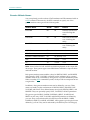
This section describes the transformation rules for creating and retrieving binarytype (TYPE I or TYPE L) files. The term image-type is used interchangeably with
binary-type in the information in this section.
No Record Structure
The STRU F command with TYPE I or TYPE L parameters defines a binary file
without record structure.
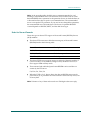
Storing Binary Files
These rules define the transformations to such a file when it is stored (using
STOR or APPE) by the Server FTP:
■
The received network data is folded into maximum-length logical records
when stored by the Server FTP.
■
If a null (zero-length) network record is received, it is ignored.
■
No translation, truncation, or padding is performed on the data.
Since the contents of an image-type file are considered to be untranslatable as
characters, it is assumed not to be a print file. Therefore, the Server FTP does not
write image-type data into a print data set (RECFM includes A).
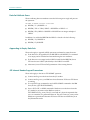
Retrieving Binary Files
These rules define the transformations to such a file when it is retrieved (using
RETR) by the Server FTP:
■
■
The retrieved logical records are concatenated into a single stream of
network data.
No translation, truncation, or removal of padding is performed on the
retrieved data.
Since the contents of an image-type file are considered to be untranslatable as
characters, it is assumed not to be a print file. Therefore, the Server FTP does not
retrieve from a print data set (RECFM includes A).
3–52
User Guide