1
- 9 A STANDARD XML FORMAT FOR A SCENARIO REPRESENTATION
Page 44 of 82
9.5.3 listShortestPaths
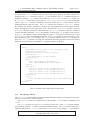
This event extends ASEventType. It has five attributes: src, dst and SPFType which are
strings and ECMP and nodeList which are booleans. All these attributes are optional.
This event prints information about shortest paths of the given domain on the standard output
stream. If src and dst are specified, it prints only shortest paths between these two nodes. If
only src (resp. dst) is specified, the shortest paths from src (resp. to dst) to (resp. from) all
the other nodes are listed. If neither is specified, it prints all the shortest paths of the given domain.
If you want to take ECMP into account, ECMP must be set to true and false otherwise (note
that it is false by default). SPFType is exactly the same attribute as the one described in section
9.5.4. Finally, nodeList specifies whether the paths must be printed under the form of a list of
nodes or a list of links. If it is true, a list of nodes is printed. Otherwise, the event prints a list of
links. Note that the attribute is true by default.
9.5.4 ShowLinkInfo
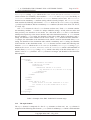
This event extends ASTMEventType. It has four optional attributes type, verbose, ECMP and
SPFtype. type can be LOAD, LOAD_BIS, LOAD_IS, RESERVATION and PRIMARY_BACKUP.
verbose and ECMP are booleans and SPFtype is a string.
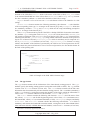
This event prints information about the load or about the reservation of links (if the value of
type is LOAD or RESERVATION) on the standard output stream. If type is not specified, it
prints information about the load of links by default. verbose must be true if you want to have
information about each link of the given domain and false if you just want to print the following
values: maximum, mean, standard deviation and percentile 10 (verbose is false by default).
SPFtype allows you to choose the SPF algorithm used to compute the load or the reservation of
links (see the section 8.1 for the possible values). By default, a classical SPF algorithm based on
the links’ metrics is used. If you want to enable ECMP (Equal Cost MultiPath), ECMP must be
true and false otherwise. By default, ECMP is false.
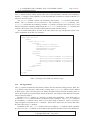
If the value of type is PRIMARY_BACKUP, the event prints some information about primary
and backup link reservation (total primary bandwidth reserved, oversubscription for backup (with
or without taking sharing between primary and backup paths into account), mean and max link
utilization). In order to use this feature correctly, you have to set the useBWSharing attribute of
the loadDomain element to true.
The values LOAD_BIS, LOAD_IS, LOAD_OVERLAY are used when part of the traffic is
routed with IGP routing (shortest path based on link weigths) while other part of the traffic is routed
with MPLS label switched paths. In particular, the values LOAD_BIS and LOAD_IS can be used
for SAMTE (see section 8.8), but can also be used in other algorithms. The value LOAD_BIS
corresponds to the Basic IGP Shortcut model. In this model, the traffic that is forwarded on the
path of an LSP is the whole traffic that crosses the ingress node of the LSP and whose exit point
is the egress of the LSP. The value LOAD_IS is used for IGP Shortcut. In this model, the traffic
that is forwarded on the path of an LSP is the whole traffic that crosses both the ingress and egress
nodes of the LSP. In this last model, more traffic is forwarded on the LSP (there is no restriction
about the exit point of the traffic). Finally, the LOAD_OVERLAY value corresponds to the overlay
model. In this model, the traffic is forwared on a LSP if the source and destination of the traffic
match the ingress and egress of the LSP.
If you want to deal with backup LSPs and link/node failures, you should probably want to enable traffic switching in order for the traffic to be routed on some backup path when a failure is encountered on a primary LSP. Traffic switching can be enabled using the enableTrafficSwitching
event (see section 9.3.4).
Copyright 2004, 2007 - ULg, UCL