1
46
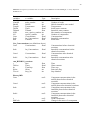
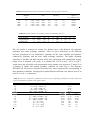
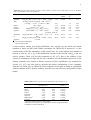
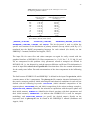
Table 4.8 Log K parameters for multi-site exchange complex.
Yexchanger(1)
HY(2)
NaY
KY
MgY2
CaY2
CdY2
PbY2
ZnY2
-1.0
-0.3
-0.4
-0.2
-0.2
0.05
-0.2
HYa
HYb
HYc
HYd
HYe
HYf
1.65
3.3
4.95
6.85
9.6
12.35
(1)
The value for NaY is taken from Appelo et al. (1998). Values for the other complexes are taken from the
phreeqc.dat database (Parkhurst and Appelo, 1999) and adapted relative to the K for NaY.
(2)
Values taken from Appelo et al. (1998).
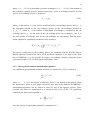
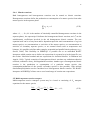
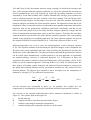
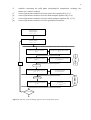
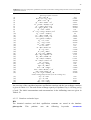
An overview of the considered aqueous equilibrium reactions is given in Table 4.7. The role
of chloride as a complexing agent is described by reactions (10) through (13). Other
geochemical reactions that are considered are the heterogeneous multi-site ion-exchange
reactions. The exchange coefficients for major cations and heavy metals were assumed to be
the same for all exchange sites. Table 4.8 gives parameters for this multi-site exchange
complex.
4.3.1.2 Database and model input
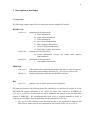
HP1
Chemical reactions and their equilibrium constants are stored in the database phreeqc.dat.
The following keywords are used for this problem: SOLUTION_MASTER_SPECIES,
SOLUTION_SPECIES, EXCHANGE_MASTER_SPECIES, and EXCHANGE_SPECIES. The
input file for water flow and solute transport is relatively straightforward and can be easily
created the standard way with the graphical interface of HYDRUS-1D. The problem involves
9 components that are transported, i.e., Na, K, Mg, Ca, Cl, Br, Cd, Zn, and Pb. Only
parameters related to solute transport (i.e., the dispersivity and the aqueous diffusion
coefficient) are defined in HYDRUS-1D. All other solute transport parameters, except for the
Freundlich exponent which is equal to one, are set to zero. This information is stored in the
HYDRUS-1D input files Selector.in and Profile.dat. Note that these files also contain
information about the steady-state flux (0.05 cm day-1), the boundary concentrations of the
nine components in the incoming water, and spatial and temporal discretization parameters of
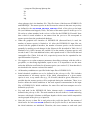
the numerical problem. The link between HYDRUS-1D and PHREEQC is defined in the
Species.in input file that contains names of nine elements, the names of which must be the
same as in the Phreeqc.dat database. Finally, the initial solutions and exchange complexes are
defined in the Phreeqc.in input file. Since the transport problem involves variable water
contents with depth, a SOLUTION-keyword needs to be defined for nearly each cell. In
addition, the cation exchange complex for each soil layer must be defined using the keyword
EXCHANGE, with each layer containing six exchange sites. Also included in the input file are
the keywords TRANSPORT to indicate that HYDRUS-1D will be used for transport
modelling, and SELECTED_OUTPUT to specify the desired output. Details about the
keywords used in Phreeqc.in can be found in the PHREEQC-2 manual (Parkhurst and
Appelo, 1999).