1
ellip
Algorithm
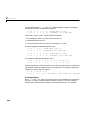
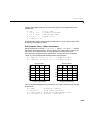
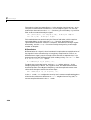
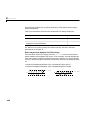
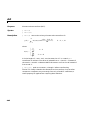
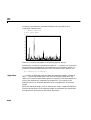
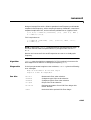
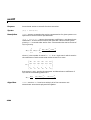
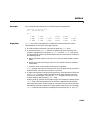
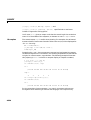
The design of elliptic filters is the most difficult and computationally intensive
of the Butterworth, Chebyshev type I and II, and elliptic designs. ellip uses a
five-step algorithm:
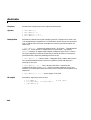
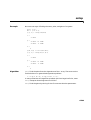
1 It finds the lowpass analog prototype poles, zeros, and gain using the
ellipap function.
2 It converts the poles, zeros, and gain into state-space form.
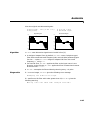
3 It transforms the lowpass filter to a bandpass, highpass, or bandstop filter
with the desired cutoff frequencies using a state-space transformation.
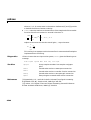
4 For digital filter design, ellip uses bilinear to convert the analog filter
into a digital filter through a bilinear transformation with frequency
prewarping. Careful frequency adjustment guarantees that the analog
filters and the digital filters will have the same frequency response
magnitude at Wn or w1 and w2.
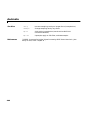
5 It converts the state-space filter back to transfer function or zero-pole-gain
form, as required.
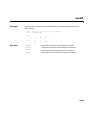
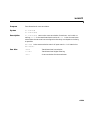
See Also
besself
Bessel analog filter design.
butter
Butterworth analog and digital filter design.
cheby1
Chebyshev type I filter design (passband ripple).
cheby2
Chebyshev type II filter design (stopband ripple).
ellipap
Elliptic analog lowpass filter prototype.
ellipord
Elliptic filter order selection.
6-115