1
CALIBRATION
Series 75/7600(0), 85/8600(0), 95/9600(0) M & I
Multifunction Instrument, Totalizer Calibration
This is a three-part calibration procedure. Part one adjusts idle consumption. Part two determines optimum cruising RPM and fuel
tank configuration. Part three calibrates for overall accuracy.
PART I: Idle Consumption Adjustment
•
•
•
•
Start and run engine(s) until they’re at operating temperature.
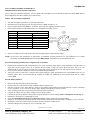
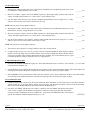
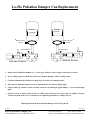
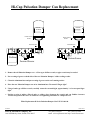
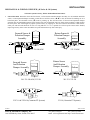
Referring to the switch diagram, rotate the Upper and Lower Black Switches to, “0”.
Increase engine speed to 1800 RPM for one minute. This purges any trapped air from the system.
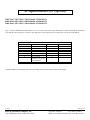
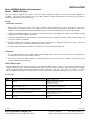
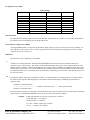
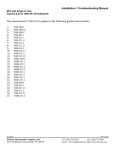
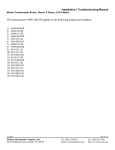
Return engine speed to low idle and determine its’ consumption from Table 1 below.
Table 1
HP
100-400
400-750
750-1000
1000-1250
1250-1500
1500-2000
2000-3000
No Load Idle Consumption
Non-Turbo
w/Turbo
0.1-0.5 GPH, (1-2 LPH)
0.3-0.7 GPH, (2-3 LPH)
0.8 GPH, (3 LPH)
1.0 GPH, (3-4 LPH)
1.0 GPH, (4 LPH)
1.5 GPH, (5-6 LPH)
2.0 GPH, (7-8 LPH)
2.5 GPH, (9-10 LPH)
3.0 GPH, (11-12 LPH)
3.5 GPH, (13-14 LPH)
3.5 GPH, (13-14 LPH)
4.0 GPH, (15-16 LPH)
4.5 GPH, (17 LPH)
5.0 GPH, (18-19 LPH)
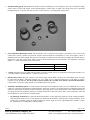
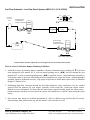
0 is the
reference
point
Turning switch
counter clockwise
0-6 will increase
the GPH, (LPH)
reading
D
C
E
F 0
1
9
7
2
B
A
8
Turning switch
clockwise from
3
0-5 will
the
4 decrease
GPH, (LPH)
reading
5
6
Lower BLACK Switch
•
Rotate Lower Black Switch until the idle GPH, (LPH) reading matches engine HP from Table 1.
NOTE: At this point, idle consumption is approximate. It establishes operating parameters for final calibration. On G model
instruments, the Green Switch replaces the Lower Black Switch. G Instruments were discontinued in 1999.
Part II: Determining Optimum Tank Configuration & Cruise RPM
•
•
•
Determine the optimum fuel tank configuration for your vessel. If possible, single engine vessels should draw and return fuel to a
single tank. On twin engine vessels, try to configure the fuel system so that each engine draws and returns fuel to its’ own
dedicated tank. If your twin engine vessel has only a single tank, equal consumption rates for both engines must be assumed.
Close any cross connect or limber line valves between tanks during calibration.
Take your vessel for a short cruise. Using the GPH, (LPH) reading as a guide, determine the best cruising RPM for the way you
normally operate. Don’t be concerned that the readings are slightly off. Calibration is most accurate when done at a single
cruising RPM.
Part III: Final Calibration
•
•
•
•
•
•
•
•
•
•
•
Return to the fuel dock and top off the fuel tank(s).
Reset the totalizer so that the GALLONS, (LITERS) window reading is zero.
Take the vessel for a cruise. Once underway, steam at your optimal cruising RPM, (Determined in Part II). Consume a minimum
of 20 to 30 gallons, (75 to 115 liters) of fuel per engine. Higher consumption gives better accuracy.
After consuming some fuel, return to the fuel dock and top off the fuel tank(s).
Compare the Gallons, (Liters) window reading to the fuel pump reading.
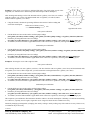
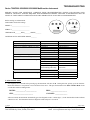
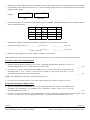
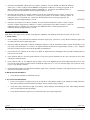
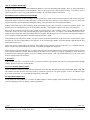
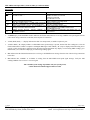
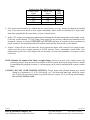
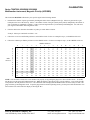
Calculate the percentage difference between the fuel pump & Gallons, (Liters) readings; (Refer to Examples I & II on page 2).
Determine if the totalizer is reading High or LOW.
Rotate the Upper Black Switch until the GALLONS, (Liters) window matches the fuel pump reading.
Starting at, “0” rotating the Upper BLACK Switch in a clockwise direction increases the Totalizer readings by 2% for each click.
Rotating the switch in a counter-clockwise direction decreases Totalizer readings by 2%.
Totalizer readings can be increased by 10%, or reduced by 20%.
(Continued on reverse side)
10/30/2002
FloScan Instrument Company, Inc.
3016 NE Blakeley Street, Seattle, WA 98105
7000-087-00F
Tel: (206) 524-6625
Fax: (206) 523-4961
email: [email protected] http://www.floscan.com