1
1
Introduction
The parallel solution to large sparse linear systems of equations:
Ax = b
(1)
where A ∈ Rn×n , x, b ∈ Rn , is a central task in computational science and
engineering. While iterative methods based on Krylov subspaces are well-suited
for an effective implementation on High Performance Computing (HPC) platforms, most preconditioning techniques are not. For a recent thorough review,
see e.g. [6].
A well-known preconditioner for Symmetric Positive Definite (SPD) linear
systems is the Factorized Sparse Approximate Inverse (FSAI). The native FSAI
algorithm was originally introduced by [15] about 20 years ago with the aim at
computing an explicit sparse approximation of the inverse of the exact lower
Cholesky factor of A by means of a Frobenius norm minimization procedure.
FSAI is a robust tool endowed with attractive theoretical properties, such as its
optimality for a given sparsity pattern with respect to the Kaporin conditioning
number of the preconditioned matrix [14]. The aspect that mainly impacts on
the FSAI quality and efficiency is the selection of its sparsity pattern. Originally,
the algorithm was conceived assuming that a pattern S for the non-zero entries
of the preconditioner is statically set by the user. A typical choice based on
the Neumann series expansion of A−1 is to use for S the pattern of a small
power of A, i.e., A2 or A3 . However, even small powers of A can be very dense,
thus slowing down the overall algorithm. Possible remedies to such a drawback
can be either using the power of a sparsified A [5] or post-filtering the FSAI
preconditioner by dropping its smallest entries [16] or both. More recently, also
a dynamic pattern computation has been advanced [12] using an algorithm that
chooses adaptively the most significant terms to be retained for each row of the
preconditioner. Another possibility is to build the preconditioner recursively, so
as to compute a dense and high quality FSAI as the product of a few sparse
factors [3]. The choice of the most efficient technique for generating the FSAI
non-zero pattern is strongly problem-dependent. In most cases, a combination
of existing strategies would probably provide the best outcome.
The software package FSAIPACK collects all existing ways for computing
a FSAI preconditioner. FSAIPACK allows for combining different strategies
to build S, in both a static and dynamic way, thus thoroughly exploiting the
preconditioner full potential. The combination of different strategies can be
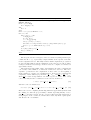
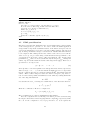
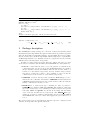
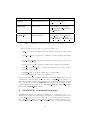
managed by direct library calls or by the FSAIPACK Command Language, that
provide the user with a great flexibility and easiness of use. The strategy can
be defined by a sequence of commands in ASCII format that can be interpreted
by the driver. The commands follow a number of syntax rules that must be
complied with for a successful run. FSAIPACK is programmed in Fortran90
using the OpenMP directives for shared memory parallel computations.
2
Theoretical background
The FSAI preconditioner M −1 for SPD matrices is defined as the product:
M −1 = GT G
3
(2)