1
The PL/SQL Agent and the Java Interpreter can use either of two interfaces:
WRB or CGI. Which interface is used is determined by the mapping of the “file”
the URL requests; this mapping is part of the WebServer configuration.
How URLs Specify Applications
Once the Listener has determined that a URL specifies that an application is to
be executed on the server, it interprets the URL to extract path information and
arguments to be passed to the application on start-up.
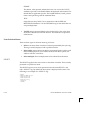
URLs that specify applications are split into three different parts:
•
The virtual path
•
The extra path information
•
The query string
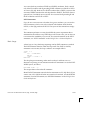
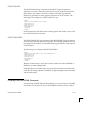
The syntax is as follows:
virtual_path extra_path_information?query_string
Here are the explanations of the syntax components:
virtual path
This is similar to a path you would use to access a regular document or image.
That is, it is a pathname that identifies the application that you want executed.
extra path information
This is optional additional information embedded in the URL after the
pathname. This consists primarily of various environment variables that you can
use to pass information to the application.
query string
This is another optional part of the URL. This is used to directly supply
parameter values (as opposed to environment variable values) to the requested
application. The parameters are specified in the following form:
<parameter name>=<value>
Example of a URL Invoking an Application
This section provides an example of a URL that invokes a PL/SQL Agent to
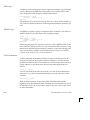
access the database. Here is the URL in question:
http://www.nhl.com:8080/ows-bin/nhl/owa/hockey_pass?person=Gretzky
1.
The substring http://www.nhl.com:8080 in the above URL signals the
Web browser to connect to the www.nhl.com host's port 8080 using the
Developing Applications for the Oracle WebServer
4-3