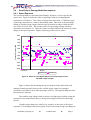
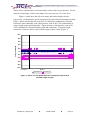
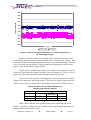
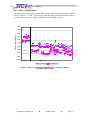
1
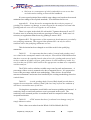
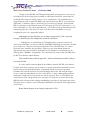
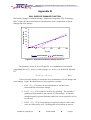
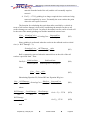
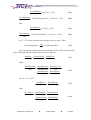
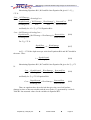
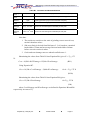
Methodology to Calculate Variable Usage Charges for Control Period 4 Substituting Equations B11, B12 and B14 into Equation B6 gives15 < Tγ ≤ 175 N: Cost RCFDamage = × GrindingCost + Axle Axle (B15) DepthGround ⎛ RCFDamage WearDamage ⎞ RenewalCost ×⎜ + ⎟× GrindingCycle ⎝ Axle Axle ⎠ SideLossLimit and finally for 15 < Tγ ≤ 175 N Equation B16: Cost = RCFDamage × GrindingCost + DepthGround RenewalCost × (RCFDamage + WearDamage)× GrindingCycle SideLossLimit (B16) For Tγ ≥ 175 N: DepthWorn WearDamage =k× Axle Axle (B17) At Tγ = 175 N the depth worn per axle from Equations B14 and B17 should be the same. Thus: k= DepthGround GrindingCycle (B18) Substituting Equations B11, B17 and B18 into Equation B6 gives for Tγ ≥ 175 N: Cost DepthGround WearDamage RenewalCost = × × Axle GrindingCycle Axle SideLossLimit (B19) and finally for Tγ ≥ 175 N Equation B20: Cost = DepthGround RenewalCost × WearDamage × GrindingCycle SideLossLimit (B20) Thus, an equations have been derived that gives the cost of rail surface damage in terms of known variables and the wear index (Tγ) generated by a vehicle. Table B1 lists assumed values for the variables in Equation B15. Prepared by TTCI(UK) Ltd. 27 March 2008 Page 70