1
6
For IHD, the definitions used in the 8th, 9th and 10th revisions are also quite
comparable. However, the definitions used in the 6th and 7th revisions are somewhat
broader. It has been suggested9 that comparability might be obtained by using codes
420 + 422.1 in the 6th and 7th revisions, but data are not available from WHO for such
detailed codes. Examination of 1965 data for England and Wales showed that deaths
for summary code A081 (as used in the database) were about 11% higher for men and
25% higher for women than deaths for 420 + 422.1, so the discontinuity is not a
minor one. Given that the alternative was not to have any IHD data before about
1968 (when the ICD 8th revision came in), it seemed better to include earlier data
using a somewhat different definition, but making it clear that there was a problem of
non-comparability when studying time trends.
For COPD the problem is more complex. Ideally, for comparison with smoking data,
one would have liked a disease definition which included the terms chronic bronchitis
(CB), emphysema and COPD. However, there were a number of problems:
(i)
(ii)
(iii)
(iv)
asthma, as well as bronchitis unqualified as to whether it is acute or chronic, is
combined with CB and emphysema in the same WHO broad summary code in
the 8th and 9th revisions,
COPD, a term only commonly used in the last 20 years or so, is classified with
“other respiratory disease” in the 6th, 7th and 8th revisions,
emphysema is classified with “other respiratory disease” in the 6th and 7th
revisions, and
asthma is included under allergic disorders (and not as a respiratory disease at
all) in the 6th and 7th revisions and cannot be separately identified from the
available data.
After studying the coding systems at some length it became clear that there was no
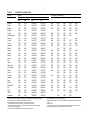
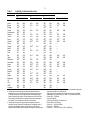
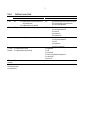
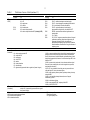
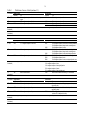
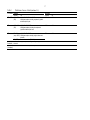
entirely satisfactory solution. The definition of COPD finally selected (as detailed in
Table 5) is comparable enough for the 9th and 10th revisions, but will lead to some
discontinuities earlier, which may vary by country. As an alternative, data for
respiratory diseases (non-acute) are also included. This broader disease grouping has
fewer continuity problems, but includes various diseases that are not associated with
smoking.
It should also be noted that there are numerous ‘rules’ used when carrying out the
coding, and that these may vary between countries and from time to time. For
instance, the death coded is the underlying cause, but between 1985 and 1992
England and Wales adopted its own version of the rule to determine the underlying
cause, resulting in a substantial drop in the death rate from pneumonia in that
period10. A similar rule was adopted with the 10th revision of ICD, and a bridge-
File Ref: N:\IMASS\IMASSv4\docs\IMASSv4UserGuideAndExamples.doc