1
How the heat pump works
How the heat pump works
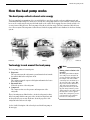
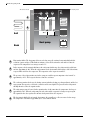
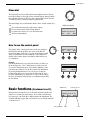
The heat pump collects stored solar energy
The heat pump has been manufactured for easy and reliable use as well as to provide your house with inexpensive and
environment friendly heating. The easiest way to describe how a heat pump works is to say it works like a refrigerator, but
in reverse. In a refrigerator, heat is moved from the inside to the outside. In a heat pump, heat stored in the ground, rock
or water, is moved into the house. The heat pump collects the stored solar energy. The heat is transferred into the house
via a collector system. The temperature is then increased in the heat pump and the heat is distributed to the house heating
system.
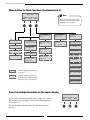
Rock heat
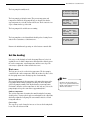
Soil heat
Technology in and around the heat pump
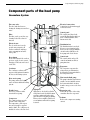
The heat pump consists of four main parts:
1. Evaporator
The evaporator turns the refrigerant to gas and transfers heat from the
heat transfer fluid to the refrigerant circuit.
2. Condenser
The condenser turns the vapour to fluid again and transfers the heat to
the heating system.
3. Expansion valve
Lowers the pressure of the refrigerant.
4. Compressor
The compressor increases the pressure and temperature of the
refrigerant.
These four main parts are linked in three circuits. A refrigerant circulates
in the heat pump, which in some parts of the circuit is in a liquid state and
in other parts in a gaseous state. Read more about the properties of the
refrigerant in the text box to the right.
See the detailed description of the technologies used in the heat pump on
the next page.
5
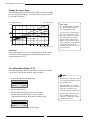
Lake heat
Note
Boiling point in relation to the
pressure:
The boiling point of different liquids
varies with pressure, the higher the
pressure, the higher the boiling point.
For example, water boils at +100ºC
at normal pressure. Double the pressure and water boils at +120ºC. Half
the pressure and water then boils at
+80ºC. The refrigerant in the heat
pump acts in the same way, the boiling point changes when the pressure
changes. However, the boiling point of
the refrigerant is as low as approximately -40ºC at atmospheric pressure.
Consequently, it is also suitable for
low heat source temperatures.