1
Wiring examples
Channel 1 (switched output) of the EBDSPIR-AT-DD can
either be used to switch a separate channel of standard,
non-dimming luminaires, or to isolate the mains supply to
dimming ballasts (saving on the standby current of the
ballasts).
Multiple luminaires may be connected in parallel to
Channel 1 (via the N and L/Out terminals) as long as the
maximum total load is not exceeded.
be used to control the light output of luminaires that are
fitted with dimming ballasts/transformers.
The ballasts/transformers can be connected in parallel to
Channel 2 (via the DIM– and DIM+ terminals). Ensure that
correct polarity is maintained at each ballast. Refer to the
specification on page 16 for ballast quantities.
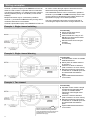
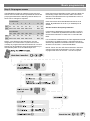
The wiring examples below show common methods of
connecting the output channels for a single detector unit.
Channel 2 (dimmable output) of the EBDSPIR-AT-DD can
Example 1: Single channel switching
Functionality
Simple On/Off load control.
Presence detection.
Absence detection using an ATBB-IN Input Unit and associated
switch/button plate.
Manual On/Off control using IR
Handset.
Lux switching.
Example 2: Single channel dimming
Functionality
Dimmable load control via suitable
ballast/transformer.
Mains power to ballast switched
by channel 1.
Presence or absence detection
(with or without Lux Level control).
Manual scene/level control using
IR Handset or AT-BB-IN Input Unit
and associated switch/button
plate.
Optional Maintained Illuminance
Level control.
Example 3: Two channel
Functionality
Separate control of both a simple
On/Off load and dimmable load
(control via suitable ballast/
transformer with integral mains
switching).
Presence / absence detection
(with or without Lux Level control).
Manual scene/level control using
IR Handset or AT-BB-IN Input Unit
and associated switch/button
plate.
Optional Maintained Illuminance
Level control.
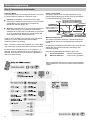
Please note that the dimming signal is
used to switch the dimming luminaire
on/off and therefore the 230V feed to the
luminaire fitting must come from the
permanent live supply
4