1
PELLET STOVE ARITERM MYSINGE
2 Installation
2.2 Chimney
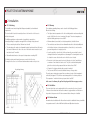
2.1 Positioning
The installation must meet all applicable European standards, local and national
requirements.
The regulations regarding chimneys can be found in the Building regulations.
Observe the following:
The stove should be located in a central position on the lower floor of the house to
facilitate heat spread.
•The highest surface temperature of the flue including insulation and surrounding shaft
may be 100˚C when the stove is running at full output. The surface temperature of
adjacent building parts may not exceed 80˚C.
The Building regulations contain a number of regulations to prevent fires.
Generally speaking, the regulations are applied if the following is being observed:
• The stove must be placed at least 100 mm from the wall.
• The underlay must be made of non-flammable material, and extend at least 300 mm to
the front and 100 mm to the side of the stove. If the hearth surface is made of steel it
must be at least 0.7 mm thick.
• Flammable material must not be exposed to temperatures exceeding 80˚C.
To facilitate servicing and cleaning, leave space on each side of the stove.
The weight of the stove is so low that no extra demands are made on the joists etc.
Any existing chimney
• Minimum diameter (round duct) or side (rectangular duct) should be 80 mm.
• The smoke ducts must be made of non-flammable material of sufficient durability and
with sufficient resistance to temperature variations, climate effects, corrosive smoke
gases and slag and use of sweeping tools etc.
• It must be possible to clean the flue. If fallen ash cannot be removed via the stove’s
cleaning hatch another cleaning hatch must be arranged. The cleaning hatch must not
be located in a room other than the one in which the stove is located.
• Connection to the chimney must be via a steel flue pipe of at least 2 mm thickness,
or minimum 1 mm thickness if stainless steel. The joint is sealed with hard packed
glass fibre or elastic sealing compound that can tolerate at least 250˚C.
• All parts of the chimney situated outdoors must be insulated.
• The stove must NOT be connected to divided chimneys or flue gas ducts.
The smoke gases contain water vapour that can condense to water if the temperature is
sufficiently low (approx 55°C) which can cause damage both to the chimney and stove.
The temperature 1 m below the chimney top must be at least 60˚C.
In the event of a chimney fire, pull out the plug and call the emergency services.
2.3 Ventilation
There must be at least one air supply ventilator in the room where the stove is located.
If there are other exhaust fans increase the number of supply ventilators until the fans no
longer affect the pressure ratio. We also recommend that a chimney fan is installed.
2.4 Ariterm Arrow
Information about installation with Ariterm Arrow instead of a traditional chimney is available
in a separate manual. See Arrow Wall fan Installation and Operation instructions.
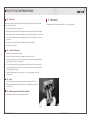
Fig. 7
ARITERM-SP-PX26868-B.1
ARITERM SWEDEN AB
Installation Instructions - 2013.10.10 - 11/20