1
IF ALARM SOUNDS – DESCEND IMMEDIATELY.
1)
Never exceed the maximum platform capacity of
265lbs (120kgs).
2)
Check below, above and around platform for any
obstruction or hazards before operating any function.
6)
Raise the jockey wheel to its stowed position and secure
for transit.
DE-COUPLING INSTRUCTIONS
1)
Apply trailer handbrake and/or chock wheels.
3)
Depress the green power button or the foot switch located
in the platform floor (if applicable).
2)
Lower the jockey wheel to the ground. Disconnect the
breakaway cable/chain and lighting plug.
4)
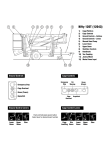
Select handlever controls marked 1, 2, 3.
3)
Operate the handle by depressing the trigger and manually
lift the coupling head clear of the towing ball or screw down
the telescopic jockey wheel to achieve the same effect.
Control 1
Operates lower boom
UP for up
DOWN for down
Control 2
Operates upper boom
UP for up
DOWN for down
Control 3
HANDBRAKE OPERATION (IF APPLICABLE)
Operates swing
UP for right
DOWN for left
THIS MACHINE IS NOT ELECTRICALLY INSULATED. DO
NOT WORK WITHIN 3M (10FT) OF OVERHEAD CABLES
EXCEEDING 415 VOLTS.
TOWING
1)
To operate the trailer parking brakes pull the handbrake
lever upwards and backwards. The spring loaded
mechanism will engage and stay in the operated position
until re-set.
2)
To disengage the parking brakes, firmly grasp the
handbrake lever and pull upwards. Depress the ratchet
release button in the end of the handbrake lever and return
the lever to the horizontal position. Care should be taken
when operating the handbrake lever due to the forces
involved in engaging the ratchet mechanism.
EMERGENCY CONTROLS
GENERAL
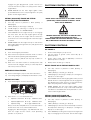
THE MAXIMUM TOWING SPEED OF A NIFTYLIFT IS 45
MPH (72 KMPH) WITH A VEHICLE THAT COMPLIES
WITH ALL ROAD TRAFFIC REGULATIONS. SPEEDING
MAY RESULT IN DEATH OR SERIOUS INJURY.
CHECKING THE OPERATION OF THE EMERGENCY
CONTROLS EVERY DAY AND/OR BEFORE EACH SHIFT
IS AN ESSENTIAL PART OF THE OPERATORS DUTIES.
It is recommended that the maximum towing speed of 45mph
(72kmph) be adhered to for the greatest safety. In other than
perfect conditions it is sensible to further reduce your speed in
order to ensure full control over your vehicle and trailer. The
importance of the suitability of your towing vehicle must be
stressed. The manufacturers’ details concerning each model will
give you recommended Gross Vehicle Weights (GVW) or Gross
Train Weights (GTW) neither of which should be exceeded.
The operator and all ground personnel must be thoroughly familiar
with the location and operation of the EMERGENCY CONTROLS.
IN THE EVENT OF AN INCAPACITATED OPERATOR.
Turn key switch selector at ground control station to ground (i.e.
fully down). Lower on ground controls as detailed in section:
Ground Control Operation.
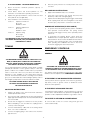
POSITION TOWING VEHICLE AND TRAILER
ON LEVEL GROUND BEFORE ATTEMPTING
TO COUPLE/DE-COUPLE.
IN THE EVENT OF MACHINE FAILURE.
COUPLING INSTRUCTIONS
1)
Depress the trigger on the lever mechanism and lift the
handle upwards and forward.
2)
Place the unlocked coupling head onto the towing ball and
apply slight downward pressure. The head will automatically
lock onto the ball.
3)
Ensure that the trigger has returned to its free position
before attempting to tow, and that the coupling head is
securely on the towing ball.
4)
Connect the breakaway cable/chain to the towing vehicle
hitch – not to the tow ball itself.
5)
Connect the lighting plug to the vehicle and check the
light functions.
Lower platform using handlever controls in platform or at ground
control station and simultaneously operate the handpump. This
operation can be completed from either the cage or base controls.
TO ROTATE PLATFORM IN AN EMERGENCY.
Fit 1/2 inch drive socket on to end of swing worm gear and
crank round manually.
4