1
1. DISCLAIMER OF LIABILITY
The installation, handling and use of Trina Solar Crystalline modules are beyond company control. Trina Solar does not assume any
responsibility for loss, damage, injury or expense resulting from the improper installation, handling, use or maintenance.
Trina Solar assumes no responsibility for any infringement of patents or other rights of third parties that may result from use of the
module. No license is granted by implication or under any patent or patent rights.
Specifications are subject to change without prior notice.
2. SAFETY PRECAUTIONS
• Potentially lethal DC voltages can be generated whenever PV Modules are exposed to a light source, avoid contact with
electrically active parts and be sure to isolate live circuits before attempting to make or break any connections.
• Only authorized and trained personnel should have access to or perform work on the modules or solar system.
• When working on electrical connections, remove all metallic jewelry, use properly insulated tools and wear appropriate personal
protective equipment to reduce the risk of electric shock.
• Do NOT stand or step on, damage or scratch the front or backside surfaces of the module.
• Broken modules cannot be repaired and contact with any module surface or frame can lead to electrical shock. Do NOT use a module
with broken glass or torn substrate.
• Do NOT disassemble the modules or remove any part of the module.
• Protect the electrical plug contacts against corrosion and soiling. Make sure that all connectors are corrosion free and clean before
making the connection.
• Do NOT install or handle modules when they are wet or during periods of high wind.
• Ensure sure that all connections are securely made with no gap between the contacts. Any gap can result in electrical arcing that can
cause a fire hazard and/or an electric shock.
• Make sure that the polarity of each module or a string is not reversed considering the rest of the modules or strings.
• Do NOT artificially concentrate sunlight on these solar modules.
• Trina Solar modules are certified for operating in Class A installations at voltages below 1000Vdc. This maximum voltage should not be
exceeded at any time and, as the voltage of the module increases, above data sheet values, at operating temperatures below 25°C, then
these need to be taken into account when designing a PV system.
• Do NOT use water to extinguish fires of an electrical origin.
• Under normal conditions, a solar photovoltaic module is likely to produce more current and /or voltage than reported under standard
test conditions. Accordingly, the value of Isc marked on this module should be multiplied by a factor of 1.25 when determining the
conductor current ratings, fuse sizes and size of controls connected to the SPV output.
3. UNPACKING AND STORAGE
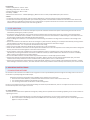
• At time of receipt, verify that the product delivered is in fact the product
order. The product name, subname, and serial number of
each are clearly marked on the outside of each packing box.
• Leave the product in its original packing box until you are ready to install.
• Store packing boxes in a clean, dry area with relative humidity below 85%
and ambient temperatures between -20°C and 50°C.
• Do NOT stack packing boxes (pallets) more than 2 boxes high.
• At the installation site, take care to keep modules and, in particular, their
electrical contacts clean and dry before installation. If connectors
are left in damp conditions then the contacts may corrode. Any module
with corroded contacts should not be used.
• If pallets are stored temporarily outside then place a protective covering
over the pallet to protect it from direct weathering and do not stack more than 1 pallet high.
• Two people are required to unpack the modules from the packing box, when handling modules always use both hands. Cut the cable ties,
with suitable wire cutting pliers and take care to avoid scratches to the module back surface.
• Do NOT place modules directly on top of each other.
3.1 PRODUCT IDENTIFICATION
Each individual module has a unique serial number laminated behind the glass and another permanently attached to the back-sheet of the
module on the product sticker. Note all serial numbers in an installation for your future records.
4. ENVIRONMENTAL CONSIDERATIONS
4.1 CLIMATE CONDITIONS
Trina Solar Crystalline series modules may be installed in the following conditions for more than 25 years. In addition to the required IEC
certification to meet European standards Trina Solar products have also been tested to verify resistance to ammonia fumes that may be
present around barns sheltering cattle, as well as suitability for installation in humid (coastal) areas and areas of high sand storms.
TSM_IEC_IM_2013-06