1
significantly reduce search. The parameter to use for controlling the lemma
cache is --max-cached-lemmas or -L and an example of its use is this:
$ sbsat -L 1000 problem.cnf
It is possible to set the lemma cache to 0. This will prevent any lemma from
being created.8 For example, use
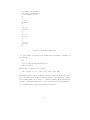
$ sbsat -L 0 slider_80_unsat.ite
For some problems this will yield significantly better results than when the
lemmas are used. See Section 12.1.2 for a discussion of when to use lemmas and
when not to use lemmas.
Remark: The heuristic used to discard lemmas from the cache when newly
created lemmas are added to a full cache is not compatible with the option that
disables lemma creation. Also the effectivness of the lemma heuristic decreases
with descreasing lemma cache size. See Section 12.1.2 for a discussion.
Remark: The Chaff-like (VSIDS) heuristic requires lemma creation and therefore is not compatible with the option that causes the lemmas not to be created
(-L 0).
Backjumping is inherently tied to lemmas and therefore, the backjumping
feature is active when -L has an argument greater than 0, and the backjumping
feature is inactive when -L 0 is used. To turn the backjumping feature on, but
store ‘almost’ no lemmas, use the flag -L 1. Please consider the --backjumping
flag deprecated.
5.4
Controlling preprocessing and search time
In some situations preprocessing time exceeds the savings in time realized during
search. In this case sbsat offers some ways to change the amount of preprocessing time performed. These include:
1. Change the preprocessing sequence to perform less iterations (see Section 5.1.2).
2. Specify a time limit, in seconds, for how long preprocessing can take. After
the time limit has been reached the preprocessor will quit and sbsat will
8 See
Section 12.1.1 for details.
35