1
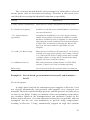
For other facilities:
“An event resulting in a major release9 of radioactive material at the facility
(comparable with the release from a core melt) with a high probability of
significant overexposure11.”
Examples of non-reactor accidents would be a major criticality accident,
or a major fire or explosion releasing large quantities of radioactive material
within the installation.
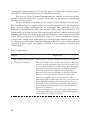
Level 4
For events involving reactor fuel (including research reactors):
“An event resulting in the release9 of more than about 0.1% of the core
inventory of a power reactor from the fuel assemblies,10 as a result of either fuel
melting and/or clad failure.”
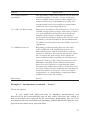
Again this definition is based on the total inventory of the core not just
the “gap inventory” and does not depend on the state of the primary circuit. A
release of more than 0.1% of the total core inventory could occur if either there
is some fuel melting with clad failure, or if there is damage to a significant
fraction (~10%) of the clad, thereby releasing the “gap inventory”.
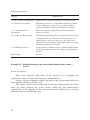
For research reactors, the fraction of fuel affected should be based on
quantities of a 3000 MW(th) power reactor.
Fuel damage or degradation that does not result in a release of more than
0.1% of the core inventory of a power reactor (e.g. very localized melting or a
small amount of clad damage) should be rated at Below scale/Level 0 under
this criterion and then considered under the defence in depth criteria.
11
‘High probability’ implies a similar probability to that of a release from the
containment following a reactor accident.
32