1
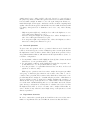
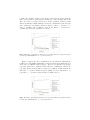
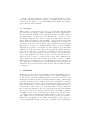
We also considered whether we could detect any significant e↵ects or trends
as a result of altering the numbers of players or comparators in the various subscenarios. We were unable to observe any striking patterns in this data, but may
explore this issue further in future.
4.1
Discussion
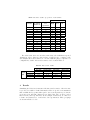
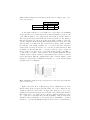
With regards to research questions 1 and 2, we found that when the initial
proportion of defectors in the population was high, the most successful characters
are those that embody high tolerance and high responsiveness. This remained
true unless initial co-operators were in the majority. As co-operation becomes
increasingly widespread, the benefits of being less tolerant and less responsive
emerge. With a very large proportion of initial co-operators, the most successful
characters were those that embodied intolerance, resulting in a reduced chance of
exploitation by the rare defectors, and moderate responsiveness, a characteristic
that enables co-operation to be established without being over-exploited. Similar,
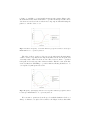
although less pronounced, observations were made when the speed with which
admiration took e↵ect was varied. The point here is that the quicker admiration
is to be elicited, the easier co-operation is to establish, so moderately responsive
characters do relatively well when a greater percentage of the population is
easy to elicit admiration from. However, due to the fact that there is never a
high proportion of initial co-operators in the scenario where admiration was
varied, characters from the least tolerant group never have a chance to flourish.
With regards to research question 3, we found that the highest system scores
were always achieved when the most tolerant characters become prevalent. In
addition the most prevalent character that emerged was also highly responsive
i.e. character 7.
5
Conclusion
In this paper we have presented a mechanism for agents that simulates the emotions of gratitude and anger to drive the emergence of co-operation. Furthermore,
we have presented a functional implementation of the emotion admiration and
investigated how this emotion spreads characteristics through a population that
enable success under various conditions. We have also identified the conditions
under which the most desirable emotional characteristics (high tolerance and
high responsiveness) become prevalent, and how these characteristics have a
beneficial e↵ect on the total score of a system/population. A key point is that
these behaviours, typically produced by agents using rational decision-making
that depends on the expected payo↵s of various actions, can equally be explained
as a simple response to the emotional states produced by the preceding actions.
In future work, we will undertake further analysis of the e↵ect of player
and comparator sets upon character prevalence since we found no real trend to
this in these experiments. We also wish to functionally model the emotion of
contempt, which will act in the opposite way to admiration and we will analyse