1
do: firstly, participants that experienced admiration were more likely to try to
emulate the prestigious individuals’ actions and secondly, participants that experienced admiration reported a unique feeling of wanting to achieve success
themselves. Therefore, we have used such empirical evidence of the e↵ects of
admiration as the basis of our functionality.
Taking inspiration from [9], we decided to use Netlogo [17] to create an
implementation of an iterated Prisoner’s Dilemma game. The next section details
the Emotional Population simulation test-bed, the agent architecture used, our
research questions and the experiments constructed and run to provide answers
to these questions.
3
Test-Bed Implementation
Our Emotional Population test-bed is a multi-agent simulation created using
the Netlogo programming language and inspired by the Prisoner’s Dilemma
game. The test-bed consists of 338 agents; all capable of emotional responses. A
typical round in an Emotional Population game proceeds as described below. A
complete game entails 500 of these rounds being played:
1. Agents and a mediator are placed in the environment.
2. Agents consult current emotional state before co-operating/defecting with/against
opponents (their decisions are also sent to the mediator).
3. Agent’s emotional state is updated by reacting to the opponent’s play in
the last round and payo↵s are distributed by the mediator as per payo↵
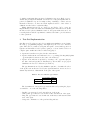
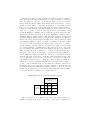
distribution in Prisoner’s Dilemma (see Table 1).
The payo↵ matrix is used by the simulation system to determine the e↵ect
of the agent’s actions. It is not used by the agents themselves, and we need not
assume any awareness of this matrix on the part of the agents.
Table 1. Prisoner’s Dilemma payo↵ matrix.
Co-operatei
Defecti
Co-operatej Defectj
3 i , 3j
0 i , 5j
5 i , 0j
1 i , 1j
The determination of an agent’s opponents is achieved by setting the player
set variable to one of the following values:
– Parallel: opponents are located east and west of the agent.
– Orthogonal: opponents are located north, south, east and west of the agent.
– Diagonal: opponents are located north-east, north-west, south-east and southwest of the agent.
– Octagonal: combination of orthogonal and diagonal sets.