1
44
COLLABORATIVE NETWORKS AND THEIR BREEDING ENVIRONMENTS
Initiation
& Recruiting
Creation
1. Set up
& running the
VBE system
Operation &
Evolution
2. Load the
existing ontology /
thesaurus
3. Parameterize domain &
setup necessary
links
Foundation
1. Creation
of necessary
databases
Metamorphosis
2. Enter data
for assisting
/administrative
tools
1. Search
competency &
past- performance
for partner
selection
4. Advanced
assiting tools
for
VBE members
2. Ontology
for sectodependent
competency /
resources/
products
5. Regular
submission of VO
performance data
7. Assisting
tools to deal
with support
institutions
3. Register
new members
3. Creation
& registration
of a VO
in the VBE
6. Submission
of VO records
to be kept &
protected
8. Traceability:
History / past
records
1. Revise
& organize
the gathered
knowledge
2. Transition
to new
organizational
structure
Dissolution
1. Transfer
collected knowledge
to another
organization
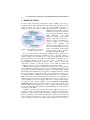
Figure 4 – Examples of VBE life cycle support functionalities
Base functionality supporting the VBE operation and evolution – This phase
requires support for: management of competencies and assets, registration of new
members (including incremental profiling, characterization of competencies,
products, services, etc.), assisting VO creation, incremental generation / evolution of
ontologies for the domain / sector, keeping records of past performance and
collaboration processes, assessment and assistance tools, collaboration support (e.g.
newsgroups, discussion forum, common information repositories, etc.), management
and evolution of working and sharing principles and rules, acquisition and
management of common knowledge and assets.
Base functionality supporting the VBE metamorphosis – This phase will require
assistance for the design of the aimed new organizational structure, selection and
reorganization of the information and knowledge collected during the VBE
operation, and that might be transferred to the new organization, analysis and
adjustment to the new context, etc.
Base functionality supporting the VBE dissolution - In the case of dissolution
there is a need to plan the transfer of its collected knowledge, information, bag of
assets, etc. to its members, or another entity based on defined agreements.
Clearly, considering the existing technological approaches, more than one system
architecture can be designed for the VBEs, and many different ICT tools and
mechanisms can be applied to develop this architecture [8].
5. SOME OTHER CHALLENGES
A number of important challenges can be identified in the design and development
of a replicable VBE framework, where competency management, value systems,
system of metrics, and trust management are among the main elements.
Competencies Management: Competencies represent the “capacity” for existing
resources plus the available capabilities/skills to perform some task or activity.
Competencies are thus the combination of capabilities and capacities. Proper
management of the set of competencies is fundamental for a VBE management