1
Kerberos User Guide, Release 1.13
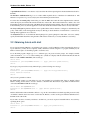
--libs [library] prints the compiler options needed to link against library. Allowed values for library are:
krb5
gssapi
kadm-client
kadm-server
kdb
Kerberos 5 applications (default)
GSSAPI applications with Kerberos 5 bindings
Kadmin client
Kadmin server
Applications that access the Kerberos database
4.5.4 EXAMPLES
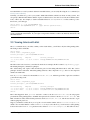
krb5-config is particularly useful for compiling against a Kerberos installation that was installed in a non-standard location. For example, a Kerberos installation that is installed in /opt/krb5/ but uses libraries in /usr/local/lib/
for text localization would produce the following output:
shell% krb5-config --libs krb5
-L/opt/krb5/lib -Wl,-rpath -Wl,/opt/krb5/lib -L/usr/local/lib -lkrb5 -lk5crypto -lcom_err
4.5.5 SEE ALSO
kerberos(1), cc(1)
4.6 ksu
4.6.1 SYNOPSIS
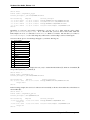
ksu [ target_user ] [ -n target_principal_name ] [ -c source_cache_name ] [ -k ] [ -D ] [ -r time ] [ -pf ] [ -l lifetime ]
[ -z | Z ] [ -q ] [ -e command [ args ... ] ] [ -a [ args ... ] ]
4.6.2 REQUIREMENTS
Must have Kerberos version 5 installed to compile ksu. Must have a Kerberos version 5 server running to use ksu.
4.6.3 DESCRIPTION
ksu is a Kerberized version of the su program that has two missions: one is to securely change the real and effective
user ID to that of the target user, and the other is to create a new security context.
Note: For the sake of clarity, all references to and attributes of the user invoking the program will start with “source”
(e.g., “source user”, “source cache”, etc.).
Likewise, all references to and attributes of the target account will start with “target”.
4.6.4 AUTHENTICATION
To fulfill the first mission, ksu operates in two phases: authentication and authorization. Resolving the target principal
name is the first step in authentication. The user can either specify his principal name with the -n option (e.g., -n
[email protected]) or a default principal name will be assigned using a heuristic described in the OPTIONS
section (see -n option). The target user name must be the first argument to ksu; if not specified root is the default. If .
4.6. ksu
17