1
1 INTRODUCTION
Page 8 sur 10
datagram/segment is also printed. For Accept events, the address of the connection peer is
printed, together with the association number. For Setup and Teardown events, no other data is
provided.
An identification number is used to reference a datagram or a segment within a stream. For
stream protocols, the identification field specifies the position of the first received byte in the stream:
consequently, the identification field added to the length field gives the total number of bytes
transferred at the event time.
An Error event type is also provided to record errors as they occur during the execution of the
program. Depending upon when the error takes place, an address may or may not be recorded in the
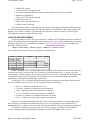
log file. The error codes are described in log.h and are reprinted below.
#define LOGERR_INTFMT
#define LOGERR_MEM
#define LOGERR_2SETUP
#define LOGERR_GETTIME
#define LOGERR_SELECT
#define LOGERR_FCNTL
#define LOGERR_GETPEER
1
2
3
4
5
6
7
/* Script format error */
/* Out of memory */
/* Two connections were established */
/* gettimeofday() failed */
/* select() failed */
/* fcntl() failed */
/* getpeername() failed */
INTERNAL LOG FILE FORMAT
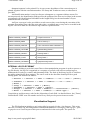
For those wishing to write their own filters or data manipulation programs in order to process a
log file directly, the log file is organized as a sequence of records, with each record having as a
minimum the record type, control, and timestamp fields. The form of the binary log file is similar to
the tables printed by the dcat program. The source code in the dcat filter should provide a good
starting point. The format is as follows.
< Receive > < Control > < Time > < Address > < Id > < Size > [ Errno ]
<
[
<
<
<
<
Transmit > < Control > < Time > < Address > < Id > < Size >
Errno ]
Setup > < Control> < Time > [ Errno ]
Teardown > < Control> < Time > [ Errno ]
Accept > < Control > < Time > <Address > < Association > [ Errno ]
Error > < Control > < Time > < Address > < Error Type >
Consult the tg and dcat source code for the elaboration of each field. As detailed above, the [ Errno ]
field holds the UNIX error file number and will very likely not be present in most records.
Visualization Support
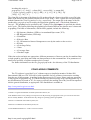
The TG distribution includes a perl script called gengraph.pl in the ./bin directory. This script
takes the TG binary log files and produces information suitable for viewing by either xgraph , xplot ,
or gnuplot. Dcat is used as part of this process and must be in the user's path. The syntax for
http://www.postel.org/tg/tg2002.html
05/02/2003