1
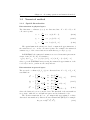
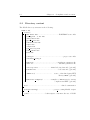
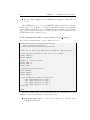
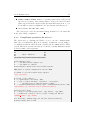
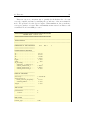
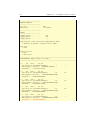
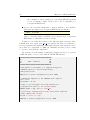
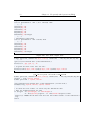
20 Chapter 2 Compilation and execution *** Type of simulation *** perturbative_________________ T linear___________________ T *** Base state (only perturbative run) *** base2D_type__________________ tanh *** Initial velocity *** velo_type____________________ null white_noise__________________ 1E-10 *** Output *** output1_period_______________ 400 output2_period_______________ 1000 output3_period_______________ 0 lx, ly and lz are the dimensions Lx , Ly and Lz of the computational domain along each physical direction. dt is the fixed time step δt used by the time scheme. begin is the arbitrary numerical value of initial time t0 of the simulation. itmax is the number of time steps. Consequently, the initial time is begin and the ending time is begin+itmax×dt. de aliasing indicates whether dealiasing (see § 1.2.4) is applied (T) or not (F). If dealiasing is applied, it is possible to choose between a squared (1) or elliptic (2) dealiasing. radius truncation x, y, z, are the dealiasing radius rxk , ryk and rzk along each spectral direction. viscosity is the viscosity ν of the fluid. stratified indicates whether the simulation is in a stratified fluid (T) or in a homogeneous fluid (F). In a stratified fluid, the Brunt–Väisälä frequency N and the Schmidt number Sc must be defined. 2omega is 2Ωb , twice the angular velocity of the rotating frame. The non-rotating case corresponds to a value Ωb = 0. perturbative indicates whether the simulation is non-perturbative (F) or perturbative (T). In perturbative mode, the simulation can be linear perturbative (linear=T) or nonlinear perturbative (linear=F). See § 1.1 for the meaning of the different options. base2D type is only used for perturbative simulations. It defines the two-dimensional base flow: