1
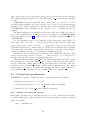
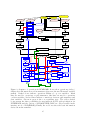
• TYPE ncrgcnt (messy ncregrid tools.f90 provides a structure for the cyclic
counting, as described in section 9.4.
10.4
The recursive core of NCREGRID
The actual regridding is performed by the
RECURSIVE SUBROUTINE NREGRID(...)
in module messy ncregrid base.f90. The algorithm has to be recursive to allow
the regridding in an arbitrary number of dimensions.
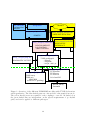
On the first recursion level, some basic checks on the input are performed. NREGRID compares the input / output axes and specifies a dimension as invariant, if
the output axis is undefined. For invariant dimensions, no regridding is required.
If a dimension is invariant and the respective axis is dependent (i.e., curvilinear),
the axis data is pre-regridded. The whole regridding procedure requires a special
order of the dimensions, which is calculated by NREGRID itself (on the first recursion level): first, all independent, non-invariant dimensions, next all dependent,
non-invariant dimensions, and finally all invariant dimensions.
If the current dimension is non-invariant, NREGRID calculates the overlap matrices (as fractional overlap) between source and destination axis. For each nonzero element of these matrices, it branches to the next recursion level (i.e., to the
next dimension).
If the current dimension is the first invariant dimension, NREGRID loops along
all remaining (invariant) dimensions and calculates the results for the output grid,
depending on the regridding type (RG TYPE, see section 7).
Since in most practical cases, regridding is performed for more than one variable
on the same grid (axes), NREGRID handles a list of variables in one step. The
innermost loop is over the number of variables, in oder to increase the performance,
i.e., to avoid recalculation of the same overlap-matrices for all variables separately.
28