1
10
CHAPTER 2. INTRODUCTION
2.3
Scientific applications
The PUMA code is the dynamical core of a GCM forced by Newtonian cooling and Rayleigh
friction, such as that proposed by Held & Suarez (1994) to evaluate the dynamical cores of
GCMs. It forms the basis for various applications:
• The code can be utilized to build and test new numerical algorithms (like semi-Langrangian
techniques).
• Idealized experiments can be performed to analyze nonlinear processes arising from internal atmospheric systems (life cycles, etc.).
• Data assimilation techniques can be incorporated to interpret results from GCM simulations or observations.
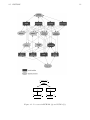
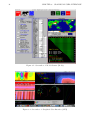
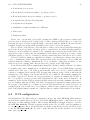
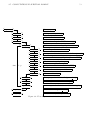
Figure 2.1 (a) demonstrates the complexity of the interactions in a full size climate model,
which leads to similar complex response patterns from small parameter changes. The same
diagram for PUMA Figure 2.1 (b) shows the simple and direct paths which allow the easy
identification of the effects from changes to this model.
2.4
Requirements
PUMA is open source, everyone may download and use it. Though it’s easy to use, the design of
experiments and the interpretation of the results require a thorough knowledge of atmospheric
science.
PUMA is available as FORTRAN-90 source code. So all that is needed to use PUMA on
any computer is a FORTRAN-90 compiler. The GUI additionally requires a C-compiler with
the graphical library X11, which is standard on any UNIX/Linux system as well as on newer
MACs. Windows user may try a X11-emulator like Cygwin.
The program was developed and tested with several operating systems including LINUX,
MAC-OS, and Solaris. The main development was done using Linux and MAC-OS and the
FORTRAN compiler gfortran and sunf90.
The postprocessor Pumaburner requires a C++ compiler.
There are several compilers available for the Linux operating system. MoSt, PUMA, and
Planet Simulator were successfully tested with:
• SunStudio12 (development environment including FORTRAN-90, C, C++, and Debugger) for Solaris and Linux. SunStudio12 can be downloaded for free from http://www.
sun.com.
• Gnu FORTRAN (gfortran). This free and open access FORTRAN-90 compiler is part of
most Linux distributions. It’s also available from http://directory.fsf.org/devel/
compilers/gfortran.html.
2.5
History
The University of Hamburg PUMA model originates from the Hoskins & Simmons SGCM
(Simple General Circulation Model) version ([Hoskins and Simmons, 1975]). The major differences between PUMA and its predecessor SGCM are: