1
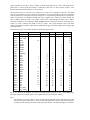
1. Floppy drive sizes
Inside the case is the floppy disk, a round plastic foil coated with a material containing metal oxide, which
can be magnetised to store information. The case has multiple openings. The bigger hole in the middle
allows the drive motor to spin the floppy clockwise.
Old floppy drives use a DC-motor with a variable resistor to adjust the speed. They often have a
stroboscope ring on their bottom for that purpose. Modern drives have brushless motors. The big disk on
the bottom contains permanent magnets and is controlled by an SIL-IC with a heat pipe and connections to
coils under the disk. This unit is controlled with a crystal or ceramics resonator. If you want to change the
drive speed, adjusting the variable resistor works for older drives, but not for newer ones. On those, you
will need to change the crystal. The speed may off by at most 2%.
The longish hole is used for the drive read/write head to touch the disk. The smallest hole in the case is for
detecting the index hole. An LED/optical element gives a signal when the index hole appears. The writeprotect notches are sensed using micro switches.
There are one sided and two sided floppy disk drives, depending on if they only have a head on bottom or
also on top. Floppies are available as both one or two sided, but here one sided only means that only side 0
is verified by the manufacturer. You may use side 1 at your own risk. At today’s prices that should not be
an issue any more, though.
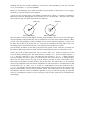
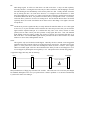
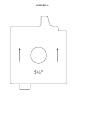
When transporting floppy drives, the read/write heads should be protected from touching each other with a
piece of cardboard like shown below. Usually those come with the drive when you buy it, but if you didn’t
get one, then you can copy the given pictures on thin cardboard and cut them out. If nothing else, you
should at least insert an old floppy in the drive. The drive door should be locked. Make sure to remove the
cardboard from the drive before switching it on again.