1
Introduction
1.1.1
Processor Terminology
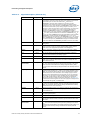
Commonly used terms are explained here for clarification:
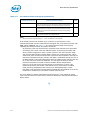
• Dual-Core Intel® Xeon® Processor 3085, 3075, 3070, 3065, and 3060 —
Dual core processor in the FC-LGA package with a 4 MB L2 cache.
• Dual-Core Intel® Xeon® Processor 3050 and 3040 — Dual core processor in
the FC-LGA package with a 2 MB L2 cache.
• Processor — For this document, the term processor is the generic form of the
Dual-Core Intel® Xeon® processor 3000 series. The processor is a single package
that contains one or more execution units.
• Keep-out zone — The area on or near the processor that system design can not
use.
• Processor core — Processor core die with integrated L2 cache.
• LGA775 socket — The processors mate with the system board through a surface
mount, 775-land, LGA socket.
• Integrated heat spreader (IHS) —A component of the processor package used
to enhance the thermal performance of the package. Component thermal solutions
interface with the processor at the IHS surface.
• Retention mechanism (RM) — Since the LGA775 socket does not include any
mechanical features for heatsink attach, a retention mechanism is required.
Component thermal solutions should attach to the processor via a retention
mechanism that is independent of the socket.
• FSB (Front Side Bus) — The electrical interface that connects the processor to
the chipset. Also referred to as the processor system bus or the system bus. All
memory and I/O transactions as well as interrupt messages pass between the
processor and chipset over the FSB.
• Storage conditions — Refers to a non-operational state. The processor may be
installed in a platform, in a tray, or loose. Processors may be sealed in packaging or
exposed to free air. Under these conditions, processor lands should not be
connected to any supply voltages, have any I/Os biased, or receive any clocks.
Upon exposure to “free air”(i.e., unsealed packaging or a device removed from
packaging material) the processor must be handled in accordance with moisture
sensitivity labeling (MSL) as indicated on the packaging material.
• Functional operation — Refers to normal operating conditions in which all
processor specifications, including DC, AC, system bus, signal quality, mechanical
and thermal are satisfied.
• Execute Disable Bit — The Execute Disable bit allows memory to be marked as
executable or non-executable, when combined with a supporting operating system.
If code attempts to run in non-executable memory the processor raises an error to
the operating system. This feature can prevent some classes of viruses or worms
that exploit buffer over run vulnerabilities and can thus help improve the overall
security of the system. See the Intel® Architecture Software Developer's Manual
for more detailed information.
12
Dual-Core Intel® Xeon® Processor 3000 Series Datasheet