1
66
DSR Installer/User Guide
Appendix C: UTP Cabling
The following information is intended to brief you on various aspects of
connection media. The performance of a DSR system depends on high quality
connections. Poor quality or poorly installed or maintained cabling can
diminish DSR system performance.
NOTE: This appendix is for information purposes only. Please consult with your local code
officials and/or cabling consultants prior to any installation.
DSR systems utilize Unshielded Twisted Pair (UTP) cabling.
UTP copper cabling
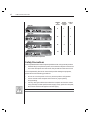
The following are basic definitions for the three types of UTP cabling that the
DSR appliance supports:
•
CAT 5 UTP (4-pair) high performance cable consists of twisted pair conductors, used primarily for data transmission. The twisting of the pairs
gives this cable some immappliancey from the infiltration of unwanted
interference. CAT 5 cable is generally used for networks running at 10 or
100 Mbps.
•
CAT 5E (enhanced) cable has the same characteristics as CAT 5, but is
manufactured to somewhat more stringent standards.
•
CAT 6 cable is manufactured to tighter requirements than CAT 5E cable.
CAT 6 has higher measured frequency ranges and significantly better
performance requirements than CAT 5E cable at the same frequencies.
Wiring standards
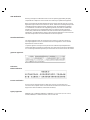
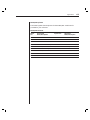
There are two supported wiring standards for 8-conductor (4-pair) RJ45 terminated UTP cable: EIA/TIA 568A and B. These standards apply to
installations utilizing CAT 5, 5E and 6 cable specifications. The DSR system
supports either of these wiring standards. Please refer to the following table
for details.
DSR Wiring Standards
Pin
EIA/TIA 568A
EIA/TIA 568B
1
white/green
white/orange
2
green
orange
3
white/orange
white/green
4
blue
blue