1
Program Mode
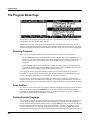
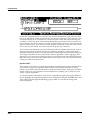
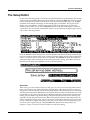
The Program Editor
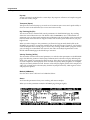
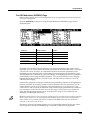
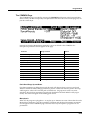
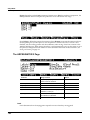
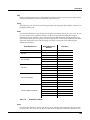
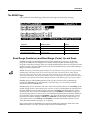
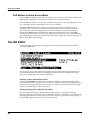
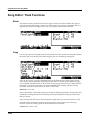
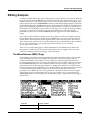
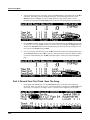
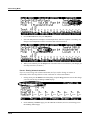
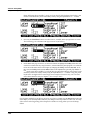
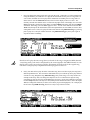
The PC3LE always uses real values of measurement, rather than just arbitrary numbers, for adjustable parameters. This means that you specify pitch in semitones (ST) and cents (ct), and amplitude in decibels (dB).
Remember that the parameters on the control‐input pages are cumulative—they can add to or subtract from the effects of the other parameters on the page, depending on their values. For example, even if you’ve adjusted the pitch of a sample so high that it pins, the effects of the other parameters may bring the pitch back down to a workable range.
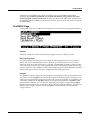
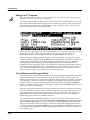
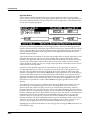
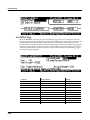
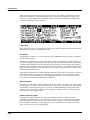
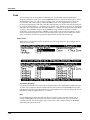
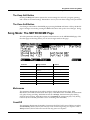
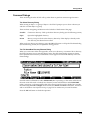
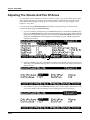
Fine Adjust Parameter
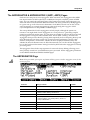
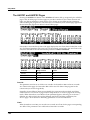
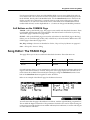
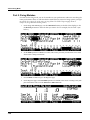
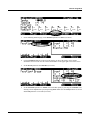
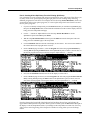
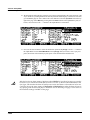
You can add slight detuning to the pitch with the fine adjust parameters. Notice that there are actually two fine adjust parameters for the Pitch function: one that changes the pitch in cents (100ths of a semitone), and one that changes it according to its frequency (in increments of Hertz—cycles per second). Since we’re discussing the universal control sources here, and not specifically pitch, we’ll move on for now, as the Hz parameter applies only to pitch‐related functions. See The PITCH Page on page 6‐27 for a more thorough description of Hz.
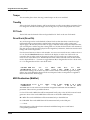
Hard-wired Parameters
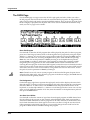
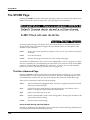
Key Tracking
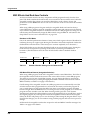
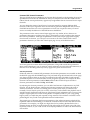
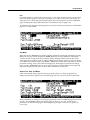
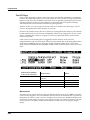
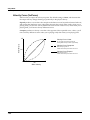
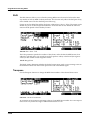
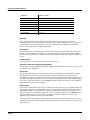
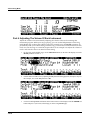
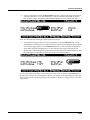
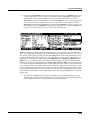
This is a quick way to get additional control based on the MIDI note number of each note you trigger. Key tracking applies a different control signal value for each note number. In the case of pitch, key tracking enables you to change the tuning of each note relative to its normal pitch.
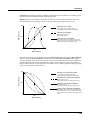
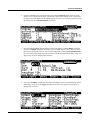
Middle C is the zero point. Regardless of the key tracking value, there is no effect on Middle C. If you set a nonzero value for key tracking, the effect increases for each note above or below Middle C. In the case of pitch, for example, say you assign a value of 5 cents per key for the key tracking parameter. Triggering Middle C (C 4 on the PC3LE) will play a normal C 4. Triggering C# 4 will play a note 5 cents higher than C# 4. Triggering D 4 will play a note 10 cents higher than D 4, and so on. Notes below Middle C will be tuned lower than their normal pitches. If you set a negative value for key tracking, notes above Middle C will be tuned lower than their normal pitches.
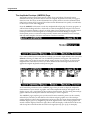
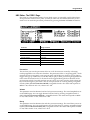
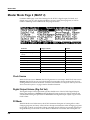
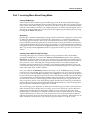
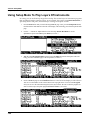
Keep in mind that key tracking on the PITCH page works in conjunction with the key tracking parameter on the KEYMAP page. This is why you can set the KeyTrk parameter on the PITCH page to 0ct/key, and notes still increase in pitch by 100 cents/key as you go up the keyboard. It’s because the KeyTrk parameter on the KEYMAP page is already set at 100 cents per key.
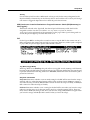
Velocity Tracking
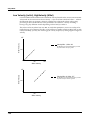
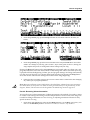
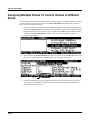
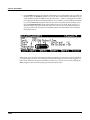
A positive value for velocity tracking will raise the pitch as you trigger notes with higher attack velocities. This is great for getting a trace of detuning based on your attack velocity, especially in drum programs, where you can make the pitch of the drum samples rise slightly with higher‐
velocity Note Ons, just as drums do when you strike them harder. Negative values will lower the pitch as you increase the attack velocity.
Programmable Parameters
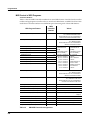
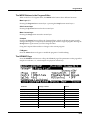
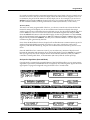
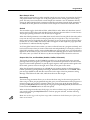
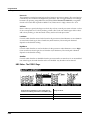
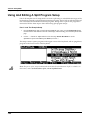
Source 1 (Src1)
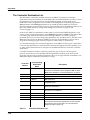
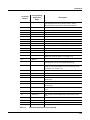
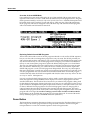
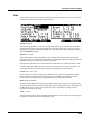
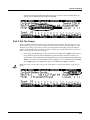
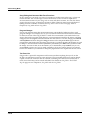
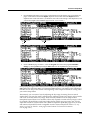
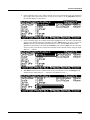
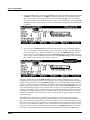
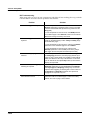
This parameter takes its value from a long list of control sources including every MIDI control number, a host of LFOs, ASRs, envelopes and other programmable sources.
6-30