1
DVD
Theater Grand
Processor
TGP-5 and TGP-5(E)
SAFETY
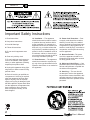
Important Safety Instructions
1. Read Instructions
2. Keep these Instructions
3. Heed all Warnings.
4. Follow all Instructions
5. Do not use this apparatus near
water.
6. Clean only with dry cloth.
7. Do not install near any heat sources such as radiators, heat registers,
stoves, or other apparatus (including
amplifiers) that produce heat.
8. Unplug this apparatus during lightning storms or when unused for long
periods of time.
9. Refer all servicing to qualified service personnel. Servicing is required
when the apparatus has been damaged in any way, such as a powersupply cord or plug is damaged, liquid
has been spilled or objects have fallen
into the apparatus, the apparatus has
been exposed to rain or moisture,
does not operate normally, or has
been dropped.
10. Ventilation — The apparatus
should be situated so that its location
or position does not interfere with its
proper ventilation. For example, the
apparatus should not be situated on a
bed, sofa, rug, or similar surface that
may block any ventilation openings; or
placed in a built-in installation such as
a bookcase, cabinet, or closed equipment rack that may impede the flow of
air through ventilation openings.
11. Power Sources — The apparatus
should be connected to a power supply only of the type described in these
operation instructions or as marked on
the apparatus.
12. Power Cord Protection — Power-supply cords should be routed so
that they are not likely to be walked
upon or pinched by items placed upon
or against them, paying particular attention to cords at plugs, convenience
receptacles, and the point where they
exit the apparatus.
13. Non-use Periods—The power
cord of the apparatus should be unplugged from the outlet when unused
for a long period of time.
14. Object and Liquid Entry — Care
should be taken so that objects do not
fall into and liquids are not spilled into
the inside of the apparatus.
15. Servicing — The user should
not attempt to service the apparatus
beyond those means described in this
operating manual. All other servicing
should be referred to qualified service
personnel.
2
User's Manual
SAFETY
16. To prevent electric shock, do not
use this polarized plug with an extension cord, receptacle or other outlet
unless the blades can be fully inserted
to prevent blade exposure.
Pour préevenir les chocs électriques
ne pas utiliser cette fiche polariseé
avec un prolongateur, un prise de
courant ou une autre sortie de courant, sauf si les lames peuvent être
insérées à fond sans laisser aucune
parIVe à découvert.
17. Grounding or Polarization —
Precautions should be taken so that
the grounding or polarization means
of the Component is not defeated.
This apparatus does not exceed the
Class A/Class B (whichever is applicable) limits for radio noise emissions
from digital apparatus as set out in the
radio interference regulations of the Canadian Department of Communications.
ATTENTION — Le présent appareil numérique n'émet pas de bruits
radioélectriques dépassant las limites
applicables aux appareils numériques
de class A/de class B (selon le cas)
prescrites dans le règlement sur le
brouillage radioélectrique édicté par
les ministere des communications du
Canada.
WARNING – TO REDUCE THE RISK OF FIRE OR ELECTRIC SHOCK,
DO NOT EXPOSE THIS APPLIANCE TO RAIN OR MOISTURE.
CAUTION: TO PREVENT ELECTRIC SHOCK, MATCH WIDE BLADE
OF PLUG TO WIDE SLOT, FULLY INSERT.
ATTENTION: POUR ÉVITER LES CHOCS ÉLECTRIQUES, INTRODUIRE LA LAME LA PLUS LARGE DE LA FICHE DANS LA BORNE
CORRESPONDANTE DE LA PRISE ET POUSSER JUSQU’AU FOND.
EXAMPLE OF ANTENNA GROUNDING ACCORDING TO NATIONAL
ELECTRICAL CODE INSTRUCTIONS CONTAINED IN ARTICLE
810—“RADIO AND TELEVISION EQUIPMENT”
GROUND CLAMP
ANTENNA
LEAD IN WIRE
GROUND CLAMPS
SERVICE
ENTRANCE
EQUIPMENT
ANTENNA DISCHARGE UNIT
(NEC SECTION 810-20)
GROUNDING
CONDUCTORS
(NEC SECTION 810-21)
GROUND CLAMPS
POWER SERVICE GROUNDING
ELECTRODE SYSTEM
(NEC ART 250, PART H)
NEC NATIONAL ELECTRICAL CODE.
NOTE TO CATV INSTALLER
This reminder is to call the CATV system installer's attention to Article 820-40 of the NEC that provides guidelines for proper grounding and in particular, specifies that the cable ground shall be connected to the grounding
system of the building as close to the point of cable entry as practical.
OUTSIDE ANTENNA GROUNDING
If an outside antenna is connected to the receiver, be sure the antenna system is grounded so as to provide
some protection against voltage surges and built-up static charges. Article 810 of the National Electrical Code,
ANSI/NFPA 70, provides information with regard to proper grounding of the lead-in wire to an antenna-discharge
unit, connection to grounding electrodes, and requirements for the grounding electrode. See Figure above.
3
User's Manual
CHAPTER 1
Contents
Important Safety Instructions ................. 2-3
Chapter 1: Introduction ...............................5
Unpacking and Features ...........................6
Overview.....................................................7
Quick Start Guide .......................................8
Front Panel Features................................10
Rear Panel Features ................................12
Installation ................................................14
Chapter 2: System Configurations ...........15
Chapter 3: Remote Control .......................25
Chapter 4: On Screen Display...................30
Speaker Calibration ..................................40
Chapter 5: Using the TGP-5 ......................42
Bass Management....................................42
Surround Modes ......................................43
Tuner Operation .......................................45
Recording .................................................46
Zone 2 Operation......................................47
Sonic Holography .....................................48
CD Software Upgrade ..............................48
Appendix:
Speaker Placement ..................................49
The RS-232 Port.......................................51
Troubleshooting Guide .............................52
Remote Control Codes .............................55
Favorite Settings.......................................57
Specifications ...........................................58
Limited Warranty ......................................59
Service Assistance ...................................59
Read the Safety Instructions carefully before connecting and using
your Sunfire Theater Grand Processor TGP-5.
Chapter 1 is a general introduction
to the features, details and installation of your TGP-5.
Chapter 2 shows many options for
connecting your source equipment
and amplifiers to the TGP-5.
Chapter 3 describes the details and
operation of the advanced remote
control.
Chapter 4 shows the various menus
of the On Screen Display, and
how to adjust and customize your
TGP-5.
Chapter 5 describes the available
modes, options and operational
details of the TGP-5.
The Appendix shows some additional information, including a troubleshooting guide, the Warranty and
service assistance details
To find out more about this and other
Sunfire products, please visit our
website: www.sunfire.com
4
User's Manual
CHAPTER 1
Introduction
Bob Carver, Audio Designer, Physicist
Dear Friend,
Thank you for purchasing a Sunfire Theater Grand Processor TGP-5. We hope that you enjoy it and the music it
makes as much as we have enjoyed creating it for you.
As with our entire line of Sunfire products, the TGP-5 is brimming with exclusive, high-performance technology that will
help you get the highest level of enjoyment from your Home Theater system. These include:
•
High quality digital signal processor supports sampling rates up to 96 kHz
•
Dolby® Digital EX™, Dolby® Pro Logic® II, and Dolby® Pro Logic® IIx processing
•
DTS® ES™ and DTS® Neo:6™ processing
•
FM/AM tuner with 40 station presets, and active dynamic FM noise reduction
•
DSP Holographic Imaging, which gives a greatly enhanced soundstage
•
Automatic 5.1, 6.1 and 7.1 channel mode selection
•
Balanced audio outputs
•
Two Zone operation
•
Pre-programmed and learning LCD remote control
The TGP-5 lets you run all of your audio and video components from a single easy-to-use control center. So you can
experience the extraordinary, dynamic, full-range, multidimensional, wall-to-wall Theater sound.
5
User's Manual
CHAPTER 1
Unpacking
Your TGP-5 should reach you in
perfect condition. If you do notice any
shipping damage, please contact your
Sunfire Dealer immediately.
Gently lift out the unit and remove
all the packing material and accessories. It is important to save all the
packing materials and the box in case
your TGP-5 ever needs to be moved
or shipped for repair.
Make sure that you keep your sales
receipt. It is the only way to establish
the duration of your Limited Warranty
and it may come in useful for insurance purposes.
Please take a moment to fill out and
mail the Sunfire Customer Response
card. Also read the serial number
located on the rear panel, and record
it here:
Serial #:
___________________________
Purchased at:
___________________________
___________________________
___________________________
___________________________
Date: _______________________
Features
• Automatic video format
transcoder upconverts video
sources to S and component
video
• Dolby Digital EX, Dolby Pro
Logic IIx, DTS ES and DTS
Neo:6 decoding modes
• DSP Sonic Holography for
unbelievable soundstage
enhancement
• 7.1 channel outputs plus stereo side outputs for a total of
9.1 channels
• Three component video inputs
and two component video outputs
• Two HDMI inputs and one
HDMI output
• Party mode allows two channel
playback through all speakers
• AM/FM tuner with 40 presets
• Flash memory upgradable
through RS232 or CD
• Second zone can play sources
independent of the main zone
• Six A/V inputs, each with audio,
S-video and composite video
• Three A/V outputs, each with audio, S-video and composite video
• Three audio-only inputs, including MM Phono
• 8 channel analog input with separate RCA connectors
• On screen display (OSD)
• Two Tape record outputs
• Six coaxial and four optical digital
inputs
• Treble and Bass tone controls
• RS-232 port with discrete codes
• Ethernet connection
• Trigger outputs for both zones
• IR control of both zones, with
rear IR ports and discrete codes.
• Supports all digital sampling
rates to 96 kHz
• 24-bit Crystal Semiconductor®
Analog to Digital converter
• 24-bit, 192 kHz Analog Devices®
Digital to Analog converters
• 32-bit, 20 MHz control microprocessor and 24-bit, 150 MIPS
Motorola SymphonyTM DSP processor
• DSP “simulated” surround mode
for two channel sources
• Gold plated inputs and outputs
• Can record a downmixed 2
channel output from a 5.1 digital
source
• Direct 2-channel analog bypass
mode
• Balanced XLR outputs and unbalanced RCA outputs
• Four subwoofer outputs
• IEC removable power cord
• Steel chassis with thick, milled
aluminum faceplate
Remote Features
• Fully backlit
• Pre-programmed for most brands
of A/V equipment
• Learns commands from your
other remote controls
• Macro feature lets you program a
sequence of control steps
• Operates up to ten components
• Does not lose programming
memory when changing batteries
6
User's Manual
CHAPTER 1
Overview
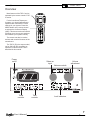
Most features of the TGP-5 can be
operated by the remote control’s TGP5 section.
For the best Home Theater performance, you should calibrate your
speakers and customize the TGP-5
settings for your system. Press the
MENU button on the remote control
to activate the On Screen Display
(OSD). This has several menus which
will allow you to set up your speakers
and calibrate your system correctly.
The remote can also be used to
activate and control all features of the
second zone.
SYSTEM
POWER
OFF
MAIN
CD
TAPE
AUX
DVD
VCR
SAT
ZONE2
TV
TGP5 CABLE
AUDIO
PAGE
MAIN
FAV
PREV
CH
VOL
CH
MUTE
GUIDE
MENU
MODE
MODE
EXIT
INFO
1
2
3
4
5
6
7
8
9
DIS
0
ENT
M1
M2
M3
+10
RC-500
The TGP-5 (E) is the export model,
set for 220-240 VAC operation. Its
operation is identical to the TGP-5
described in this manual.
Power
on/off
Select an
input
Tuner
controls
Tone
controls
Various controls
Volume
adjustment
Lock indicators
7
User's Manual
CHAPTER 1
Quick Start Guide
We hope that the following details
will help you get started using your
TGP-5.
1. Take care to read and follow the
safety instructions on pages 2-3.
Also make sure that you read the
notes and details throughout the
manual, especially notes marked
with a warning triangle ( ).
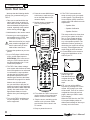
8. Press the remote MAIN button
a few times to make sure you
are on the Main Menu in the
remote's display.
9. Set the remote to operate the
TGP-5 by pressing this
button.
SYSTEM
MAIN
CD
TAPE
AUX
Make sure that all of your equipment remains unplugged from
the AC mains until you have
TGP-5
made all the connections.
4. Connect the speakers to your amplifiers.
7. Turn on the TGP-5, and then turn
on your amplifiers, TV and other
source equipment.
DVD
VCR
SAT
ZONE2
TV
TGP5 CABLE
AUDIO
PAGE
5. In your DVD player's Audio setup
menu, set the digital output to
BITSTREAM. If this is not set correctly, the TGP-5 cannot decode
the digital information for 5.1 surround sound playback.
• Speaker Position
POWER
OFF
3. Connect your source equipment
and amplifiers to the TGP-5. See
the hookups on pages 15-24.
Make a note of which speakers you would like to play the full
frequency range (Large) and those
which will have the bass redirected
(Small). Also make a note of the
approximate distance of each
speaker from your listening position.
• Speaker Size
• Speaker Calibration
2. Add batteries to the remote control.
6. The TGP-5 has a bass management system which allows the bass
from each speaker to be redirected
to a subwoofer. Larger speakers
can play the full frequency range,
and smaller speakers such as
satellite types can have their bass
redirected. See page 42 for details.
13. The TGP-5 now needs to be
setup correctly to suit your speakers and system. The following On
Screen Display (OSD) menus are
used to enter and make three main
adjustments:
MAIN
MAIN
FAV
13.1 Press MENU on the remote to
bring up the MAIN Menu of the
OSD on your TV.
PREV
CH
VOL
This setup needs to be done when
you use your system for the first
time, or if you change anything
such as the amplifiers or speakers, or the speaker position. The
calibration is also a good way to
check that your system is working
correctly. These adjustments are
made using the OSD as follows:
CH
MUTE
GUIDE
MENU
MENU
MODE
MODE
Next
MODE
Previous
MODE
EXIT
INFO
1
2
3
4
5
6
7
8
9
DIS
0
ENT
M1
M2
M3
+10
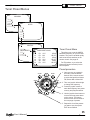
MAIN MENU
TRIMS
MODES
TONE
INPUTS
SETTINGS
EXIT
RC-500
10. Turn down the TGP-5 volume and
use the remote or front panel input
selector to select a video source.
11. Play the source, and bring up the
volume to suit your taste. Make
sure the video can be seen in the
TV monitor.
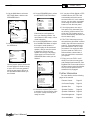
13.2 Use the joystick
pad left, right, up
and down buttons to
navigate through the
menus in the next
steps.
NOTE: you can quit the OSD at
any time by pressing EXIT on the
remote. Any changes you make
will be saved. There is no need to
navigate back through previous
pages, unless you want to make
more changes.
When the OSD is active, the TGP5 front panel display shows an
abbreviated message of where you
currently are in the menus.
12. Stop or pause the source.
8
User's Manual
CHAPTER 1
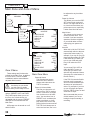
13.3 In the MAIN Menu, select the
SETTINGS Menu, and then the
SPEAKERS Menu.
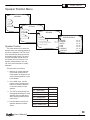
SPEAKER POSITION
L MAIN/SIDE
R MAIN/SIDE
CENTER
L SURR
R SURR
L SURR BACK
R SURR BACK
SETTINGS
MAIN ZONE
ZONE 2
SPEAKERS
VIDEO
SOFTWARE
CONTROL
13.5 In the SPEAKERS Menu, select
the SPEAKER POSITION Menu.
4
4
3
4
4
5
5
ft
ft
ft
ft
ft
ft
ft
6in
6in
0in
0in
0in
0in
0in
SPEAKERS
SIZE
POSITION
CALIBRATION
L-R CROSSOVER
C-SURR CROSSOVER
SUBWFR MODE
110 HZ
90 HZ
NORMAL
13.4 In the SPEAKERS Menu, select
the SIZE Menu.
SPEAKER SIZE
MAIN
SIDE AXIS
SURROUND
CENTER
SURROUND BACK
SUB
LARGE
SMALL
SMALL
SMALL
2 SMALL
ON
Enter how far each speaker is
from your listening position. You
can measure it with a tape, or do a
visual estimation.
13.6 In the SPEAKERS Menu, select
the CALIBRATION Menu to adjust
the output of each speaker. A
test noise plays in each selected
speaker, and you use the remote
to adjust the volume of each
speaker until they are all playing
at the same level. Return to the
SPEAKERS Menu when you are
finished.
SPEAKER CALIBRATION
Use the joystick pad to set the size
of each speaker to Small or Large,
or set to OFF for those speakers
which are not present. Return to
the SPEAKERS Menu when you
are finished.
LEFT MAIN
CENTER
RIGHT MAIN
RIGHT SIDE AXIS
RIGHT SURROUND
RIGHT SURR BACK
0.0
0.0
0.5
0.5
0.0
0.0
14. If you play a Dolby Digital or DTS
encoded source, the TGP-5 will
automatically select the correct
surround mode. If it is a 2-channel
source, you can select a surround
mode using the remote’s MODE
buttons or from the front panel.
15. You might want to turn on the
front panel "Fully Automatic" button near the Volume control. This
will let the TGP-5 select an input
source automatically, whenever the
source starts to play.
16. The TGP-5 has many more options which are described in further
detail in the OSD menu section on
page 30. These options will help
you customize the TGP-5 to suit
your tastes. You can do this after
you have used the TGP-5 for a
while and have a better idea of
how you would like to customize
your system.
17. Enjoy your new TGP-5. It will
allow you to listen to many great
and wonderful performances, from
Big Band 78s in surround sound, to
the latest space-action blockbuster
with up to nine speakers and a
subwoofer fully engaged.
Further Information
SPEAKER CALIBRATION
LEFT SURR BACK
LEFT SURROUND
LEFT SIDE AXIS
SUBWOOFER
GO TO LEFT MAIN
0.0
0.0
0.5
0.5
ON-THE-FLY TRIMS ZEROED
13.7 Press the remote’s EXIT button
to quit the On Screen Display. Now
the TGP-5 is setup correctly and
ready for action.
For more details, see the following
pages of the manual:
Remote Control:
Page 25
On Screen Display:
Page 30
Speaker Size:
Page 38
Speaker Position:
Page 39
Speaker Calibration: Page 40
Bass Management:
Page 42
Surround Modes:
Page 43
9
User's Manual
CHAPTER 1
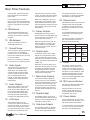
Front Panel Features
1
2
6
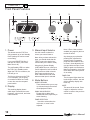
1. Power
This button turns the TGP-5 on
(fully powered up) or into Standby
mode (asleep, but can be turned
on remotely).
If you press ZONE TWO first, it
can turn on Zone 2 (even if the
Main Zone is off).
The red Standby LED is on when
the TGP-5 is in Standby mode.
When the TGP-5 is turned on, the
LED will go out.
To fully turn off power to the TGP5, for example if you are going
on vacation to Boise for a week
or two, then use the rear panel
power switch.
2. Display
This soothing display shows
which input is selected, the tuner
frequency, volume level, and other
useful features.
3
7
4
8
3. Manual Input Selector
Use this control to select the
source you want to listen to.
Note: After you have selected an
input, you should check that the
TGP-5 is set to the desired surround mode (or the stereo mode).
Using the On Screen Display
(OSD) INPUTS menu, each input
can be adjusted in level so that all
the inputs have similar volumes.
Each input can also be set to
enter a desired surround mode
whenever that input is selected.
4. Mode Buttons
MODE UP/DOWN
These buttons allow you to step
up or down through the various
sound playback modes.
SONIC HOLOGRAPHY
Engage this to add a three
dimensional effect, especially to
stereo listening.
5
9
Note: If Zone 2 has not been
enabled (see page 36) this button has no effect.
Any changes you make after
pressing this, will affect the
selected zone. For example,
press this and POWER to turn
on Zone 2, then adjust the Volume and select an input. Press
ZONE 2 again to revert back to
Main Zone operation. It will also
revert back after a short period
of no activity.
PANEL DIM
The front panel lights have four
levels: bright, medium, low and
off (low intensity display with
LEDs off).
MUTE
This turns off the sound. Press
it again, or adjust the volume
control to return to the previous
volume level.
ZONE SELECTION
Use this to select either the
main zone, or zone 2 to be
adjusted.
10
User's Manual
CHAPTER 1
Front Panel Features
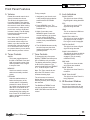
5. Volume
Rotate this manual control clockwise to increase the volume.
The dB level will appear in the
front panel display. Note that the
control knob does not rotate when
the remote is used. When turning
on a new source, make sure the
level is low, such as -80 dB and
increase it slowly. The dB display
becomes less negative as the
volume increases.
Note: When the TGP-5 is turned
on, it has a deliberately slow
and smooth volume ramp from
silence, up to the level that was
set when the unit was last turned
off. It can also be set to come up
to a preset volume you can select,
rather than the previous volume.
6. Tuner Controls
AM/FM
This button toggles between
the AM or FM band. Press and
hold it to engage a scan of the
station presets. Press it again
to stop the scan.
MEMORY
Use this to store the current
station as an easily-recalled
preset.
UP/DOWN
Switch to stations above or
below the frequency of the
current station. If repeatedly
pressed, the tuner will move
up or down one frequency step
each time. If held down for a
second or more, the tuner will
automatically keep tuning stations. Press UP or DOWN once
again to stop when it reaches a
station you like.
Tuning example:
1. Navigate to your favorite rocka-billy-surfing-hip-hop-classics
station with the UP/DOWN
buttons.
2. Press MEMORY once. The
preset choice will go to the next
available one.
3. Within 5 seconds, press
MEMORY again to save the
current frequency as a preset,
or else use the UP/DOWN
buttons to find another preset
number, then press MEMORY
to save it.
4. The UP/DOWN buttons usually
tune the frequency but when
loading the presets, they navigate the presets.
7. Tone Controls
To change the tone, first press
BASS or TREBLE and then press
UP or DOWN to suit your taste.
The display will show the change
in dB level for reference. The
range for both BASS and TREBLE
is +/- 10 dB in steps of 1 dB.
Note: The Tone controls do not
affect the LFE channel, or the
8-Channel analog input
The unit returns to its normal
display after a few moments of
inactivity, and any level changes
are retained.
The BASS and TREBLE levels
can also be adjusted using the
OSD TONE Menu and the remote
control.
8. Lock Indicators
DOLBY DIGITAL
This light is on when a Dolby
Digital signal is being decoded.
DTS
This light is on when a DTS
signal is being decoded.
HDMI
This is on when the HDMI connections are in use.
DOLBY PRO LOGIC IIx
This light is on when the Dolby
Pro Logic IIx mode, or Dolby
Pro Logic II mode is engaged.
DIGITAL SOURCE
This light is on when a Digital
signal is being decoded.
SONIC HOLOGRAPHY
This light is on when the HOLOGRAPHIC IMAGE "circuit" is
engaged. (This is actually
modeled in DSP).
SIDE AXIS
This light is on when the side
axis outputs are enabled.
ZONE TWO ON
This light is on when Zone 2 is
turned on.
ZONE TWO ADJUST
This light is on when Zone 2 is
being adjusted.
9. IR Receiver Window
This window should be clean
and free from obstruction for the
remote control to work correctly.
11
User's Manual
CHAPTER 1
Rear Panel Features
1
2
3
4
5
6
7
8
9
10
11
12
13
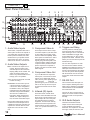
1. Audio/Video Inputs
These audio, composite-video and Svideo inputs connect to the outputs of
your audio video components. When
these inputs are selected, the audio
will be heard in your system and the
video will be seen on the TV screen.
VID2 can be used for a second VCR.
2. Audio/Video Outputs
MAIN: connects to the inputs of a TV
monitor, where the video of any
selected input and the On Screen
Display (OSD) can be viewed. The
audio connections allow you to
listen to any selected audio source
through your TV’s speakers.
VCR: connects to the inputs of a VCR
to allow recording.
VID2/MON2: connects to the input of
a second VCR for recording, or to
a second TV. When configured in
the OSD for “VID2,” this output is
muted whenever the VID2 input is
selected. This prevents feedback;
also there is no OSD then on
this output. When configured for
“MON2,” the output is always active, the same as the Main output.
Note: Analog audio signals are present at these L and R outputs even if
a digital input has been selected. The
output is a 2 channel downmix if the
digital source is more than 2 channels.
14
15 16
17
3. Component Video In
These inputs connect to the component-video outputs of your DVD, SAT
or other video source (VID1) if they
have this advanced capability. When
these inputs are selected, the TGP-5
will automatically route any video
signals going into these jacks to the
component video outputs. Note that
component video provides the best
picture compared to composite or
S-video. The TGP-5 can also switch
HDTV signals.
4. Component Video Out
If your TV Monitor has component
video inputs, connect them to these
outputs. If you select DVD, SAT or
VID1, then any video signals going to
the component
inputs will
pass through to your TV monitor. The
TGP-5 can also up-convert composite video and S-video from the other
inputs.
5. Infrared (IR) Inputs
These are used in custom installations to control the Main Zone and
Zone 2 from a remote location. The
input accepts 1/8” mono mini-jacks
from standard remote control IR
equipment, such as those made by
Xantech and other companies. The
remote sensors can be in a different
room, or in a preferred location in your
main room.
18 19 20 21 22 23
6. Triggers and Relay
The relay switch is normally open,
and it will close after a short delay,
when selecting a source. This can be
used in installations to trigger video
screen deployment, or other custom
purposes. The OSD INPUTS menu
allows you to choose which inputs will
activate the relay.
The +12 VDC outputs are on whenever their zone is enabled. Sunfire
amplifiers and subwoofers have a +12
VDC input which allows them to be
turned on automatically by the TGP-5.
The 1/8” mini-jack is wired in parallel
with the terminals. Do not exceed a
current draw of 500 mA total for both
outputs.
7. RS-232 Port
This connects to the serial port of a
home computer, allowing the TGP-5
Flash memory software to upgraded.
Latest software can be downloaded
from www.sunfire.com.
The port can also connect to the serial port of a Home Theater Controller,
allowing the TGP-5 to be operated
remotely.
8. XLR Audio Outputs
These line-level balanced XLR
outputs connect to the XLR inputs
of your amplifiers and powered
subwoofer. The outputs are: front left,
front right, center, left surround, left
12
User's Manual
CHAPTER 1
Rear Panel Features
surround back, right surround back,
right surround and one subwoofer
(LFE) output.
input from the front panel or remote
control. The eight channels of analog
audio will then pass into the TGP-5.
If your amplifier has a choice of
inputs, we recommend using the XLR
balanced type. This gives better noise
rejection, especially for longer cable
runs.
Note: This is designed to be a very
short analog-only signal path. DSPbased effects such as tone controls,
bass management and DSP surround
are bypassed. This input is not available in Zone 2.
9. FM Antenna
The supplied FM antenna fits this
“F-type” screw-on connector. Other
antennas can be fitted for improved
reception.
10. AM Antenna
These connections are for the included AM loop antenna.
11. Ground Screw
This is commonly used for the ground
connection wire of a turntable, to
prevent any hum in your speakers. It
is tied to the chassis ground, and may
be used as needed.
Note: It is not necessary or desirable
to connect this to an electrical ground.
12. Audio Inputs
These audio inputs connect to the
outputs of your turntable, DAT or
TAPE player. Any standard audio
component with a line-level output
can be connected to DAT or TAPE.
Only a turntable with a movingmagnet, or high-output moving-coil
cartridge can be connected to the
PHONO input.
13. Audio Outputs
These audio outputs connect to the
analog record inputs of your tape
decks, such as DAT, cassette or reel
to reel. These outputs allow you to
record the selected audio program.
Note that these also allow analog
recording from digital audio sources.
14. 8-CH Input
These analog audio inputs can
connect to the output of an external
surround processor, or a source component such as DVD-Audio, SACD,
or a DVD player with its own surround
decoder. You can select this as an
User's Manual
15. Stereo Outputs
FIXED MAIN is a line level output,
and the volume is not adjustable. This
can be used as a record output, or to
feed another audio system.
ZONE 2 connects to the inputs of a
stereo amplifier to run Zone 2. The
volume and source are adjustable,
either from the front panel, or from a
remote IR sensor.
16. Digital Inputs
These inputs connect to the digital
outputs of your audio/video components. The DVD, SAT and VID1 and
CD inputs have two options, optical or
coaxial. The DAT and VID2 inputs are
coaxial only.
Whenever one of these inputs is selected from the front panel or remote,
the TGP-5 will automatically select
the digital input if there is a signal
present, otherwise it will select the
corresponding analog input.
17. Main Audio Outputs
These line-level RCA outputs connect to the inputs of your amplifiers
and powered subwoofer(s). There are
outputs for front left, front right, center, left surround, left surround back,
right surround back, right surround
and three identical subwoofer (LFE)
outputs.
18. Digital Output
This S/PDIF output is active for all
sources except the 8-channel input. It
allows you to record digital audio, for
example to a DAT or CD-R.
19. Side-Axis Outputs
These outputs provide two optional
front side channels to complement
the left, center, right, surround and
surround back channels. They can
be turned on or off using the Speaker
Size OSD menu (see page 38).
20. Ethernet port
This Ethernet port is a Lantronix Xport
10/100T TCP/IP with configurable
IP address, and security. It uses a
simple ascii command set to control
the TGP-5.
An embedded webpage is included
for PC control, and monitoring via
TCP/IP Link.
There are two LEDs on the Ethernet
jack, that indicate the connection
status as shown in this table:
LEFT LED
RIGHT LED
Color
Meaning Color
Meaning
Off
No Link
No
Activity
Off
Amber 10 Mbps Amber Half
Duplex
Green
100
Mbps
Green
Full
Duplex
21. HDMI
Use these to connect any HDMI
components you may have in your
system. Two are inputs, and one is
an output to your HDMI-equipped TV.
No TGP-5 on screen display or audio
decoding inside the TGP-5 is available from the HDMI inputs. Always
connect a separate digital audio input
cable when using HDMI.
22. IEC Linecord Socket
The TGP-5 comes with a detachable
linecord which connects here.
Plug the linecord into an AC wall
socket or power strip which is correctly configured with the voltage
specified for your model.
23. Power Switch
If this is switched off, the TGP-5 will
be off, and cannot be turned on, even
with the front panel power switch.
In normal operation, leave this switch
on. Turn it off if you will not be using
the TGP-5 for extended periods.
13
CHAPTER 1
Installation
Observe the following precautions
when choosing a location for your
TGP-5:
•
•
•
•
Protect it from prolonged
exposure to direct sunlight and
other direct sources of heat,
such as heating vents and
radiators.
Do not expose the unit to rain
or moisture. If fluid or a foreign object should enter the
unit, immediately turn off the
power and contact your Sunfire
Dealer.
•
•
Some audiophile cables should
be hooked up in one direction,
these are usually marked with
arrows.
•
It is usual for the right channel
patch cord plugs to be red and
the left channel connections to
be white, grey or black. Composite video connections are
usually yellow.
AC Power Considerations
Ensure that the unit is plugged into
an outlet capable of supplying the correct voltage specified for your model.
Care
If you need to clean the front surface, first turn off the power and then
use a soft dry cloth, rubbing with the
grain. Be careful not to scratch the
display window.
Connection Tips
Before setting up your new system,
please consider the following :
Always make sure that your
components are all turned
OFF, or unplugged before
making or changing any
connections.
•
•
Whenever possible, route the
power cords away from the
signal cables or speaker wires
to prevent any hum or interference heard in the speakers.
Choose reliable hookup cables.
They should be fully shielded
and as short as possible.
Some patch cords can be a
very tight fit and there is usually a preferred method of getting them off. Some have to be
removed with a twisting action.
Be gentle or you may damage
the jacks of your TGP-5, or
other components.
•
Avoid excessive exposure to
extreme cold or dust.
Do not place heavy objects on
top of the unit.
Use quality coaxial digital
cables to connect the TGP-5 to
any source equipment which
has coaxial digital outputs.
•
Video Screen Trigger
The Main Zone and Zone 2
12 VDC terminals each supply 12
VDC whenever that zone is turned
on. This can be used to turn on power
amplifiers equipped with a 12 V trigger
input.
The two middle terminals marked
as relay contacts are connected together only when the Main Zone is on
and an input is selected for which the
trigger output is enabled. The OSD
INPUTS Menu can be used to select
which inputs have the trigger output
enabled or disabled (see page 34).
Use all standard safety precautions and make sure all
the equipment is disconnected
before making any connections.
Here are two connection options:
If your amplifier or subwoofer
has XLR inputs, use balanced
connections as they provide
superior rejection of hum and
noise, especially if long cables
are required.
Video Connections
The TGP-5 has four types of video
connections: composite video, Svideo, component video and HDMI.
Choose component or S-video if your
video system supports it, as this will
give better picture quality than composite video.
When an audio/video component
is selected, the audio will play in your
system and the video will be switched
to a video input of your TV monitor.
You must have the TV connected
in order to see the On Screen Display
(OSD). For component video OSD,
only the system setup menus are
available, not the pop-up text (volume,
source etc.) which appear on the composite or S-video outputs. For HDMI,
no OSD is available.
THIS TRIGGER RELAY IS
NORMALLY OPEN.
IT CLOSES WHEN YOU SELECT
ANY INPUT WHOSE TRIGGER
HAS BEEN ENABLED
TRIGGERS
12VDC
ZONE2
12VDC
MAIN ZONE
+12V GND
+12V GND
USE EITHER
TO TURN
MAIN ZONE
AMPLIFIER ON
USE TO TURN
ZONE TWO
AMPLIFIER ON
DO NOT use the relay contacts for 120 VAC or 240 VAC
switching! They are only for
low voltage AC/DC loads of
2 A maximum.
+12V IS PRESENT WHEN AN INPUT WHOSE
TRIGGER IS ENABLED IS SELECTED
GND
+12V
TRIGGERS
12VDC
ZONE2
12VDC
MAIN ZONE
14
User's Manual
CHAPTER 2
System Configurations
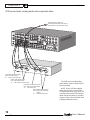
The following pages show some typical connections that you might make in your installation. They show how the inputs and outputs of the TGP-5 are connected to various
audio and video components.
Analog audio and composite video
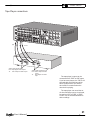
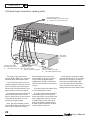
Composite video signal from
TGP-5 MAIN composite video output
to TV Monitor's composite video input
MANUFACTURED
UNDER LICENSE
FROM DOLBY
LABORATORIES.
"DOLBY", "PRO-LO
GIC" AND THE
DOUBLE-D SYMBOL
ARE
TRADEMARKS
OF DOLBY
LABORATORIES.
DVD IN
SAT IN
MANUFACTURED
SYSTEMS, INC. UNDER LICENSE FROM
5,978,762 AND US PAT. NO. 5,451,942, DIGITAL THEATER
5,956,674
OTHER WORLD-W
PENDING. "DTS",
IDE PATENTS , 5,974,380,
"DTS-ES EXTENDE
ISSUED
"NEO:6" ARE
D SURROUND" AND
TRADEMARKS
AND
SYSTEMS, INC.
OF DIGITAL
SYSTEMS, INC. COPYRIGHT 1996, 2000, THEATER
DIGITAL THEATER
ALL RIGHTS
RESERVED.
Composite video signal
From: DVD Player video output
To:
TGP-5 DVD video input
Analog audio signals
From: DVD Player audio outputs
To:
TGP-5 DVD L/R audio inputs
HDMI OUT
When the DVD input is selected
from the front panel or the remote
control, the DVD’s audio will play in
your system and the video is sent to
the TV.
As with all the video connections
that follow, you must make sure that
your TV monitor is set to look at its
correct video input or you will not see
the picture.
If your TV and other video components have S-Video connections, use
them, as they provide better picture
quality than composite video.
15
User's Manual
CHAPTER 2
Digital audio and component video connections
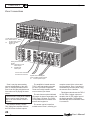
Component video signals
from TGP-5 Component video outputs
to TV Monitor's Component video inputs
MANUFACTURED
UNDER LICENSE
FROM DOLBY
LABORATORIES.
"DOLBY", "PRO-LO
GIC" AND THE
DOUBLE-D SYMBOL
ARE
TRADEMARKS
OF DOLBY
LABORATORIES.
DVD IN
SAT IN
MANUFACTURED
SYSTEMS, INC. UNDER LICENSE FROM
5,978,762 AND US PAT. NO. 5,451,942, DIGITAL THEATER
5,956,674
OTHER WORLD-W
PENDING. "DTS",
IDE PATENTS , 5,974,380,
"DTS-ES EXTENDE
ISSUED AND
"NEO:6" ARE
D SURROUN
TRADEMARKS
D" AND
SYSTEMS, INC.
OF DIGITAL
SYSTEMS, INC. COPYRIGHT 1996, 2000, THEATER
DIGITAL THEATER
ALL RIGHTS
RESERVED.
HDMI OUT
If your DVD or video
component has an
HDMI output, connect
it to one of these inputs
with an HDMI cable
Component video signals
From: DVD Player component
video outputs
To:
TGP-5 DVD component
video inputs
Connect your TV's HDMI input here.
Digital audio signals
From: DVD Player coaxial
digital audio outputs
To:
TGP-5 DVD coaxial
digital audio inputs
If your DVD and TV Monitor both
have component-video, they can be
connected as shown, giving a superior
picture.
The digital output from the DVD
player must be connected to the
digital inputs of the TGP-5. This is the
only way the TGP-5 can receive and
decode Dolby Digital or DTS signals.
It is best to use a coaxial digital cable
to make the connection to the TGP-5,
rather than a standard audio cable.
Note: you must also connect the
player's two-channel audio outputs if
you want it to play it in Zone 2 when
the Main Zone is playing a different
source.
16
User's Manual
CHAPTER 2
LD connections: external RF Demodulator and S-Video
S-video signals
from TGP-5 MAIN S-video output
to TV Monitor's S-video input
MANUFACTURED
UNDER LICENSE
FROM DOLBY
LABORATORIES.
"DOLBY", "PRO-LO
GIC" AND THE
DOUBLE-D SYMBOL
ARE
TRADEMARKS
OF DOLBY
LABORATORIES.
DVD IN
SAT IN
MANUFACTURED
SYSTEMS, INC. UNDER LICENSE FROM
5,978,762 AND US PAT. NO. 5,451,942, DIGITAL THEATER
5,956,674
OTHER WORLD-W
PENDING. "DTS",
IDE PATENTS , 5,974,380,
"DTS-ES EXTENDE
ISSUED AND
"NEO:6" ARE
D SURROUN
TRADEMARKS
D" AND
SYSTEMS, INC.
OF DIGITAL
SYSTEMS, INC. COPYRIGHT 1996, 2000, THEATER
DIGITAL THEATER
ALL RIGHTS
RESERVED.
HDMI OUT
digital
audio
signal
RF demodulator
RF
signal
LD player
S-video signal
From: LD Player
S-video output
To:
TGP-5 VID2
S-video input
RF signal
From: LD Player
RF output
To:
Demodulator
RF input
Digital audio signal
From: LD Player
Digital output
To:
Demodulator
Digital input
A suitable external RF demodulator must be used to convert the AC-3
RF output of LD players. Ideally, the
demodulator should also have a
digital bypass (pass-through) feature.
Lexicon and B&K are among several
companies making excellent demodulators with this feature.
If your LD and TV Monitor both have
S-video, they can be connected as
shown. This gives a better picture
than composite video.
Note: you must also connect the
player's two-channel audio outputs
if you want to play it in Zone 2 when
the Main Zone is playing a different
source.
17
User's Manual
CHAPTER 2
VCR connections: analog audio and composite video
Composite video signal from
TGP-5 MAIN composite video output
to TV Monitor's composite video input
MANUFACTURED
UNDER LICENSE
FROM DOLBY
LABORATORIES.
"DOLBY", "PRO-LO
GIC" AND THE
DOUBLE-D SYMBOL
ARE
TRADEMARKS
OF DOLBY
LABORATORIES.
DVD IN
SAT IN
MANUFACTURED
SYSTEMS, INC. UNDER LICENSE FROM
5,978,762 AND US PAT. NO. 5,451,942, DIGITAL THEATER
5,956,674
OTHER WORLD-W
PENDING. "DTS",
IDE PATENTS , 5,974,380,
"DTS-ES EXTENDE
ISSUED
"NEO:6" ARE
D SURROUND" AND
TRADEMARKS
AND
SYSTEMS, INC.
OF DIGITAL
SYSTEMS, INC. COPYRIGHT 1996, 2000, THEATER
DIGITAL THEATER
ALL RIGHTS
RESERVED.
HDMI OUT
Composite video signal (play)
From: VCR video output
To:
TGP-5 VCR video input
Analog audio signals (play)
From: VCR audio outputs
To:
TGP-5 VCR L/R audio inputs
Composite video signal (record)
From: TGP-5 VCR video output
To:
VCR video input
Analog audio signals (record)
From: TGP-5 VCR L/R audio
outputs
To:
VCR L/R audio inputs
The VCR can record the analog
audio and the video of whichever A/V
input is selected.
NOTE: If your VCR has a digital
audio output, connect it to the TGP5’s digital VCR input. In this case, you
must also connect the VCR’s analog
audio outputs (as shown) if you want
to play in Zone 2 when the Main Zone
is playing a different source.
18
User's Manual
CHAPTER 2
CD and Antenna connections
AM Loop Antenna
Position this to get the best reception before fixing it in place. The supplied
loop antenna has been carefully matched to the AM tuner. Larger Loop antennas may improve reception, provided that their inductive value is around 18 uH.
FM Antenna
The supplied dipole antenna and its adaptor push onto
the rear panel’s F-type connector as shown. First screw
the spade terminals of the dipole antenna onto the adaptor.
An outdoor antenna can be used for improved reception. Take care to observe all the safety instructions shown
on page 3.
MANUFACTURED
UNDER LICENSE
FROM DOLBY
LABORATORIES.
"DOLBY", "PRO-LO
GIC" AND THE
DOUBLE-D SYMBOL
ARE
TRADEMARKS
OF DOLBY
LABORATORIES.
DVD IN
SAT IN
MANUFACTURED
SYSTEMS, INC. UNDER LICENSE FROM
5,978,762 AND US PAT. NO. 5,451,942, DIGITAL THEATER
5,956,674
OTHER WORLD-W
PENDING. "DTS",
IDE PATENTS , 5,974,380,
"DTS-ES EXTENDE
ISSUED
"NEO:6" ARE
D SURROUND" AND
TRADEMARKS
AND
SYSTEMS, INC.
OF DIGITAL
SYSTEMS, INC. COPYRIGHT 1996, 2000, THEATER
DIGITAL THEATER
ALL RIGHTS
RESERVED.
HDMI OUT
NOTE: If your CD has a digital output, connect it to the TGP-5’s digital
CD input. Also connect the analog
CD inputs (as shown) if you want
this source available in Zone 2 when
the Main Zone is playing a different
source.
Analog audio signals
From: CD L/R audio outputs
To:
TGP-5 CD L/R audio inputs
19
User's Manual
CHAPTER 2
Turntable connections
MANUFACTURED
UNDER LICENSE
FROM DOLBY
LABORATORIES.
"DOLBY", "PRO-LO
GIC" AND THE
DOUBLE-D SYMBOL
ARE
TRADEMARKS
OF DOLBY
LABORATORIES.
DVD IN
SAT IN
MANUFACTURED
SYSTEMS, INC. UNDER LICENSE FROM
5,978,762 AND US PAT. NO. 5,451,942, DIGITAL THEATER
5,956,674
OTHER WORLD-W
PENDING. "DTS",
IDE PATENTS , 5,974,380,
"DTS-ES EXTENDE
ISSUED
"NEO:6" ARE
D SURROUND" AND
TRADEMARKS
AND
SYSTEMS, INC.
OF DIGITAL
SYSTEMS, INC. COPYRIGHT 1996, 2000, THEATER
DIGITAL THEATER
ALL RIGHTS
RESERVED.
Ground wire
From: Turntable chassis ground
To:
TGP-5 chassis ground connector
HDMI OUT
Phono-level audio signals
From: Turntable L/R audio outputs
To:
TGP-5 Phono L/R audio inputs
Only connect a Turntable to the
PHONO inputs. In most cases, you
should also connect the ground wire
to reduce any hum through the speakers.
The TGP-5 PHONO input is
designed for moving magnet
cartridges and high output
moving coil cartridges. DO NOT connect CD players or other line-level
sources to this input.
20
User's Manual
CHAPTER 2
Tape Player connections
MANUFACTURED
UNDER LICENSE
FROM DOLBY
LABORATORIES.
"DOLBY", "PRO-LO
GIC" AND THE
DOUBLE-D SYMBOL
ARE
TRADEMARKS
OF DOLBY
LABORATORIES.
DVD IN
SAT IN
MANUFACTURED
SYSTEMS, INC. UNDER LICENSE FROM
5,978,762 AND US PAT. NO. 5,451,942, DIGITAL THEATER
5,956,674
OTHER WORLD-W
PENDING. "DTS",
IDE PATENTS , 5,974,380,
"DTS-ES EXTENDE
ISSUED
"NEO:6" ARE
D SURROUND" AND
TRADEMARKS
AND
SYSTEMS, INC.
OF DIGITAL
SYSTEMS, INC. COPYRIGHT 1996, 2000, THEATER
DIGITAL THEATER
ALL RIGHTS
RESERVED.
play
HDMI OUT
record
Analog audio signals (play)
From: Tape player audio outputs
To:
TGP-5 Tape L/R audio inputs
Analog audio signals (record)
From: TGP-5 Tape L/R audio
output
To:
Tape Player L/R audio
input
The tape player’s output can be
connected to the TAPE or DAT inputs.
If you have two players, the TGP-5 will
automatically select the input which
has a signal present. The unused
deck must be turned off when the
other deck is playing.
The tape player can record the audio from whichever source is selected,
but not from DAT to TAPE, or TAPE
to DAT. Use an external switchbox to
dub recordings.
21
User's Manual
CHAPTER 2
8-Channel Input connections (analog audio)
Composite video signal
from:TGP-5 MAIN composite video output
to: TV Monitor's composite video input
MANUFACTURED
UNDER LICENSE
FROM DOLBY
LABORAT
"DOLBY", "PRO-LOG ORIES.
DOUBLE-D SYMBOL IC" AND THE
ARE
TRADEMARKS
OF DOLBY
LABORATORIES.
DVD IN
SAT IN
MANUFACTURED
SYSTEMS, INC. UNDER LICENSE FROM
5,978,762 AND US PAT. NO. 5,451,942, DIGITAL THEATER
5,956,674,
OTHER WORLD-W
PENDING. "DTS",
IDE PATENTS 5,974,380,
"DTS-ES EXTENDE
ISSUED AND
"NEO:6" ARE
D SURROUN
TRADEMARKS
D" AND
SYSTEMS, INC.
OF DIGITAL
SYSTEMS, INC. COPYRIGHT 1996, 2000, THEATER
DIGITAL THEATER
ALL RIGHTS
RESERVED.
LEFT
RIGHT
AUDIO O
U
L SUR TPUTS
CEN
R SUR
SUB
If your DVD player has its own surround processing circuits you can connect it as shown. The surround back
inputs can be left disconnected if your
player does not have these outputs.
An external surround processor can
also be connected like this. You will
have to connect some of your sources
to the external processor, so it can
process the original signals.
Note: The eight channels of audio
from the DVD bypass the DSP circuits
of the TGP-5, so the tone controls,
DVD, DVD-A,
SACD player
etc.
LB SUR
RB SUR
Composite video signal
From: DVD video output
Analog audio signals
To:
TGP-5 DVD video input From: DVD audio outputs
To:
TGP-5 8-Channel audio inputs
This input is really useful as an
input for DVD A, SACD, etc., as a multichannel direct (DSP-bypass) input.
HDMI OUT
Digital audio signals
From: DVD digital audio output
To:
TGP-5 DVD digital audio input
bass management and surround
mode selections will have no effect.
This provides the highest fidelity
signal path for SACD or DVD-Audio,
free from any coloration or processor
circuitry.
This input is only for the Main Zone,
it is not selectable for Zone 2.
In this diagram, the player's digital
output is also connected. If you select
the TGP-5's DVD input, you will get
DVD video and DVD digital audio.
If you select the TGP-5's 8-Channel
input, you will get DVD video, and
analog audio from the 8-channel input.
The video output in this example is
connected to the TGP-5 DVD composite video input. Use the OSD 8-CH
input configuration menu to lock the
8-channel input to DVD video (see
page 34 for details). Whenever the
8-channel input is selected, the DVD
video will also be selected.
22
User's Manual
CHAPTER 2
Amplifier connections
MANUFACTURED
UNDER LICENSE
FROM DOLBY
LABORAT
"DOLBY", "PRO-LOG ORIES.
DOUBLE-D SYMBOL IC" AND THE
ARE
TRADEMARKS
OF DOLBY
LABORATORIES.
DVD IN
SAT IN
MANUFACTURED
SYSTEMS, INC. UNDER LICENSE FROM
5,978,762 AND US PAT. NO. 5,451,942, DIGITAL THEATER
5,956,674,
OTHER WORLD-W
PENDING. "DTS",
IDE PATENTS 5,974,380,
"DTS-ES EXTENDE
ISSUED AND
"NEO:6" ARE
D SURROUN
TRADEMARKS
D" AND
SYSTEMS, INC.
OF DIGITAL
SYSTEMS, INC. COPYRIGHT 1996, 2000, THEATER
DIGITAL THEATER
ALL RIGHTS
RESERVED.
HDMI OUT
12 VDC trigger voltage
From: TGP-5 12 VDC
trigger output
To:
Amplifier 12 VDC
trigger input
Balanced analog
line-level audio signals
From: TGP-5 balanced
audio outputs
To:
Amplifier balanced
audio inputs
MINIMU
M SPEA
KER LO
AD
IMPEDAN
CE 4 OH
MS
(or use RCA unbalanced
outputs as needed)
R
RB
RS
C
LS
To Sp
eaker
s
LB
L
Speaker-level audio signals
From: Amplifier speaker outputs
To:
Speaker inputs
If your amplifier has XLR inputs,
it can be connected to the balanced
audio outputs as shown. It is preferable to use the XLR connections if
you have this option, because they offer superior noise rejection compared
to unbalanced (RCA) connections,
especially for long cable runs.
This diagram shows a Sunfire
TGA-7400 seven-channel amplifier.
The TGP-5 side-axis outputs can be
connected to other amplifiers, and its
subwoofer output can connect to a
powered subwoofer.
This diagram also shows the TGP-5
12 VDC trigger output connected to
the 12 VDC trigger input of the Sunfire
amplifier. The amplifier automatically
turns on whenever the TGP-5 main
zone is turned on.
You can also use a Sunfire TGA5400 or TGA-5200 amplifier, which
have five channels, or use separate
amplifiers for each pair.
23
User's Manual
CHAPTER 2
Zone 2 connections
MANUFACTURED
UNDER LICENSE
FROM DOLBY
LABORAT
"DOLBY", "PRO-LOG ORIES.
DOUBLE-D SYMBOL IC" AND THE
ARE
TRADEMARKS
OF DOLBY
LABORATORIES.
DVD IN
SAT IN
MANUFACTURED
SYSTEMS, INC. UNDER LICENSE FROM
5,978,762 AND US PAT. NO. 5,451,942, DIGITAL THEATER
5,956,674,
OTHER WORLD-W
PENDING. "DTS",
IDE PATENTS 5,974,380,
"DTS-ES EXTENDE
ISSUED AND
"NEO:6" ARE
D SURROUN
TRADEMARKS
D" AND
SYSTEMS, INC.
OF DIGITAL
SYSTEMS, INC. COPYRIGHT 1996, 2000, THEATER
DIGITAL THEATER
ALL RIGHTS
RESERVED.
HDMI OUT
12 VDC trigger voltage
From: TGP-5 Zone 2
12 VDC trigger output
To:
Amplifier 12 VDC
trigger input
Analog line-level audio
signals
From: TGP-5 Zone 2 L/R
audio outputs
To:
Amplifier L/R
audio inputs
MINIMU
M SPEA
KER LO
AD
IMPEDAN
CE 4 OH
MS
Connect to an external IR
remote sensor in Zone 2
Speaker-level audio signals
From: Amplifier speaker outputs
To:
Zone 2 speaker inputs
Zone 2 can play stereo analog
sources independently of the main
zone, or can play the same source.
Zone 2 can only play a digital source
if the main zone is playing the same
source.
Note that Zone 2 has to be enabled
before it can be used. Please see
page 47 for more details of Zone 2
operation.
This example shows a Sunfire
TGA-7400 power amplifier fed from
the TGP-5 Zone 2 stereo outputs.
The amplifier is located near the
TGP-5, and long speaker wires are
run out to your Zone 2 speakers.
These are usually located in another
room or area of your house.
The wire from an optional Infrared
(IR) sensor is shown connected to the
TGP-5 Zone 2 IR input. The TGP-5
is compatible with most makes of IR
sensors and equipment.
complete control of the volume and
source selection. Zone 2 can also be
controlled from the front panel, using
the remote's Zone 2 buttons.
This diagram also shows the TGP-5
12 VDC Zone 2 trigger output connected to the 12 VDC trigger input of
the Sunfire amplifier. The amplifier
automatically turns on whenever Zone
2 is turned on.
The sensor can be located in a
suitable area of Zone 2, allowing you
24
User's Manual
CHAPTER 3
Remote Control
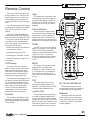
Think of the TGP-5 remote control
as ten remotes in one. There are ten
DEVICE buttons, five on either side
of the display, and each allows the
remote to operate one piece of equipment.
From the factory, the device buttons
are labeled: CD, TAPE, AUX, ZONE2,
TGP-5, DVD, VCR, SAT, TV and
CABLE.
Only the TGP-5 and ZONE2 buttons are pre-programmed, and these
allow the remote to operate your TGP5. The remote can be set to operate
your other remote controlled equipment. This is done in three ways from
the hidden SETUP menu:
1. Entering a code from the tables at
the end of this manual
2. Stepping through the codes
3. Learning from your other remotes
See Remote Setup on page 27 for
more details.
Light
The button on the right side of the
remote briefly turns on the lights for
the buttons and display. Pressing it
again will turn it off. The number of
seconds can be varied, or it can be
disabled.
POWER
OFF
Use this to jump to various display
pages. For example, if you press the
TGP-5 device button, the display
changes to some show buttons which
control your TGP-5. If you press
PAGE, the display will move to page
2, showing more functions for the
TGP-5.
The top line shows the present
device, mode or status, and it shows
when a remote command is being
transmitted. The bottom line shows
the page number, status and basic
instructions during programming.
LIGHT
MAIN
CD
TAPE
AUX
DVD
VCR
SAT
ZONE2
DEVICE
Buttons
TV
TGP5 CABLE
AUDIO
FAV
PAGE
MAIN
FAV
PREV
CH
PAGE
This button will return the remote
display back to the Main menu.
Depending on which mode you are
in, it may take two or more presses.
This will help you get back to the
Main menu if you ever get lost in the
menus.
The contrast of the display can be
changed by holding down the MAIN
button and pressing the joystick pad
UP or DOWN.
SYSTEM
DEVICE
Once you press a device button,
Buttons
all the device buttons change label
and function to become buttons to
operate your device. There are two
PAGE
pages per device, and you can move
between them using the PAGE button.
MAIN
MAIN
Contrast
LCD
Device Buttons.
LCD Display
The main part of the display shows
the labels of the ten DEVICE buttons.
You can change any label and customize the remote to fit your system.
Note: this is not a touch-sensitive
screen, just a way of labeling the
device buttons on each side, and
showing instructions and status.
IR WINDOW
VOL
CH
MUTE
GUIDE
MENU
MODE
MODE
JOYSTICK
EXIT
INFO
1
2
3
4
5
6
7
8
9
DIS
0
ENT
M1
M2
M3
+10
MACROS
RC-500
FAV
This button allows you to step
through five display pages of your
favorite TV and radio stations. These
can be set and re-labeled to suit.
Joystick Pad
This pad and surrounding buttons
are used to operate standard DVD
menus, and VCR and Tape transport
controls. In TGP-5 mode, if you press
MENU, the On Screen Display will appear and the joystick can be used to
select and adjust the various items.
M1, M2 and M3 Macros
These MACRO buttons can be
programmed to send out a sequence
of commands with a single press.
Batteries
The remote takes four AAA batteries inside the rear compartment.
These should last about six months
in normal use, before a low-battery
warning appears.
25
User's Manual
CHAPTER 3
Operating the TGP-5 with the Remote
1. Press the remote's MAIN button
to make sure the display is on the
main display menu.
SYSTEM
2. Press the TGP-5
device button to
set the remote
to operate your
TGP-5. The display
changes to show
the TGP-5 input
selections:
MAIN
CD
TAPE
AUX
ZONE 2
4. The following buttons with fixed labels are also programmed: Power,
Volume up, down and Mute. The
number pad accesses the tuner
presets directly, and CH+/- steps
through them. DIS is the +10 function, and ENT is station enter. The
MODE buttons either side of the
joystick, allow you to select the different surround modes.
26
TV
TGP5 CABLE
AUDIO
MAIN
PAGE
PAGE
FAV
MAIN
PREV
CH
VOL
Hold down MAIN and
ENT for a few seconds
to enter the SETUP
mode. See next page.
CH
MUTE
Use the Joystick to navigate
through the OSD (when active)
GUIDE
Full-page On Screen
Display (OSD)
MENU
MODE
MODE
Next Mode
Previous Mode
EXIT
OSD Exit
The BAND button allows you to
switch between the AM or FM
bands of the Tuner.
Page 2 also allows you to engage
HOLOGRAM, and to adjust the
volume trims for center, surrounds,
and sub. On the right is '+'
(increase level) and on the left is '-'
(decrease level).
DVD
VCR
SAT
ZONE2
TGP-5
3. Press PAGE to
reach page 2 of
the display menu.
SMOD- and
SMOD+ allow you
to navigate through
the assorted Dolby
Pro Logic modes
(Pro Logic, PLII
Music, PLIIx Music,
PLII Movie, PLIIx Movie and PLII
Matrix) or you can toggle between
Neo:6 Cinema and Neo:6 Music.
POWER
OFF
INFO
1
2
3
4
5
6
7
8
9
DIS
0
ENT
M1
M2
M3
+10
Momentary status and
information display
ENT
RC-500
ZONE 2
Note: Zone 2 must first be enabled
using the OSD (see page 36), or
these controls will have no effect.
Zone 2 can be turned on even if
the Main Zone is off.
See page 47 for more Zone 2 details.
1. From the main
display menu,
press the ZONE2
device button to
access features
of the second
zone. Page 1
shows the input
selections.
2. The hard buttons
operate Zone 2,
such as Power,
Volume, Mute,
and the Tuner
controls and presets.
3. Page 2 shows
Zone 2 on/off,
Zone 1 on/off, and Zone 2 balance
left/right.
User's Manual
CHAPTER 3
Remote Setup
You must enter the SETUP mode
to program the remote control for the
other components in your system,
and to customize it for your convenience. There is only one way to
enter the SETUP mode:
Hold down both the MAIN and
ENT buttons for a few seconds until
SETUP appears in the display.
The SETUP
display shows 10
options. These are
described in more
detail as follows:
P-PRO
The remote is
pre-programmed
to operate many types of equipment.
The P-PRO mode allows you to enter
a 3-digit code to recall the commands
for each of your system components.
1. Find the make of your TV, DVD,
VCR, CD and other components,
then look at the tables at the rear
of this manual. Make a note of the
various codes for each piece. Note
that some TV/VCR combined units
may use VCR codes, not TV.
2. Sit in a position in front of your
equipment, and make sure that all
components are turned off.
3. In the SETUP mode, press P-PRO
and the device labels will appear.
4. Select the device button you want
to program, then choose the device table you took the code from.
For example, for a TV, press TV
twice. If you want AUX to control a
VCR, press AUX, then press VCR.
5. You can now enter a code using the remote’s keypad, or UP
or DOWN. After the third digit is
entered, the remote transmits a
power command. If the component
turns on, press SAVE and then
EXIT. Go to step 7.
User's Manual
6. If you could not find a code which
works, hold the UP button to step
through all the codes in the table
for that device. Release UP when
your equipment turns on. If you go
past, press DOWN. Press SAVE
and then EXIT.
7. The display will change to show
the devices again, still in the
P-PRO mode. Repeat steps 4 to 7
until all your equipment is working.
8. Press MAIN to return to the main
menu from any setup mode.
9. Test the remote to see which
buttons will operate your equipment. For example, if you were
trying to control your TV, check
the power, channel up and down,
and volume up and down. If some
of these buttons are not working
correctly, choose another code for
that manufacturer, or you can learn
over those not working by using
the LEARN mode.
NOTE: If you accidently "learn
over" one or more of the buttons which operate the TGP-5,
fear not. You can use ERASE (see
page 28) to reset either the individual buttons, or the whole TGP-5
bank. After erasing, the buttons will
revert to their TGP-5 programming.
FAV
This mode allows you to enter your
favorite TV and radio stations.
Note that the following procedure
assumes you have already programmed your remote to operate your
TV, radio tuner and other equipment.
The keypad must already be able to
select channels on your TV or SAT,
and any TGP-5 tuner presets.
Before using FAV mode, use the
EDIT mode to change the labels in
the FAV display to show your station
call signs or reminders. You can also
delete the labels from unused buttons,
or move all your most favorite FAV
labels to page 1.
1. In the SETUP mode, select FAV.
2. Select the device, such as
SAT, TV or TGP-5, to learn station
commands from.
3. The FAV display will appear, and
you can step through five pages
using PAGE or FAV.
4. Press a favorite channel button
and the first character will blink.
Use the keypad to enter the channel number. For channels below
10, you should enter a 0 (zero)
first. If you want, you can enter a
power button before entering the
channel. Also, if your equipment
needs it, you may have to enter
the ENT button after the channel is
entered. If you want to add a short
delay, press PAUSE (II).
5. When you have finished with one
channel, press its button, and the
label will reappear. Move on to the
next favorite channel and program
it in the same way. Repeat this
for all the channels and devices.
Press MAIN to return to the top
menu.
6. Now, if you press the molded FAV
button, the favorite channels appear in the display, and the ones
you programmed will take you to
your favorite channel or radio station. If you programmed in a power
command, the TV or tuner will turn
on first.
7. The commands are sent in sequence, for example for channel
13, first the 1 and then the 3 are
sent. Wait a few seconds before
switching between favorites, or
your TV may receive for example,
the 1 of one button and the 2 of
the next.
continued..
27
CHAPTER 3
Remote Setup continued
PUNCH
This mode allows you to set up the
volume, channel up/down and transport buttons so they will work for your
main devices, no matter which device
the remote is set for. For example, the
volume buttons can operate the TV,
even if the remote is set to VCR. The
channel buttons can operate the VCR,
even if the remote is set to TV.
1. In SETUP, select PUNCH and the
display changes to show VOL, CH,
and PLAY. The PLAY selection will
make the eight transport buttons
around the joystick punch through.
2. Select one of these buttons, for
example VOL.
to erase one device at a time. If
you use KEY, press MAIN and
EXIT when you have erased all the
devices you want.
3. If you select FAV, press ALL to
erase all favorites, or KEY to erase
single favorites. Note that the
labels are not erased.
4. If you select MACRO, press ALL to
erase all macros, or KEY to erase
macros, one device at a time.
5. Press EXIT to return to the SETUP
menu, and press MAIN to return to
the main device menu.
LIGHT
3. Press a device button for the
device you want the Volume commands to appear in (punch TO).
This mode allows you to either disable the light, or change the number
of seconds it stays on. (The light is
inactive while in the SETUP mode).
4. Press a device button for the device you want to learn from (punch
FROM). These settings are saved.
1. In the SETUP menu, select LIGHT
and the display will show ON, time
in seconds, SAVE and EXIT.
5. Repeat steps 2 to 4 until you have
punched to all devices you want.
2. If you press ON, it changes to OFF
and disables the light. This is useful if you want to save battery life,
or if the kids like to use the remote
as a flashlight or Light Saber®.
6. Use MAIN to return to SETUP.
NOTE: To erase Punch commands
from a device (return buttons
to their previous programming):
Repeat steps 1 and 2, then press
the device button twice. Repeat for
other devices, then press MAIN to
return to SETUP.
ERASE
Use this mode to erase commands
stored in the remote. This does not
affect the labels, just the stored IR
commands. The pre-programmed
commands for the TGP-5 will not be
lost, as they can be recalled.
3. Use the keypad to enter the number of seconds you want the light
to stay on. If you enter 00, it only
stays on while the light button is
held down.
4. Select SAVE, or press EXIT to
make no change. Either of these
will return you to the SETUP menu.
LEARN
1. In the SETUP mode, select
ERASE and the display will show
LEARN, FAV, MACRO and EXIT.
The remote can learn commands
from other remote controls. This is
useful if the pre-programmed commands do not operate some of your
equipment, or certain buttons do not
work, or you want to customize key
functions.
2. If you select LEARN, press ALL to
erase all learned buttons, or KEY
NOTE: PAGE, MAIN, FAV, M1, M2
and M3 cannot be learned over.
1. Find your original remote and
make sure it has good batteries,
and it operates your equipment
perfectly. In the following example,
the Sunfire remote will learn the
PLAY command from a DVD remote.
2. Point the DVD remote into the Red
IR top window of the Sunfire remote. Place them on a flat surface,
about 1 to 2 inches apart, and
avoid bright lighting or sunlight.
3. In the SETUP mode, press
LEARN.
4. Select the DVD device button and
the display will change to show
some common DVD labels (remember there are two pages).
5. Select the PLAY button just above
the joystick pad. The display will
show “READY.”
6. Press your DVD remote’s PLAY
button. The display will show
“GOOD” if it has been accepted. If
it shows “FAIL,” press PLAY again.
7. Press another button on the
Sunfire remote and repeat the
procedure until all the DVD buttons
you need are learned.
8. Press MAIN once to return to the
LEARN mode, twice for SETUP
and three times for the MAIN
menu.
9. Try out the Sunfire remote and see
if the learned buttons will successfully operate your equipment. You
may find that some commands
cannot be learned, because some
are non-conventional, or too long
or too short.
10. The EDIT command can be used
to change the labels if some of the
standard labels do not correspond
to your original remote buttons.
continued..
28
User's Manual
CHAPTER 3
Remote Setup continued
MACRO
The macro mode allows you to set
up certain buttons to transmit up to 20
commands in sequence. For example,
a single button press could turn on all
of your home theater equipment, and
set the TGP-5 to DVD, set the TV to
channel 3, and set the DVD to play,
make the tea and put the cat out.
The buttons which can be programmed as macros are: M1, M2 and
M3 at the bottom of the remote, and
Power and System at the top. The
ten device buttons can also be programmed as macros, although these
will only be activated if the device button is held down for a few seconds.
Note that the macro buttons are independent of which device the remote
is set for. So there is only one M1
macro, only one power macro etc.
1. In the SETUP mode, press
MACRO.
2. Press one of the buttons you wish
to program as a macro, such as
M3, Power, or a device button.
3. Press up to 20 buttons you would
like the macro to store. Do this in
the exact order you want them to
be transmitted. Use the PAGE,
FAV and the direct buttons to find
buttons to use in the macro.
4. To add a delay between steps, you
can add 0.2 seconds each time
you press PAUSE (II). This does
not take up a step.
5. Press the Channel UP button to
save your macro.
6. Repeat this procedure to program
more macros, and press MAIN to
return to the main menu.
7. Try out the macros to see if they
work OK. It may take some time
to transmit all the commands in
sequence, so keep the remote
pointing at your equipment and do
not move it during this time.
Note that the remote's Zone 2,
Page 2 has discrete on and off codes
for the Main Zone and Zone 2. You
can use these within Macros instead
of the main power button commands
(which toggle on/off).
RECAL (Recall)
This mode lets you quickly see the
three digit codes you have assigned
to each device. This is useful if you
want to check the tables and find
other codes which may work better.
1. In the SETUP mode, select RECAL. The device labels and their
codes will flash alternately, before
returning to the SETUP menu.
Make a note of the codes.
2. Press MAIN to return to the main
device menu.
EDIT
This mode allows you to change the
labels in the display to suit your system. You can change device labels, or
the buttons on page 1 or page 2 of a
device, or the FAV labels.
1. In the SETUP menu, press EDIT.
2. To edit a device label, press PAGE
and then the device button. Go to
step 5.
3. To edit a button on a device’s page
1 or 2, press the device button and
its page 1 will appear. Press PAGE
to reach page 2 if required. Go to
step 5.
times, it will step through A, B, C,
1. Press 2 for D, E, F and 2. The
number 0 has a selection of special characters to choose from.
7. Press the joystick right to move on
to the next character, or press it
down to delete a character.
8. When finished, press the button
next to the label you just edited.
You can edit other buttons, or
press MAIN a few times to return
to the main menu.
CLONE
This feature allows you to easily
copy all of the commands and labels
from one Sunfire remote (of the same
type) to another.
1. Set both remotes on a flat surface,
with their IR windows pointing
towards each other, about 1 or 2
inches apart.
2. In the SETUP menu for both
remotes, press CLONE and the
display will change to show SEND,
RCV (receive) and EXIT.
3. Press SEND on the remote you
want to copy from. Press DEVIC
to only clone a single device, then
press the device button. Press ALL
to clone all programming.
4. Press RCV on the remote you
want to copy to.
4. To edit a FAV button, press FAV
and select the button you want
from the five pages. Use PAGE or
FAV to change pages to find the
one you want. Go to step 5.
5. When you are ready, press START
on both remotes. It may take up
to 40 seconds, so do not move
the remotes during this time. The
remote will flash “GOOD” if it has
successfully learned all the commands. If it flashes “FAIL,” then
repeat this procedure.
5. Press the button you want to edit
and the first character will flash.
6. Press MAIN to return to the main
menu.
6. Use the keypad to enter up to 5
characters. This is like using a
telephone keypad to enter letters.
For example, if you press 1 a few
29
User's Manual
CHAPTER 4
On Screen Display (OSD)
Video Connections
MAIN
MON2
MAIN
The On Screen Display (OSD) is
present at the composite video
or S-video MAIN outputs, and the
component video MAIN and MON
outputs. It is also present at the
output labeled VID2/MON2, but
only if it is set to MON2. This is
set in the OSD Video menu (see
page 37). Make sure that your TV
monitor's video input is connected
correctly to one of these outputs.
MON2
No OSD from:
• VCR outputs
• VID2/MON2 set to VID2
• HDMI output
Note that the HDMI output does
not support OSD functions.
OSD Activation
The OSD is activated using the
remote's MENU button (with the
remote set to operate the TGP-5).
The joystick pad and surrounding buttons allow you to navigate
through the OSD menus to control
and customize many features of
the TGP-5.
GUIDE
MENU
MODE
MODE
Quick Information
Press EXIT to quit the OSD at any
time. Any changes you make will
be saved.
Note that the TGP-5 front panel
display shows abbreviated text
when the OSD is activated.
EXIT
INFO
Pressing INFO at any time will
bring up a short description of the
source you are listening to. For
example if you are listening to a
DVD, the TV display might show:
DVD DIGITAL 48K
DOLBY EX 5.1 / 5.1
where:
DVD is the selected input,
DIGITAL is the signal type,
48K is the sample rate,
DOLBY EX is the mode,
5.1 is the input format,
5.1 is the output (i.e. five
speakers and a subwoofer).
30
User's Manual
CHAPTER 4
OSD Menus
Trim (Page 32)
Main Menu
The first menu of the TV On
Screen Display looks like this
MAIN MENU
TRIMS
MODES
TONE
INPUTS
SETTINGS
TRIM MENU
SUB
CENTER
SURROUND
SUR BACK
SIDE AXIS
TRIM MEMORY
+2.5
0.5
-2.5
-1.0
0.0
OFF
Modes (Page 33)
MODES
Navigation
DOLBY SETUP
DTS SETUP
PARTY
JZCLUB AMBIENCE
Adjust the volume of each
speaker "on-the-fly."
Adjust the settings of the
surround modes.
3
Use the joystick pad left, right,
up and down buttons to navigate
through the menus.
Tone (Page 32)
TONE
BASS
TREBLE
0
0
Treble and Bass adjustment.
An arrow after text ( ) on the
screen, shows there is more information on another page.
The back arrow ( ) shows that
you can return to the previous
page.
The down arrow ( ), such as at
the bottom of the Inputs Menu,
shows there is a second page of
similar choices.
The up arrow ( ) shows the way
back to the first page.
NOTE: you can quit the OSD at
any time by pressing EXIT on the
remote. Any changes you make
will be saved. There is no need to
navigate back through previous
pages, unless you want to make
more changes.
Inputs (Page 34)
INPUTS
DVD
CD
SAT
VID1
VID2
VCR
Set up each input's trim
level, default surround
mode, video type, enable/
disable in Main or Zone 2,
and triggers.
Settings (Page 36)
SETTINGS
MAIN ZONE
ZONE 2
SPEAKERS
VIDEO
SOFTWARE
CONTROL
• Main Zone and Zone 2 volume and power-up setting
• Speakers size, position,
calibration, and crossover
• Video and OSD settings
• Software settings
• IR and RS232 setup
31
User's Manual
CHAPTER 4
Trim and Tone Menus
Trim Menu
MAIN MENU
TRIM MENU
TRIMS
MODES
TONE
INPUTS
SETTINGS
SUB
CENTER
SURROUND
SUR BACK
SIDE AXIS
TRIM MEMORY
+2.5
0.5
-2.5
-1.0
0.0
OFF
This menu allows you to adjust the
individual volume level of your speakers "on-the-fly." Although careful calibration is key to a good home theater,
the trims allow fine adjustment of the
current program playing. The trims
add or subtract from the reference
levels set during calibration using the
Speaker Calibration menu. Recalibrating will reset these on-the-fly trims to
zero.
The trims do not exceed +10 dB
and are not less than -20 dB. The trim
dB levels appear in the front panel
display during adjustment.
Step up and down
through the menus
The center, rear and sub trims can
also be adjusted using Page 2 of the
remote's TGP-5 menu (see page 26).
TRIM MEMORY
If ON, the trims are stored in memory and are recalled during power turn
on. If OFF, the trim setting will be lost
when the power is turned off.
Step through any available
options, and change dB levels
Note: There are separate
subwoofer trims for Dolby, DTS and
two-channel modes:
Dolby Technologies
When you play discs encoded
in Dolby Digital and adjust the
subwoofer trim, the TGP-5 remembers that setting and uses
it the next time you play these
discs.
MAIN MENU
TRIMS
MODES
TONE
INPUTS
SETTINGS
TONE
BASS
TREBLE
0
0
Tone Menu
The Bass and Treble can be
boosted or cut by up to 10 dB.
DTS
When you play a DTS disc and
adjust the subwoofer trim, the
TGP-5 remembers that setting
and uses it the next time you
play a DTS disc.
Two-Channel
This is true for all two-channel
modes as a group: if you play
a CD or the tuner, etc., and
use Stereo, Dolby Pro Logic,
DTS Neo:6 or Party, and adjust
the subwoofer trim, then that
setting will be used when any
2 channel source is played in
future.
32
User's Manual
CHAPTER 4
Modes Menu
DOLBY
MAIN MENU
TRIMS
MODES
TONE
INPUTS
SETTINGS
DOLBY D DYN RNG
PRO LOGIC IIx MODE
DOLBY SUB TRIM
MODES
DOLBY SETUP
DTS SETUP
PARTY SETUP
JZCLUB AMBIENCE
ON
0.0
PRO LOGIC IIx MODE
3
MODE
CENTER WIDTH
PANORAMA
DIMENSION
Modes Menu
MUSIC
0
ON
4
Dolby Setup
Dynamic Range
This is the range in level between the loudest sound and
quietest sound during Dolby
Digital and DTS playback only.
The options are Quiet (narrow range), Medium (average
range) and Large (wide range).
Select Quiet for late night listening if you do not want to disturb
anyone. Select Loud for full
dynamic range.
Dolby Pro Logic Mode
Select this for Dolby Surround
playback, or to enhance any
stereo program. A second menu
will show the available options.
Dolby Sub Trim
Adjusts the subwoofer level
specifically for Dolby source
material. There are separate
subwoofer trims for DTS and
2-channel source material.
DTS Setup
DTS LFE
Set your subwoofer (LFE)
channel for either Cinema or
Music during DTS playback. In
the Cinema setting, there is no
change to the DTS subwoofer
level from that mastered on the
DTS disk. For the Music setting, there is a 10 dB reduction,
necessary to accurately match
the levels on DTS music discs.
DTS
DTS LFE
DTS NEO:6
DTS SUB TRIM
CINEMA
MUSIC
0.0
DTS Neo:6
This allows you to select either
Cinema or Music for DTS
Neo:6 playback. These two
options are described in more
detail on page 43.
DTS Sub Trim
Adjusts the subwoofer level.
Party
This mode allows you to play a
stereo source with multiple
speakers. A second menu allows you to select which speakers are present.
Jazz Club Ambience
This adjusts the ambience and
effects of the Jazz Club mode,
simulating various venue sizes
and strength of the rear reflections.
Dolby Pro Logic IIx Mode
Modes
The available modes are :
PLII Music, PLIIx Music,
PLII Movie, PLIIx Movie,
PLII Matrix, and
Dolby Pro Logic.
These are described in more
detail on page 43. Note: PLII
and PLIIx are on-screen abbreviations for Dolby Pro Logic
II and Dolby Pro Logic IIx.
Dolby Pro Logic II Music and
Dolby Pro Logic IIx Music
modes have three extra options which allow you to create
a realistic and natural surround
effect from 2 channel sources:
Center Width
This spreads the center channel between the front left and
right channels.
Panorama
This wraps the front left and
right channels around to the
surround channels.
Dimension
This adjusts the balance between the front and surround
speakers.
33
User's Manual
CHAPTER 4
Input Menus
Input Configuration Menus
Input Menus
MAIN MENU
These menus let you select which
input you would like to configure.
Pressing the joystick right on each
input brings up a second menu which
allows you to configure what happens
when each input is selected.
TRIMS
MODES
TONE
INPUTS
SETTINGS
INPUTS
DVD INPUT CONFIGURE
DVD
CD
SAT
VID1
VID2
VCR
NAME
GAIN TRIM
DEFLT MODE
VIDEO TYPE
MAIN ZONE
TRIG RELAY
ZONE 2
FULL AUTO
DVD
0.5
LAST
AUTO
ENABLE
ON
ENABLE
OFF
INPUTS P2
TUNER
TUNER PRESETS
TAPE
PHONO
8-CHANNEL
Name
Use the joystick up/down, and left/
right to change the display name
for any input, up to 9 characters.
Move fully left when finished.
Gain Trim
Use this to adjust all of your
sources to play at similar levels. To
prevent overloading, the levels can
only be adjusted downwards.
Default Mode
Set the input to a favorite surround
mode, or the last mode, or stereo.
Video Type
If you know the type of video used
for each input, select the type from
CVID (composite), SVID (S-video)
or COMP (component). Otherwise,
choose AUTO, and the TGP-5 will
automatically detect the source
type when a video signal is present. There maybe some delay in
Auto, for certain program material.
Main Zone
Enable/disable the selected input
in the Main Zone. You can disable
any unused inputs, then it will not
play in the Main Zone.
8-CH INPUT CONFIGURE
NAME
GAIN TRIM
LCK TO VID
MAIN ZONE
TRIG RELAY
8-CHANNEL
0.5
VID1
ENABLE
ON
Note: the 8-Channel input menu is
slightly different from the other
menus:
It allows you to select a specific
video input whenever the 8-Channel audio input is selected. Also,
this input only works in the Main
Zone, not Zone 2.
Trigger Relay
The Trigger Relay can be set to
turn on whenever the input is selected. This could be used to turn
on an amplifier or a video screen
for example.
Zone 2
Enable/disable the input in Zone 2.
You can select the inputs you wish
to play in Zone 2. For example,
you might disable the Phono input
if nobody in Zone 2 appreciates
your vintage collection of Swing
78s.
Full Auto
Select on, and the TGP-5 will turn
on and select this input whenever
this input starts to play. Use off
for any input which hinders auto
operation.
34
User's Manual
CHAPTER 4
Tuner Preset Menus
MAIN MENU
TRIMS
MODES
TONE
INPUTS
SETTINGS
INPUTS
DVD
CD
SAT
VID1
VID2
VCR
INPUTS P2
TUNER
TUNER PRESETS
TAPE
PHONO
8-CHANNEL
Tuner Preset Menu
TUNER PRESETS PAGE 1
01
02
03
04
05
06
FM
FM
FM
FM
AM
FM
107.5
99.9
97.3
104.1
1250
107.5
NR ON
NR OFF
NR ON
NR OFF
MONO
NR OFF
This allows you to set the AM/FM
band and frequency of up to 40 radio
stations. They can be recalled quickly
and set as favorite stations on the
remote control. See page 45.
For FM stations, try to select the
Stereo-NR (noise reduction) for the
best reception.
Preset procedure
GUIDE
MENU
MODE
MODE
1/ Once you are on a preset in
the OSD, press the MODE
buttons on the remote control
to select the band from Stereo
FM, Stereo-NR or Mono AM.
2/ Then use joystick left and right
to change the frequency.
3/ Press the joystick center to
enter that frequency into preset
memory and play that station.
EXIT
INFO
4/ Use the joystick down button to
move to the next preset down
on the screen. The bottom
arrow on each screen leads to
the next page of presets.
5/ Repeat this for all the presets
you want to set, then press
EXIT when finished.
35
User's Manual
CHAPTER 4
Main Zone and Zone 2 Menu
be adjusted to any level afterwards.
MAIN MENU
TRIMS
MODES
TONE
INPUTS
SETTINGS
Power Up Volume
This allows you to set the PRESET volume level mentioned
above. You might want to set it
to a low level to avoid any surprises upon turn-on, especially
if other users like loud music.
SETTINGS
MAIN ZONE
ZONE 2
SPEAKERS
VIDEO
SOFTWARE
CONTROL
MAIN ZONE
PWRUP SOURCE
PWRUP VOL MD
PWRUP VOL
MAX VOL
AUTO ON
DVD
PRESET
45
70
ON/OFF
ZONE 2
ZN2 SYSTEM
BALANCE
PWRUP SRC
PWRUP VOL MD
PWRUP VOL
MAX VOL
ZN2 OSD POPUP
ENABLE
2 LEFT
TAPE
PRESET
45
51
ON
Zone 2 Menu
These settings are like those described for the Main Zone. In addition,
the entire Zone 2 can be enabled
or disabled, and the stereo balance
adjusted with this menu.
Zone 2 is set "disabled" from
the factory, so you should
use this menu to enable
Zone 2 when you are ready to use it.
The Power Up Volume has three
options: PRESET, LAST and FIXED.
The FIXED option allows you to set
the Zone 2 to a fixed volume, not
adjustable with the remote. PRESET
and LAST are as described for the
Main Zone.
OSD popup can be turned on or off
with this menu.
Main Zone Menu
PowerUp Source
This sets the input source
which the TGP-5 will then
always select whenever the
TGP-5 is turned on.
Power Up Volume Mode
This lets you choose the volume level the TGP-5 reaches
when it is turned on. It ranges
from 0 minimum to 100 maximum. You can select from a
PRESET level, set below (the
power-up volume), or it can
play at the LAST level it was
playing before it was turned off.
The TGP-5 will always turn on
at the level set here, but it can
Max Volume
The volume can be set to not
exceed a certain level. This
is useful if you have sensitive
speakers, sensitive neighbors,
or you would rather not have
others play your system too
loud.
Auto ON
When this is ON, the TGP-5 will
automatically switch to the next
input which starts to play. For
example, if you turn on your CD
player and press Play, the TGP5 will switch to CD. When you
turn on your VCR and press
Play, it will select the VCR
input.
You must set FULL AUTO to
ON in the INPUT menu, for
each input you want to use
with this fully automatic feature.
(See page 34, at the bottom of
the last column.)
If the TGP-5 is turned off while
the Auto mode is engaged, it
will turn on and select an input
whenever an input becomes
active. For example, if you turn
on your CD player and press
Play, the TGP-5 will turn on and
select the CD input.
We recommend that you turn
off this feature if you are selecting the inputs manually, or
recording.
36
User's Manual
CHAPTER 4
Video, Software and Control Menus
SOFTWARE
MAIN MENU
TRIMS
MODES
TONE
INPUTS
SETTINGS
SETTINGS
MAIN ZONE
ZONE 2
SPEAKERS
VIDEO
SOFTWARE
CONTROL
Video Menu
OSD POP UP
(VOL, SOURCE, and MODE)
When enabled, an on-screen
message appears any time the
Volume (or Mute, on-the-flyTrims), Source, and Surround
Mode are changed.
The OSD popups can be set to
show only Volume, only Source,
only Mode, or any combination
of the three, by setting the menu
item to Enable. When all three are
disabled, the Info button is also
disabled, and a message appears
on the bottom of this menu. With
all three disabled, the video signal
uses the purest path possible to
route to the monitor. For example,
if you are set to an S-video input
and the monitor is on it’s
S-video feed, then the video is not
digitized in the TGP-5. If you are
up-converting from a composite
video source, or you have popups enabled, then the video path
for S-video will always be digitized
for smoothest viewing transitions
for the OSD popups.
OSD popups are not available on
component out when component
sources are playing. They are
also not available on the HDMI
output.
VID INTERLACE
Video interlacing is normally ON,
and will work with most monitors and projectors. If you notice
any moving artifacts on a paused
video picture, try setting this to
OFF. This will only effect S-Video
and Mon2 Composite outputs.
UPGRADE SOFTWARE
REVISION LIST
CONTROL
VIDEO MENU
OSD VOL POPUP
ENABLE
OSD SRC POPUP
ENABLE
OSD MD POPUP
ENABLE
VID INTERLACE
ON
VID2/MON2 OUT
VID2
VID DELAY
0 ms
INFO DISPLAY ENABLED
VID2/MON2 OUT
VID2: the VCR2/MON2 outputs
can be used for recording to a
second VCR. There is no OSD,
and the output is muted when
VID2 is chosen as an input (to
prevent feedback).
MON2: the VCR2/MON2 output
becomes a second monitor output
(with OSD) for another TV. It will
not mute when VID2 is chosen.
VIDEO DELAY
This adjustment is useful if you
have an external video processor
in your system. Video signals may
become delayed with respect to
the audio signals. Although it is
called Video Delay, it is actually a
delay adjustment of the audio signals relative to the video signals.
Use the remote's joystick pad to
adjust the delay in one millisecond
steps. An equal amount of delay is
added to all audio channels.
Note: The speakers keep their
relative time delay settings which
the TGP-5 calculates from the
Speaker Position Menu settings.
The video delay is just added
on top. Leave the video delay at
zero if you have no external video
processor.
RS-232
DIG CONTROL
LAN MODE
REAR MAIN IR
REAR ZN2 IR
FRONT PNL IR
BAUD RATE
ENABLE
LAN/SERIAL
RUN/SETUP
ENABLE
ENABLE
ENABLE
19200/9600
Software Menu
This menu is used to show the current revision levels of system software
within your TGP-5.
It also allows the TGP-5 Flash
memory software to be upgraded by
CD, see page 48 for details.
Control Menu
In most cases, there is no need to
change these settings (all enabled by
default). You should make any changes with caution.
This menu allows you to enable or
disable the RS-232 port and the rear
panel IR remote control connections.
Dig Control allows you to select if
the unit is controlled by LAN (ethernet) or Serial (RS232). The front panel
IR receiver can also be disabled if
required, but make sure the rear panel
IR receiver is working correctly and is
still active before doing this.
If you select a baud rate of 19200,
the Ethernet jack will need to be
configured in it’s own setup for 19200
baud (it defaults to 9600).
The front panel IR can be re-enabled by holding down the remote's
MENU button for several seconds,
while pointing it at the front IR window.
37
User's Manual
CHAPTER 4
Speaker Size Menu
MAIN MENU
TRIMS
MODES
TONE
INPUTS
SETTINGS
SETTINGS
MAIN ZONE
ZONE 2
SPEAKERS
VIDEO
SOFTWARE
CONTROL
SPEAKERS
SIZE
DISTANCE
CALIBRATION
L-R XOVER
C-SURR XOVER
SUBWFR MD
Speaker Size Menu
This menu allows you to enter the
size of your speakers. The TGP-5's
bass management will then automatically assign each speaker a
frequency range: either full range
for large speakers or high-pass for
small speakers. In the latter case, the
low frequency range is sent to the
subwoofer.
See page 42 for more details on
bass mangement. See page 41 for
information regarding the adjustment
of the bass management crossover
point.
LARGE or SMALL
With a few exceptions, this option
can be applied independently to the
main, center, surround and surround
back speakers.
•
•
Select LARGE for
any speakers which
are capable of good
bass performance.
They will then receive the full
frequency range.
Select SMALL for
any speakers such
as satellites with
5 or 6 inch woofers. They will then receive the
higher frequency range above
SPEAKER SIZE
MAIN
110 HZ SIDE AXIS
SURROUND
90
CENTER
NORM
SUR BK
SUB
LARGE
SMALL
SMALL
OFF
2 SMALL
ON
the crossover point. Try using
SMALL even if your speakers
are large. This will protect your
speakers from low frequency
damage and conserve amplifier power.
CENTER OFF
• In the OFF position, the center
channel information is redirected to the fronts. This is
sometimes known as a
“PHANTOM” center channel.
The lower frequencies from all speakers set to SMALL
will be redirected to
the subwoofer, in
addition to its own LFE
channel.
SURROUND BACK
• Select OFF if you have no surround back speakers. The information will be shared among
the other surround speakers,
creating a phantom back channel.
SIDE-AXIS
• Select OFF if you have no
side-axis speakers. The size
is always the same as the
main speakers, so do not set
the mains to LARGE, if the
side-axis speakers are small
and not capable of good bass
performance.
SUBWOOFER ON/OFF
• Select ON if you have a
subwoofer. It will then receive
any LFE signals (from 5.1, 6.1
sources), and the bass from
any channels set to SMALL
•
SURROUND
• Select OFF if you have no surround speakers.
Note: the bass management does
not work for the 8-Channel input, or
for Zone 2. Therefore the speaker size
settings will have no effect and these
channels will always be full range.
38
User's Manual
CHAPTER 4
Speaker Position Menu
MAIN MENU
TRIMS
MODES
TONE
INPUTS
SETTINGS
SETTINGS
MAIN ZONE
ZONE 2
SPEAKERS
VIDEO
SOFTWARE
CONTROL
Speaker Position
SPEAKERS
SIZE
POSITION
CALIBRATION
L-R CROSSOVER
C-SURR CROSSOVER
SUBWFR MODE
This menu allows you to enter the
distance from your listening position to
the various speakers. The TGP-5 will
then automatically adjust and correct
the speaker delay times. The sound
from each speaker should arrive at
the listener at the correct time. The
distance measurement is not critical, and a visual estimate is usually
adequate.
SPEAKER DISTANCE
L MN/SIDE
110 HZ
R MN/SIDE
90 H CENTER
L SUR
R SUR
L SUR BACK
R SUR BACK
4
4
3
4
4
5
5
ft
ft
ft
ft
ft
ft
ft
6in
6in
0in
0in
0in
0in
0in
The procedure is as follows:
1. Measure or visually estimate
(in feet and inches) how far
each speaker is away from the
center listening position of your
home theater.
2. In the OSD menu, use the
remote control joystick arrow
buttons to enter the distance
in feet and inches for each
speaker.
3. The TGP-5 automatically sets
the appropriate delays for each
speaker so the sounds arrive
at the listening position at the
correct time.
4. Use this table to record your
speaker distance measurements.
SPEAKER
DISTANCE
LEFT MAIN/SIDE
RIGHT MAIN/SIDE
CENTER
LEFT SURROUND
RIGHT SURROUND
LEFT SURR BACK
RIGHT SURR BACK
39
User's Manual
CHAPTER 4
Speaker Calibration Menu
MAIN MENU
TRIMS
MODES
TONE
INPUTS
SETTINGS
SETTINGS
MAIN ZONE
ZONE 2
SPEAKERS
VIDEO
SOFTWARE
CONTROL
Speaker Calibration
The calibration procedure allows
you to adjust the volume level of each
speaker in turn until they are all equal.
This will give you the best Home Theater performance. You should only do
this calibration when you are sitting in
your usual listening/viewing position.
Preliminary: Play a movie and adjust
the volume for a comfortable listening
level. The volume of the calibration test
noise is linked to the setting of the main
volume control, so if the test noise is
too quiet, turn the main volume up a
little and retry.
1. Use the OSD to navigate to
the SPEAKER CALIBRATION
menu.
2. Press the remote's joystick
down to turn on the noise
generator. While the test signal
is playing in each speaker, its
level can be adjusted using the
joystick left/right buttons. Adjust each speaker in turn until
they are all equal in volume.
The best results are obtained
if you use a Sound Pressure
Level (SPL) Meter. This is a
hand held meter which will accurately measure and display
the sound level. Adjust all of
SPEAKERS
SIZE
POSITION
CALIBRATION
L-R CROSSOVER
C-SURR CROSSOVER
SUBWFR MODE
SPEAKER CALIBRATION
LEFT MAIN
110 HZ
90 HZ CENTER
NORMAL RIGHT MAIN
R SIDE AXIS
RIGHT SUR
R SUR BACK
the speakers until they are
playing within 1 dB of each
other. Without a meter, you can
still obtain good results with
careful listening.
3. Repeat the procedure several
times for each speaker until
you are satisfied they are playing at the same level.
4. Press the joystick-up to return
to the top of the menu, and
then press joystick-left to exit.
The calibration noise generator
will turn off.
The main volume control adjusts
the volume of all of the speakers up
and down at the same time. They
keep the same relative levels you set
here, that is, they will still be playing
as loud or as quiet as each other.
The Dolby Digital, Dolby Surround
and DTS soundtracks are designed
to be played back in a calibrated
Home Theater. The sounds from each
speaker will be at the correct relative
levels, as the movie sound director
designed them. Repeat the calibration if you change any external power
amps or speakers, or if you move your
couch relative to the speakers.
0.0
0.0
0.0
0.0
0.0
0.0
SPEAKER CALIBRATION
L SUR BACK
LEFT SUR
L SIDE AXIS
SUBWOOFER
GO TO LEFT MAIN
0.0
0.0
0.0
0.0
ON-THE-FLY TRIMS ZEROED
The range of adjustment is +/– 10
dB (in 0.5 dB steps) for each speaker.
Record your levels here:
SPEAKER
dB LEVEL
LEFT MAIN
CENTER
RIGHT MAIN
RIGHT SIDE AXIS
RIGHT SURROUND
RIGHT SURR BACK
LEFT SURR BACK
LEFT SURROUND
LEFT SIDE AXIS
SUBWOOFER
40
User's Manual
CHAPTER 4
Speaker Crossover Menu
MAIN MENU
TRIMS
MODES
TONE
INPUTS
SETTINGS
SETTINGS
MAIN ZONE
ZONE 2
SPEAKERS
VIDEO
SOFTWARE
CONTROL
SPEAKERS
SIZE
POSITION
CALIBRATION
L-R CROSSOVER
80 HZ
C-SURR CROSSOVER
80 HZ
SUBWFR MODE
ENHANCED BASS
Crossover adjustment
Subwoofer Mode
The subwoofer output can be set
to Normal, or to an Enhanced Bass
mode.
The Enhanced Bass mode provides
an output to your subwoofer even
when you are listening to a stereo
source with main speakers set to
LARGE. In the Normal mode, there
would be no subwoofer output in this
case, and the bass would only come
from the main speakers.
The Enhanced Bass mode has no
effect if the main speakers are set to
SMALL, as the subwoofer is automatically engaged. It also has no effect in
5.1 or greater surround modes.
The TGP-5 bass management
system allows you to send the low
frequencies of your speakers to a
subwoofer. The crossover point of
your main left and right speakers can
be selected from 40 Hz to 160 Hz, as
can the crossover point of your center
and surround speakers.
For example, if your main left and
right speakers are a bit lacking in bass
response, you can set the speaker
size to SMALL, and set the L-R crossover to 40 Hz. The subwoofer will then
receive the lower bass range, (not
well reproduced by your front speakers). This will not affect the range sent
to your center or surrounds.
Most manufacturers provide a -3 dB
specification for their speakers. This
is the frequency where the speaker's
output has dropped by 3 dB. Set the
TGP-5's crossover to this frequency or
above. If you cannot find this, set the
crossover to 80 Hz (the default).
Set your subwoofer's own crossover control to maximum frequency or
bypassed mode. If it is set lower than
the TGP-5, there would be a hole in
the mid-bass, and bass information
would be missing.
A setting of 80 Hz is a good starting point if you are not sure of the
response of your speakers. In this
example:
• The subwoofer receives frequencies below 80 Hz, from all speakers whose size is set to SMALL.
• All speakers set to SMALL, receive
frequencies above 80 Hz.
41
User's Manual
CHAPTER 5
Using the TGP-5
Bass Management
Unlike higher frequencies, it is
difficult to discern exactly from which
direction lower bass is coming from.
The TGP-5 has a bass management system which takes advantage
of this effect. It allows you to choose
whether your speakers will play the
full frequency range, or if the bass will
be redirected to the subwoofer.
The advantages of redirecting the
bass to a subwoofer are :
•
The overall bass of the system
is improved as subwoofers,
such as Sunfire's powered
True Subwoofers are specially
designed for this frequency
range.
•
The subwoofer can simultaneously play the bass from all
of the speakers, in addition to
it’s own low frequency effects
channel (LFE).
•
There is no loss in perception of the position of movie or
music sound effects, as the ear
cannot easily locate the position of bass sound sources.
•
•
Smaller speakers can be used
for front, center and surrounds, as they do not have to
reproduce the low frequency
range. This leads to a saving
in speaker expense and room
space. Note that a subwoofer
is required if the front speakers
are set to SMALL.
Your amplifiers do not waste
power reproducing the low
frequency range.
See the previous page for information regarding the adjustment of the
bass management crossover point.
Video Conversion
The SPEAKER SIZE menu is used
to set the bass management correctly
for your speaker system. See page
38.
NOTE: Dolby Digital and DTS
modes are designed especially for
complete systems with front, center, and surround speakers and
subwoofers. You need all of the
speakers to get the best performance
from your Home Theater. If you do not
have a subwoofer connected, then
you should not use the bass management system (so set all the speakers
to Large). Without a subwoofer, you
will be missing the 5.1 LFE (low frequency effects) information.
Considering the advantages of
the bass management system, you
might try setting all of your speakers
to Small, even if they are capable of
good low-frequency performance.
The TGP-5 has advanced digital
video DSP circuitry and coding which
allows the following:
•
Up conversion from composite
video inputs to S-video and
component video outputs.
•
Up conversion from S-video
inputs to component video
outputs.
•
Down conversion from S-video
inputs to the MON2 composite
video output jack.
The video conversion makes the
TGP-5 able to switch all of your video
sources, making it the central controller for all of your audio and video
entertainment.
For example, suppose you have
your TV connected to the component video outputs of the TGP-5. Any
of your other video sources can be
connected to the TGP-5, even those
which do not have component video.
The TGP-5 will convert any composite
and S-video sources to component
video.
Notes:
•
Do not connect both composite and S-video inputs on the
same TGP-5 input. Always
connect the highest quality
video source type.
•
The quality of the converted
output is limited by the quality
of the original source.
•
The Tuner, Tape and Phono inputs do not have video inputs.
When these are selected, the
video stays on the last selected
video source.
•
The TGP-5 has sophisticated
video circuitry that requires it to
be pre-configured for only one
type of television broadcast
standard. For US models, this
is NTSC and for export models, this is PAL-BGIH.
42
User's Manual
CHAPTER 5
Surround Modes for 2-Channel Sources
For 2 channel input sources, you
can choose from the following modes:
STEREO
DOLBY PRO LOGIC II
DOLBY PRO LOGIC IIx
PARTY
JAZZ CLUB
DTS Neo:6
SOURCE DIRECT
The mode selection can be made
from the front panel MODE buttons,
or from the remote control.
GUIDE
JAZZ CLUB
Try MUSIC mode for all of your
stereo programs, and adjust these
extra options to suit your taste:
DTS Neo:6
MENU
MODE
MODE
EXIT
In MOVIE mode, Dolby Surround
soundtracks are decoded by the
TGP-5 into separate channels: left
and right channels for off-screen
imaging, a center channel for
most on-screen dialog, and stereo
surround channels for ambience
and special effects. This is the
mode to use for any surround-encoded material.
INFO
Center Width spreads the
center channel across the front
soundstage.
Panorama wraps the left and
right channels around you.
Dimension adjusts the front/
rear balance.
STEREO
This is the conventional two-channel stereo mode with sound from
your left and right speakers. The
TGP-5 bass management lets you
use your subwoofer to handle the
lower frequency range.
We recommend that you try the
HOLOGRAPHIC IMAGE when
using stereo sources.
DOLBY PRO LOGIC II and
DOLBY PRO LOGIC IIx
These modes allows you to enjoy
many of the benefits of Dolby
Digital (and Dolby Digital EX) from
your stereo sources.
DOLBY PRO LOGIC II features
enhanced realism from full range
stereo surround channels. Use
this mode to listen to your stereo
sources in 5.1 surround sound.
It has two options, Movie and
Music, which can be set using the
On Screen Display (OSD) menus.
User's Manual
DOLBY PRO LOGIC IIx extends
the Dolby Pro Logic II technology by adding stereo full range
surround back channels. Use this
instead of Dolby Pro Logic II if you
are using the surround back channels in your system. This also
has Movie and Music options as
described above.
DOLBY PRO LOGIC mode
emulates the original standard
surround mode. It can be used
for source material which is not of
optimum quality, or if you just feel
nostalgic for the way things were.
PLII MATRIX mode can be used
for mono sources, or for FM programs with poor stereo reception.
PARTY
This extra stereo mode copies the
front speaker signals to the other
speakers in your system. This
mode adds tremendous presence
to your stereo sources and is
great for parties and casual listening alike. The OSD menu can be
used to select which speakers are
active in this mode.
In this DSP mode, the surrounds
simulate the ambiance caused
by rear reflections and effects of
a small to medium sized venue.
This is useful for adding surround
sound effects to stereo sources.
The ambiance effect can be varied using the OSD MODES menu.
The CINEMA option can produce
up to six full range, separate
channels and a subwoofer output
from stereo matrix surround
sources. This enhances the playback of sources such as surround
sound video tapes, Laser Discs
and broadcast TV programs.
The MUSIC option can expand
normal stereo programs into six
channels. It does so in a natural
sounding way, which enhances
the listening experience.
SOURCE DIRECT
This mode bypasses all DSP,
Tone, and bass management
circuits. It is stereo analog only,
and offers the shortest signal
path through the TGP-5. Only
the front left and right speakers
are engaged. Do not use this
mode for digital-only sources, as
it only routes the analog audio. To
prevent damage to your speakers,
this mode only works if your front
speakers are set to Large.
In addition to these modes, and
those offered for multi-channel sources, the side-axis speakers will widen
the front sound stage and fill in the
sound field between the front speakers and the surrounds. Note that the
side-axis speakers are active in stereo
as well as multi-channel operation.
The Holographic Image can also
be selected for any 2 channel or multichannel source for enhanced realism
and depth.
43
CHAPTER 5
Surround Modes for Multi-Channel Sources
For multi-channel sources, the
TGP-5 will automatically select the
correct mode from one of the following:
DOLBY DIGITAL
DOLBY DIGITAL EX
DTS
DTS-ES MATRIX
DTS-ES DISCRETE
Dolby Digital and DTS are “5.1”
surround systems with five main channels: left front, center, right front, left
surround, and right surround. Each
channel can play the full frequency
range and is independent of the
other channels. The “.1” denotes the
subwoofer channel which plays the
low frequency effects (LFE), also independent of the other channels.
Dolby Digital EX and DTS ES offer
"Extended Surround." Both systems
offer a surround back channel which
effectively fills in the otherwise empty
soundspace behind you.
If you want to try one of the modes
on the previous page, you should select a 2-channel output from your DVD
player's options menu.
NOTE: In your DVD player's audio
setup menu, set the digital output
to BITSTREAM. If this is not set
correctly, the TGP-5 cannot decode the digital information.
DOLBY DIGITAL (5.1)
This mode is available if the
TGP-5 automatically detects a
Dolby Digital encoded source on
the currently selected input. You
should look for the Dolby Digital
Logo on DVDs, LaserDiscs and
other sources.
Many DVDs have the option of
a Dolby Surround, Dolby Digital
or Stereo soundtrack. Follow the
instructions in your DVD player's
manual to output Dolby Digital
bitstreams. Dolby Digital must
often be selected from the Disc's
menu.
44
DOLBY DIGITAL EX (6.1/ 7.1)
Dolby Digital EX mode is primarily
for playback of Dolby Digital Surround EX encoded soundtracks.
One advantage over Dolby Digital
playback is that it fills in the area
behind you with a completely
separate full-range channel.
The TGP-5 has the option of connecting one or two surround back
speakers. The calibration and
speaker size options can create a
seamless surround field.
If you have no surround back
speakers, the extra information
is sent to the standard surrounds
and no material is lost. (Set the
surround back speakers to OFF in
the SPEAKER SIZE menu).
The TGP-5 will also create the
surround back channel if you are
playing a 5.1 source.
DOLBY DIGITAL with PRO LOGIC IIx
Besides Dolby Digital and Dolby
EX, you may change the Mode
during Dolby Digital playback using the Mode keys on the remote
or front panel, to Dolby Pro Logic
IIx Music and Dolby Pro Logic IIx
Movie. These two modes create
enhanced stereo back surrounds.
Listen to each Mode to determine
which sounds best on a given
movie.
Dolby Digital uses a maximum
of 5.1 channels and does not
support surround back channels. Dolby EX supports a mono
surround back channel (or dualmono surround back channels if
both left and right surround backs
are used). Dolby Pro Logic IIx
Movie is not an optional mode
when the surround back channel
is configured for only one speaker.
Dolby Digital plus Pro Logic IIx
Movie or Music uses the Dolby
Pro Logic IIx decoder to create a
stereo surround back soundfield
from the stereo content of the left
and right surrounds. For example,
Dolby Pro Logic IIx Movie directs
or "steers" some of the left surround signal to the left surround
back, whereas Dolby Pro Logic
IIx Music lets the left surround
remain intact and fills in the left
surround back with additional
material.
Although movies are encoded
with either Dolby Digital or Dolby
EX, many sound even better
when using the Dolby Pro Logic
IIx modes. Try it out.
DTS (5.1)
This mode is available if the TGP5 automatically detects that a DTS
encoded source is present at one
of it’s digital inputs. Look for the
DTS Logo on DVDs, LaserDiscs,
CDs and other sources.
Make sure that you set your
player to output DTS bitstreams.
DTS must also be selected on the
disc's menu.
DTS ES (6.1)
All DTS-ES sources have the
surround back channel matrixed
in the left and right surrounds.
Newer DVD releases also have a
discrete surround back channel, in
addition to the same information
matrixed.
DISCRETE ES sources: the
TGP-5 DTS-ES discrete decoder
will decode the discrete surround
back channel. It also removes the
surround back matrix from the left
and right surrounds, and restores
them to be fully independent
channels.
MATRIX ES sources: If there is no
discrete surround back channel,
the TGP-5 decodes the matrixed
surround back channel from the
left and right surrounds, and
restores them to be fully independent channels.
User's Manual
CHAPTER 5
Tuner Operation
The Tuner is selected either by
rotating the manual input selector on
the front panel, or by touching the
TUNER button in the remote’s TGP-5
mode. The front panel display shows
the frequency of the last station you
were listening to.
The FM Tuner can tune stations
from 87.5 MHz to 108.0 MHz in 0.2
MHz steps (.05 MHz steps for some
international models). The AM Tuner
range is 530 kHz to 1710 kHz in 10
kHz steps (531 kHz to 1710 kHz in
9 kHz steps for some international
models).
Tuner and the OSD
Page 35 shows how to set up the
Tuner using the on screen display.
Tuning Stations Manually
Use the front panel AM/FM button
to select either the AM or FM band,
and then use one of these three ways
to tune stations manually:
Recalling a Preset Station
Once you have selected the Tuner,
you can quickly recall a station by
pressing its preset number, either on
the remote’s numeric keypad, FAV
buttons, or the channel up and down
buttons.
Scanning Presets
To scan through the presets, press
and hold the FM/AM button. Touch it
again to stop the scan.
Saving Presets:
1. Navigate to your favorite station
with the UP/DOWN buttons.
1. Touch UP or DOWN momentarily to change the tuner by
one frequency step.
2. Press MEMORY once. The
preset choice will go to the next
available one.
2. Hold UP or DOWN for a
second or so, then release to
start the scanning feature. The
TGP-5 will scan to the next
station, pause on it for a few
seconds to allow you to hear
what is offered there, and then
scan to the next, and so on.
Pressing UP or DOWN stops
the scanning process.
3. Within 5 seconds, press
MEMORY again to save the
current frequency as a preset,
or else use the UP/DOWN
buttons to find another preset
number, then press MEMORY
to save it.
3. Hold UP or DOWN for an
extended period to make the
tuner speed across the band
without stopping on a station.
The tuner will begin scanning
for stations when you release
the button. Pressing UP or
DOWN stops the scanning.
4. When a station is tuned, it can
be set as a preset for easy recall, see "Setting the Presets"
in the next column.
4. The UP/DOWN buttons usually
tune the frequency, but when
loading the presets, they navigate the presets.
Record your favorite stations here:
Preset
1
2
3
4
5
6
7
8
9
10
11
12
13
14
15
16
17
18
19
20
21
22
23
24
25
26
27
28
29
30
31
32
33
34
35
36
37
38
39
40
Station
AM FM NR
45
User's Manual
CHAPTER 5
Recording
Recording to a Tape Player
Input signals from an audio source playing in
the TGP-5 can be recorded using the left and
right audio outputs. The tape player will receive
a straight copy of the analog source signal going
in, unaffected by the volume, tone or any surround modes. If you are playing a digital source,
the tape player will receive a downmixed stereo
analog signal for recording.
•
Turn OFF the Fully Automatic mode. This
is because some tape decks, such as
three-head decks, will have an output signal going into the TGP-5 during
recording. The DAT or TAPE inputs may
be incorrectly selected as an input, rather
than the source you are trying to record.
•
Manually select the source such as CD
and play it through your system.
•
Set your tape player to record and adjust
the input levels for the best performance.
Once the levels are correct, you can reset
your source to the beginning and make
your recording.
•
Do not select another Main Zone input
while you are recording.
RECORD
From TGP-5
TAPE outputs
PLAY
To TGP-5
TAPE inputs
MANUFACTURED
UNDER LICENSE
FROM DOLBY
LABORA
"DOLBY", "PRO-LO TORIES.
GIC" AND THE
DOUBLE-D SYMBOL
ARE
TRADEMARKS
OF DOLBY
LABORATORIES.
Recording to a VCR
Any video source playing in the TGP-5 can be
recorded using the left and right audio and the
video outputs. The VCR will receive a straight
copy of the source signal going in, unaffected by
the volume, tone or any surround modes.
•
Select the video source and play it
through your system.
•
Set your VCR to record.
•
Do not select another Main Zone source
while you are recording.
•
The VID2/MON2 output can also be used
for recording, but first make sure that it
is set to VID2 in the VIDEO menu of the
OSD (see page 37). This output will then
mute to prevent feedback whenever the
VID2 input source is selected.
•
Do not use the OSD while recording as
the incoming video is shut off while the
OSD is displayed
DVD
MANUF
SYSTEM
5,978,76
PENDIN
"NEO:6
SYSTEM
SYSTEM
PLAY
To TGP-5
VCR inputs
RECORD
From TGP-5
VCR outputs
46
User's Manual
CHAPTER 5
Zone 2 Operation
Note: Zone 2 must first be enabled
using the OSD (see page 36), or it
will not work. Zone 2 can be turned
on even if the Main Zone is off.
If you have an amplifier and a pair
of speakers in a second room or
area (Zone 2), they can play a stereo
source independent of what is playing in the Home Theater room (Main
Zone). You can also play the same
source as selected in the Main Zone.
Zone 2 plays stereo sources, and is
unaffected by the Tone controls, DSP,
Holographic Image, surround modes
or bass management.
Connections
The connections for Zone 2 are
shown on page 24.
Note: Zone 2 can play analog
sources independent of what is playing in the Main Zone. It cannot play
from a digital-only source unless that
input is selected and playing in the
Main Zone. To play a source such as
a DVD player in Zone 2 independent
of the Main Zone, make sure you
connect the player's L-R analog audio
output to the TGP-5.
Indicators
The front panel has two LEDs to
show the Zone 2 status:
Zone 2 ON
This LED is
always on
when Zone 2
is on. If it is
off, there will
be no output
to the Zone 2
amplifier.
Zone 2 Adjust
This turns on whenever the Zone
2 source or volume is being
changed. Note: if this is on, then
any adjustments you make of volume or input, will affect Zone 2, not
the Main Zone.
POWER
In addition to these LEDs, the front
panel display will show the input and
volume adjustment.
SYSTEM
POWER
OFF
MAIN
Turning on Zone 2
CD
TAPE
AUX
Use the On Screen Display in the
Main Zone to check that Zone 2 is enabled. (See page 36, middle column
for details). This enables the Zone 2
system, but it still has to be turned on.
Press the remote's ZONE 2 button.
The remote's POWER, VOLUME and
MUTE buttons then work for Zone 2.
The remote display changes as follows:
PAGE 1
This allows you
to select the
inputs to play in
Zone 2. Z2MAI
(main) allows
Zone 2 to play
whatever is playing in the Main
Zone.
Press PAGE to show the next page:
PAGE 2
This has discrete
codes which are
useful if you want
to program the
remote control
with Macros.
DVD
VCR
SAT
ZONE2
TV
TGP5 CABLE
AUDIO
PAGE
PAGE
MAIN
VOLUME
FAV
PREV
CH
VOL
CH
MUTE
MUTE
GUIDE
MENU
MODE
MODE
TUNER
CONTROLS
EXIT
TUNER
PRESETS
INFO
1
2
3
4
5
6
7
8
9
DIS
0
ENT
M1
M2
M3
+10
RC-500
Z2 OFF, Z2 ON
Zone 2 on or off.
Z1 Off, Z1 ON
Main Zone on or off.
Z2 BL
Use these two buttons to adjust the
left-right balance of Zone 2.
B, C, E, F
These are extra buttons you can
Learn over and re-Label with your
favorite Zone 2 commands.
Note: Zone 2 can also be turned
on and adjusted without using the remote. Press the Zone 2 button on the
TGP-5 front panel, followed by Power,
to turn it on (or off), or adjust the input
source or volume.
Zone 2 operations will work even if
the Main Zone is off.
Press MAIN to return to PAGE 1,
and press it again to return to the
Main Menu.
47
User's Manual
CHAPTER 5
Sonic Holography
Sonic Holography is a unique
process which enhances the threedimensional effects and realism of
stereo sound. This is modeled in DSP,
from a design based on Bob Carver's
legendary (and much sought after)
Carver C-9 Sonic Holography Generator.
This circuit was designed to overcome a problem in obtaining accurate
sound reproduction:
In a stereo system, both ears will
hear the output from both speakers.
The left ear hears sound from the left
speaker and from the right speaker.
To see a problem with this, compare
what happens when listening to a live
musical performance:
During a concert, each ear will
receive one direct sound arrival. For
example, a cymbal crashes, both your
ears will hear it and the brain tells you
accurately the position of the musician.
In a stereo recording of the concert, this
cymbal crash will be heard from both
speakers. The left ear will hear the left
speaker, which is fine, but it will also
hear the crash from the right speaker.
These extra sounds tend to confuse the
sense of sound source location.
The stereo effect in a good pair of
headphones is enhanced because the
left ear only hears the left headphone,
and the right ear hears only the right
headphone. There are no extra sound
arrivals.
To summarize :
1. A real musical event will create
only two direct sound arrivals,
one at the left ear and one at
the right.
2. Stereo playback will give four
arrivals , as both speakers
are heard by each ear. These
second sound arrivals reduce
our naturally accurate sense of
positioning.
Software CD
The Holographic Image circuit was
designed to cancel out the unwanted
second arrivals. The left ear will mainly hear the left speaker and the right
ear mainly hears the right speaker.
This is accomplished by sending a
complex crosstalk signal from the left
and right speakers in addition to the
normal program. These extra signals
are virtually identical to the unwanted
second sound arrivals but they are
out-of-phase with them and they cancel each other out.
The result is a more three-dimensional and wider soundstage, where
the positioning clues are restored. In
a way, the musicians have been freed
from the confines of the flat plane between the speakers. You will perceive
them as playing forward or playing
behind the speakers or to one side
or the other, not just somewhere in
between. We recommend that you experiment with its effect, remember that
you are listening for a more accurate
sense of the location of the different
musicians.
Because the Holographic Image
works by phase cancellation of the
unwanted second sound arrivals, accurate speaker positioning is required.
You must make sure that the left
speaker is the same distance away
from you as the right speaker. Follow
the front speaker placement on the
next page to get the best results. This
is the same as any standard stereo
system, only with more care taken to
position the left and right speakers
accurately.
The Hologram circuit can be
engaged using the remote control or
from the front panel. There is a short
mute period until the circuit is fully
engaged or disengaged.
The TGP-5 Flash memory software
can be upgraded by connecting your
PC to the TGP-5's RS-232 serial
port, and downloading any available update files from our website:
www.sunfire.com. This is the preferred
method, as the software can be updated fairly quickly. See page 51 for
more details.
Alternatively, the TGP-5 software
can be upgraded using a CD available from Sunfire Technical Support.
This CD will be available periodically
if there are major software changes
since the initial release.
The following notes show the CD
upgrade procedure. The CD or DVD
player must be connected to the TGP5's digital audio inputs.
1. Turn on your TV, your CD
player and the TGP-5.
2. Use the TGP-5 remote to select the On Screen Display.
3. Go to the Settings Menu and
then select the Software Menu.
SOFTWARE
UPGRADE SOFTWARE
REVISION LIST
4. Select "Upgrade Software,"
which brings up a second OSD
menu.
5. On the TGP-5, select the
digital input which will play the
CD. Press ENT on the remote
(bottom right).
6. Press 1,2 and 3 on the remote,
then play the CD. The TGP-5
display will show the status as
the CD data is transferred into
the TGP-5.
7. Turn off the TGP-5 when the
software transfer is complete.
48
User's Manual
APPENDIX
Appendix
Speaker Placement
Side speakers
Side speakers
Pair A are surround speakers, pair B and C are surround back
options, and pair D are side-axis speakers, see the next page.
The Front Speakers
You should closely follow the
placement recommendations of your
speaker manufacturer, with the addition of the following points:
The left and right front speakers
should be positioned so that your TV
is exactly centered between them.
This will help focus your attention
towards the screen.
For the best Holographic Image, the
left speaker should be set exactly the
same distance and angle away from
your listening position as the right
speaker. It is recommended that you
use a tape measure to set them up
to be the same distance away, within
about half an inch tolerance.
The Center speaker
If you have a smaller TV, the speakers should be no more than two feet
away from the sides of the TV.
If possible, have the center, left
and right speakers at the same height
(within two feet). This will help give a
smooth transition when sound effects
move from speaker to speaker.
Ideally, the speakers should be no
closer than two feet from the rear and
side walls, in order to reduce any reflections that might upset the imaging.
If your speakers are closer than this,
you can experiment by adding sound
deadening material such as drapes
on the walls to reduce any unwanted
reflections.
Most movie dialog will come from the
center speaker, so careful positioning is
an important part of a good home theater system. Your eyes and ears should
focus your attention towards the center
of the screen.
The center speaker can sit on top, or
directly underneath the TV, as long as it
is located on the centerline and not off
to one side.
Position the front face of the
speaker close to the front edge of
the TV cabinet. (The sound waves
may otherwise reflect off the top of
the TV cabinet and distort the center
imaging).
49
User's Manual
APPENDIX
....Speaker Placement continued
In some systems, two center speakers are used; one on either side of the
TV. As they are in mono, the result
is a sound image that is positioned
exactly at the screen center.
Side-Axis Speakers
The TGP-5 has two side-axis channels which are matrixed from the left
and right front channels, so they are
available in stereo as well as surround
modes.
Use the OSD SPEAKER SIZE
menu to turn the SIDE-AXIS channels
ON or OFF (see page 38).
D Shows the typical placement
of the side-axis speakers. You
can also angle them in towards
your listening position. Place
the speakers along the side
walls, close to the fronts.
Surround Speakers
Subwoofer Location
Place each surround speaker to
be an equal distance away from your
central listening position, and keep
them at least one or two feet above
ear level.
The TGP-5 has identical output connections for up to three
subwoofers, in addition to a fourth,
balanced sub out.
A The diagram on the previous
page shows the use of dipole
surround speakers. These
are usually positioned to the
side of your listening position. They radiate forwards
and backwards and have a
quiet null zone which should
point towards the listener. The
overall effect is that you cannot
hear the direct sound from the
surround speakers, just the
average soundfield.
Conventional surround speakers
can be placed behind the listener, on
the rear walls or the side walls. Adjust
the angle so they do not point directly
at the listener but cause reflections
from the sidewalls or the ceiling. This
will give the effect of broadening the
rear soundstage so that you cannot
distinguish the sound as coming from
a small box on the wall but from a
larger area behind you.
Surround Back Speakers
The TGP-5 has two extra outputs
for surround back speakers. These
create a wonderful sense of realism
in surround effects during playback of
Dolby Digital EX, Dolby Pro Logic IIx,
and DTS ES.
The TGP-5 can be configured for
one or two surround back speakers.
Ideally, all the surround speakers
should be of the same make and
model, and fitted at similar heights to
produce a smooth continuous soundfield.
The best location for a single
subwoofer can be found by playing
some heavy bass and proceeding as
follows:
1. Place the subwoofer right
on the seat of your couch or
listening easy chair.
2. You can then either run the
calibration (noise) signal
through it, or simply plug the
analog outputs of a CD player
directly into your subwoofer’s
low-level inputs. Turn down
the subwoofer's volume level
before turning on the CD, then
play some of your favorite music samples with heavy bass.
3. Walk around the room, standing in all the positions where
you might be able to place
the subwoofer. This is usually
somewhere close to the corners of the room. Try locations
fairly close to the front speakers.
4. Notice where in the room
the bass output from the
subwoofer sounds the loudest.
Shut things down and install
the subwoofer there.
5. This is the best position for the
subwoofer. The bass will sound
the best when you are sitting in
your normal listening position.
If you are connecting one surround
back speaker, connect its amplifier
input to the TGP-5 left surround back
output. Place the speaker behind your
listening position.
50
User's Manual
APPENDIX
The RS-232 Port
The TGP-5 has a rear panel
RS-232 Serial communication port.
This allows the FLASH memory to
be upgraded to the latest software by
connecting to a PC.
The TGP-5 software may be updated to refine operational details and to
include new features. Downloadable
updates will be posted on our website:
www.sunfire.com.
Communications
Serial RS-232, 9600 Baud, 8-N-1
DB-9 Wiring
PINS 1, 6 and 4 are joined together
internally
PINS 7 and 8 are joined together
internally
PIN 2- Data from TGP-5 to controller
(TGP-5 transmit)
PIN 3- Data from controller to TGP-5
(TGP-5 receive)
PIN 5- Ground/Common
PIN 9- No connection
The RS-232 connector is female.
Serial Cable
To connect the TGP-5 port to a
computer, you will need a "straightthrough" serial cable. This has connector pins at one end connected
directly to the pins of the connector at
the other end. For example, pin 1 at
one end connects to pin 1 at the other
end, pin 2 connects to pin 2, pin 3 to
pin 3 and so on.
These common cables are available from most computer stores (or
from Radio Shack as # 26-117). It
should be 9-pin male at one end, to
fit into the TGP-5 and normally 9-pin
female at the other, to fit into your
computer's serial port (COM1 or
COM2).
User's Manual
Update Procedure
External Control
1. The current version level of the
software running your TGP-5
can be found by looking at the
Version Level OSD menu. This
is under the Software OSD
menu (see page 37).
The RS-232 port also allows the
TGP-5 to be controlled externally by
Home Theater controllers and computers.
2. Downloadable updates are on
our website www.sunfire.com.
If the website file is newer than
your current version, follow the
website directions and download the new file onto your
computer's hard drive.
The following information is for
programmers and developers:
Serial command set
Contact Sunfire Technical Support,
or our website www.sunfire.com for a
list of serial commands.
3. Record your calibration, preset
stations or other settings on
page 57. In most cases, the
upgrade will not affect any of
these settings, but it is good to
record them just in case.
4. Turn off your computer and the
TGP-5. Position them close
enough so that they can be
easily connected using your
serial cable. If you have a laptop computer, then it may be
easier to bring that close to the
TGP-5. Otherwise, you need
to disconnect the TGP-5 and
move it close to your computer.
5. Connect the TGP-5 RS-232
port to the corresponding serial
port on your computer.
6. Turn on the TGP-5 and your
computer.
7. Find the file you downloaded in
step 2, and run the program.
8. In AUTO mode, the software
will look for an active serial
connection and upload the new
file. The TGP-5 display will
show the status.
9. When the file transfer is complete, press the Power switch
on the TGP-5 front panel. This
completes the upgrade.
10. Turn off your computer and the
TGP-5, and disconnect the serial cable.
51
APPENDIX
Troubleshooting Guide
The Sunfire TGP-5 is expertly
designed and built to provide years of
trouble-free performance. Most problems that occur can usually be solved
by checking your setup or making
sure that the audio and video components connected to the TGP-5 are on
and fully operational.
The following information will help
you deal with common setup problems
you may experience during normal
use of your unit. If problems persist,
contact your Sunfire Dealer for help.
No sound from one or more
speakers
• Speaker cables may have come
undone. Turn off your system and
check the cables, and tighten the
binding posts.
• An audio cable may have an internal break.
• The volume level is low for the
channels concerned. Recheck the
calibration procedure (page 40).
• The Mute switch is on.
• The channel has not been turned
on in the Speaker Size Menu
(page 38).
• The correct surround mode is not
selected. (Some DVD discs are
stereo only).
• Note: In Source Direct mode, only
the front left and right speakers are
engaged. They must also be set to
Large.
No subwoofer or poor output
• The subwoofer’s amplifier is off, or
its controls are set low.
• Are all speakers set Large?
• SUB is not switched on in the
Speaker Size Menu (page 38).
• Recheck the calibration procedure
(page 40).
• Adjust the Crossover and check
Bass Management (page 41-42).
• See page 50 to find the best location for your subwoofer.
• If the bass is weak during Dolby
Digital or DTS playback, check the
correct audio output is selected in
your DVD menu, otherwise it may
just play stereo into your TGP-5
and you won’t get the true LFE
signal to the subwoofer.
Poor Tuning of Stations
• The antenna may be incorrectly
attached.
• Station not correctly tuned in, weak
or off the air.
• You can improve reception by using external antennas. Some cable
TV feeds also offer FM reception.
The same AM station can be
heard at different frequencies
• One wire of the AM loop antenna
may not be connected.
• A loop antenna is required for AM
reception, as it forms part of the
front-end tuned circuit.
Full Automatic does not work
• Make sure the Fully Automatic
mode is set to ON in the Main
Zone Setup page (page 36) and
that each input is configured for
AUTO ON on their respective
Setup Menu pages (page 34).
In order to automatically choose the
new input source, this mode senses
the following active signals: Left audio
signals, Video signals, Digital signals
Note that LD or DVD players
sometimes put out digital signals even
when the disc is paused or stopped.
Make sure that any sources are
turned off when not in use.
If a source is always active, the
automatic operation may return to that
input as the analog audio varies. In
this case, you should try and turn off
any unused sources, or turn off the
automatic mode.
If you are listening to a mono
source, make sure it connects to a left
input, or use a “Y” cord to feed both
left and right inputs.
There is no automatic selection of
the Phono input, Tuner, or 8-CH.
Certain inputs cannot be selected
• Check the INPUTS menu of the
OSD (page 34), and make sure
that the input has not been disabled in that particular Zone.
No TV picture
• Make sure that the video input of
your TV monitor is connected to
the Main monitor output on the
TGP-5 rear panel.
• Check the VIDEO TYPE is correct in the Inputs menu of the
OSD (page 34). Select the type of
video input you have connected, or
choose AUTO.
• Check that your TV monitor is
selecting it’s correct video input.
• Check the video connection from
your selected source component
into the TGP-5.
• Make sure that you are using the
same video connections. For example, if your source is connected
using S-video, then the TV monitor
must also use S-video.
• If in doubt, try connecting the video
output from your source directly to
your TV monitor. This will help you
narrow down the problem.
• Do not connect more than one type
of video connection to the same
input. Choose only the highest
quality video type.
No Holographic Image
• It is essential that your front speakers are positioned correctly. See
pages 49-50.
• The Holographic Image is most
effective in 2-channel operation. It
gives a more accurate perception
of the position of musicians and
sound effects (page 48). The
results may be masked if you are
using it in a surround mode.
52
User's Manual
APPENDIX
No Tone Controls
source has been selected.
• They will not work if you are using the 8-CH input, Source Direct
mode, or in Zone 2.
• There is no pop-up text for component video connections, but there
is full-page OSD.
No Dolby Digital, DTS playback
On Screen Display flickers when
engaged
• See page 44
• Make sure your player's digital
output is set to BITSTREAM for
Dolby Digital or DTS. This is often
a player's setup menu item, not the
disc's menu.
• Some discs are available with a
number of different options, such
as Dolby Digital or Dolby Pro
Logic. Make sure that you have
selected the correct mode from
your player’s menu.
• Only digital inputs will work for
these modes. Check that your
player's digital output is connected
to the appropriate corresponding
digital input on your TGP-5.
• There is no AC-3 RF input connection for LaserDisc players. You will
need an external RF demodulator.
• Look for the Dolby Digital or DTS
Logo on the source program’s box
or sleeve.
• Check the calibration procedure
from time to time. This is an
excellent way of checking that all
speakers are working correctly.
Noise bursts are heard when
DTS encoded CDs or LDs are
played
• Compressed DTS data uses the
normal digital audio tracks of CDs
and LDs. This analog noise may
be heard in your system before the
DTS digital signal is locked on, or it
may appear as a background hiss.
• To reduce or prevent this noise,
disconnect any analog connections
to your CD or LD players. Just use
the Digital connections.
No On Screen Display
• One of the features of the TGP5 is that its OSD circuit is not in
the video signal path all the time.
This allows for the best possible
video quality. When OSD pop up
text appears, or the Main OSD
menus are engaged, there can be
a slight flicker as the OSD circuit is
switched in. Page 37 shows how to
engage or disable some of the pop
up items.
Sound drops out with CD or
DVD playback
• Make sure the disc is not dirty or
scratched.
• Some inexpensive players and
changers tend to mistrack more
often, causing dropouts with an
external DAC.
Remote won’t Learn
• See page 28
• Make sure you are pointing the
original remote into the receiving
window of the Sunfire remote. This
is located on the top edge of the
remote.
• Make sure that the TGP-5 front
panel receiver window is not obstructed.
• Check that the front or rear IR
receivers have not been turned off
in the OSD CONTROL menu.
Zone 2 does not work
• See page 47
• Zone 2 is set "disabled" from the
factory, so you must use the OSD
Zone 2 menu on page 36 to enable
it when you are ready to use it.
This enables Zone 2, but it does
not turn it on.
• Once Zone 2 is enabled, use the
remote control's Zone 2 device
button, followed by the Power
button to turn Zone 2 on. Alternatively, press the front panel Zone 2
button, followed by the main Power
button.
• The front panel (left hand side)
Zone 2 Power light will be on when
the zone is active (i.e. engaged
and on). The Zone 2 Adjust light
turns on when the zone is being
adjusted. For example, if you turn
Zone 2 on with the remote, and adjust the volume, Zone 2's volume
changes, and the Zone 2 Adjust
light will be on.
• Try touching and holding the first
button to be learned.
Zone 2 does not play digital
inputs
• Do not do the learn procedure in
bright lighting or sunlight.
Zone 2 can play analog sources
independent of what is playing in the
Main Zone. It cannot play from a
digital-only source unless that input
is selected and playing in the Main
Zone. To play a source such as a DVD
player in Zone 2 independent of the
Main Zone, make sure you connect
the player's L/R analog audio output
to the TGP-5.
• Make sure the Sunfire remote is
correctly in its LEARN mode.
• Try varying the distance between
the remotes from 1 to 2 inches,
and see if the learn procedure
improves.
Remote will not work
• See pages 25-29
• See page 30
• Make sure the batteries are not
dead, or installed incorrectly.
• Press the remote's MENU button to activate the OSD. It should
be present even when no video
• Make sure the remote is set on the
correct device display for the component you are trying to control.
User's Manual
• Make sure that the buttons have
not been erased or learned over.
TGP-5 does not respond to any
controls
• Unplug AC power momentarily,
and press Power to turn back on
• If this does not work, try the reset
procedure on the next page.
53
APPENDIX
Your amplifiers shut down often
Check the following:
• Make sure each speaker's average
impedance is not less than your
amplifiers can safely handle.
• The amplifiers have good ventilation, no vents are covered.
• Try setting all the speakers to
Small, and let your subwoofers
handle the heavy bass.
• Check that the amplifier power
output is a good match for your
speakers. If your speakers are
inefficient, consider using larger
power amplifiers.
Reset procedure
The TGP-5 is a microprocessor
controlled device of great complexity.
Occasional power fluctuations and
spikes may cause the TGP-5 to "lock
up" or act strangely. Often times a
software problem may be resolved
by completely powering off the unit,
waiting 30 seconds and then plugging
the unit back in. Try this method first
before using the Full Reset procedure
described below as follows:
Warning: the TGP-5 will be reset to the factory defaults, and
will clear all memory. All your
stored OSD settings and Tuner
presets will be erased.
• On page 57, write down your
calibration settings, input settings,
Tuner presets, and any other settings you have made.
• Turn the TGP-5 back on and it will
go to the default screen. It has now
been reset.
• If the TGP-5 has to be reset regularly, you should invest in a good
quality AC line conditioner.
Updating firmware problems
• See page 51
• If you have a Palm Pilot™ or similar device with “HotSync™” or its
equivalent, you may need to disable this software before proceeding. This software ‘seizes’ control
of a serial port on your machine
and prevents the Sunfire software
from accessing that port. Use another port or disable HotSync.
• Check that the serial cable is connected correctly between the TGP5 and your computer's serial port.
A Hum is heard in your speakers
This problem is more than likely
caused by a “ground loop” in your system, rather than a fault in the TGP-5.
Follow these steps to isolate the main
cause of the hum, there may even be
more than one.
• Remember to turn off all components in your system, including the
TGP-5, before disconnecting or
connecting any cables.
• Disconnect the following items in
order, and check each time if the
hum has gone away:
• The TGP-5 will power on and cycle
through the display. Keep holding
the buttons down until "Resetting
to Factory Defaults" appears in the
front panel display
• Disconnect all cables which come
from outside the room, such as
cable TV, satellite TV, or roof top
antennas. Make sure that they are
disconnected where they first enter
the room, so they are making no
connection to the TGP-5 or the TV,
or any other component. If the hum
is caused by the cable TV line,
then you will need a “ground loop
isolator.” This is an inexpensive
device fitted in line with the coaxial
cable feed. Contact your cable
company or your Sunfire Dealer for
assistance.
• When the TGP-5 has been reset, it
will shut off.
• Disconnect all connections from
the TGP-5 to your TV.
• Press the power button to turn the
unit off, or turn it off from the wall
for a moment.
• Press and continue to hold down
the front panel Power button and
the Tone DOWN button at the
same time.
• Disconnect any component which
has a grounded power cord.
• If the hum persists, disconnect all
the source components one at a
time from the back of the TGP-5,
until you identify the problem.
• Ground loop isolators are available
for audio lines and video. Ask your
Sunfire Dealer for assistance.
• Try moving the speaker cables
away from any power cords. Try
just one speaker, connecting it to
different channels and see if an
amplifier channel is bad.
• If you are still having a problem,
remember that Sunfire’s dealers
and technical support staff will assist you.
Other causes of noise
• Speaker noise may also be caused
by interference or noise on your
AC line. Make sure there are no
large appliances sharing the line,
or halogen lamps or light-dimming
Triac devices.
• Try connecting your system to another AC socket on a separate line.
• If the hum is heard from within the
TGP-5 and not through the speakers, this may also be caused by
interference on the AC or DC lines.
The power transformers may turn
this interference into an audible
noise. Internal hum can be made
worse by a shelf or cabinet resonating, so try moving the TGP-5 to
another shelf.
• Try moving your components further
away from the TV, especially if
you ever notice the screen has
changed color in the area closest
to the component.
• If you have very high efficiency
speakers, these may show up
noise which other speakers may
not.
54
User's Manual
Remote Control Codes
Audio Components
ADC 007
Adcom 082, 092, 225, 161, 269
Aiwa 018, 104, 170, 202, 203,
213, 211, 188
Akai 138, 189
AMC 125, 126, 167, 128, 258,
281, 282
Amend 054
AMX 196
Angstrom 142
Arcam 141
Audio Access 147
Audio Alchemy 135
Audio Design 194, 221, 011
Audio Ease 021, 196, 207
Audio File 071
Audio Matrix 167
Audio Source 273
Audio Technica 134
B&K 096, 097
Bose 070, 170, 224
Bryston 023
Carver 006, 028, 061, 071,
201, 214, 226, 180, 185, 022,
029,077,284
Casio 076
Chiro 140
Cinema Sound 034, 134
Citation 148, 272
Clarion 026
Curtis Mathes 076
Denon 002, 034, 109, 215, 229,
230, 027, 037, 234, 259
Eiger 149
Elan 057
Enlightened Audio 099, 098
Fisher 047, 214, 180, 182
Fosgate 062, 231
GE 056, 260
Goldstar 008
Hafler 174
Harman/Kardon 231, 233, 254,
153, 154, 118, 121, 227, 277
Hitachi 020
Inkel 197
JBL 263
JC Penny
Jeff Rowland 206
Jensen 058
JVC 240, 163, 191, 114, 266,
279
Kenwood 026, 066, 145, 146,
181, 190, 197, 192, 182, 199,
151, 222, 180, 005, 280
Kinergetics 220, 140
Koss 216
Krell 150, 072
Kyocera 007
Lexicon 120, 235, 236, 237
Linn 124
Luxman 137, 139, 052, 1654,
115, 004, 009
LXI 076, 056
Magnavox 086, 164, 152, 208
Marantz 006, 028, 031, 040,
063, 185, 186, 251, 265
McIntosh 238
MCS 076
Meridian 100, 012, 013
Mitsubishi 242, 243, 204
Mondial 157, 158, 042, 043,
081, 112
Myryad 276
NAD 186, 113, 283
Nakamichi 111, 244, 245, 172,
183
NEC 176
Onkyo 017, 046, 064, 107, 108,
187, 079, 080, 090, 179, 209,
270, 275
Optimus 026, 041, 138
Panasonic 032, 195, 219, 177
Parasound 129, 130, 132, 261
Phast 196
Philips 249, 250, 251, 063
Pioneer 014, 033, 039, 044,
045, 050, 069, 159, 168, 116,
035, 079,
198
Proceed 144, 268
RCA 010, 048, 117, 156, 067
Realistic 019, 056, 073, 075,
095
Revox 162
Rotel 074, 083, 085
Samsung 016
Sansui 040, 048, 110, 119, 065,
228
Sanyo 047, 059
Scott 019, 091
Sears 076
Sharp 026, 094, 131, 175, 181
Sherwood 024, 048, 055, 102,
103, 105, 106, 051, 030
Sony 018, 093, 223, 247, 248,
160, 166, 015, 101, 184, 218,
271
Soundesign 036
Soundstream 084, 088
SSI 068
Sumo 171
Sunfire TGI 329
Sunfire TGII-IV, TGP-5 001
Taekwang 138
Teac 005, 019, 049, 111, 212,
217
Technics 122, 176, 193, 219,
178, 177, 200, 257, 262
Theta Digital 136
Toshiba 060, 087, 198, 278
Wards 180
Yamaha 026, 253, 169, 067,
173, 205, 264, 232, 089, 264,
274, 285
Zenith 143, 210
Aux (Lighting,
Switches, TiVo, Etc.
3M 152
Aiwa 164
Archer 155
Auton 191
DMX 156
Draper Screen 204
Dwin 080
Everquest 206
Extron 151
Faroudja 184
Fuji 209
Jerrold 153
JVC 185
Kenwood 185
Lite-Touch 208
Lutron 077, 158, 159
Lutron 077, 158, 159
Makita 186, 201
Mindpath 205
Niles 160, 187
NSM 161
Piano Disc Plus 085
Philips 090
Polk Audio 162
Replay 075
Russound 081
Scientific Atlanta 156, 163
Sima 082
Solo Electronics 207
Somfy 078, 079
Sony 104, 164, 165, 166
Starcom 153
Turboscan 167
Velodyne 203
X-10 093, 183
User's Manual
APPENDIX
Xantech 168, 169, 170, 171,
172, 188, 189
Cable Boxes
ABC 103, 003, 004, 039, 042,
046, 053
Americast 099
Antronix 014
Archer 005, 007, 014
Bell South 099
Centurion 092
Century 007
Citizen 007
Combano 080, 081
Comsat 074
Comtronics 030
Digicable 101
Eagle 020, 030, 040
Eastern 057, 066
Echostar 106
Electricord 032
Gemini 008, 054
General Electric 072
General Instruments 103, 074,
104
GNC 099
Golden Channel 030
Hamlin 049, 050, 055
Hitachi 103, 055
Jerrold 013, 002, 003, 004, 008,
009, 010, 069, 074
Magnavox 010, 012, 064, 079,
095, 094
Media One 107
Memorex 052
Mitsubishi 102
Lutron 077, 158, 159
Makita 186, 201
Mindpath 205
Niles 160, 187
NSM 161
Piano Disc Plus 085
Philips 090
Polk Audio 162
Replay 075
Russound 081
Scientific Atlanta 156, 163
Sima 082
Solo Electronics 207
Somfy 078, 079
Sony 104, 164, 165, 166
Starcom 153
Turboscan 167
Velodyne 203
X-10 093, 183
Xantech 168, 169, 170, 171,
172, 188, 189
CD Players
Adcom 062, 042
Aiwa 059, 065, 088, 089, 105,
122, 170,187
Akai 085, 195, 202
AMC 231, 232
Amend 118
Arcam 238
Audio Access 119, 147
Audio Ease 165
Audio Technica 046
BSR 037, 057
California Audio 103, 008
Capetronic 063
Carrera 057, 080
Carver 185, 041, 044, 050, 086,
107, 130, 134, 135, 138, 139,
203, 204, 167
Casio 111, 182
Clarinette 182
Creek 159
Crown 035
Denon 002, 123
Emerson 042, 069, 102
Fisher 050, 185, 134, 008
Fraba 111
Genexxa 010, 069, 102
Goldstar 010, 069, 102
Haitai 093
Harman/Kardon 018, 033, 047,
208
Hitachi 042, 175
Inkel 130, 143, 144
JC Penny 014, 061, 092, 141
Jensen 158
JVC 004, 022, 136, 163, 213,
214, 242, 243
Kenwood 185, 007, 023, 055,
071, 072, 142, 137
Koss 061
Krell 241
Kyocera 005
Lotte 102
Luxman 011, 028, 070, 076
LXI 059
Magnavox 044, 107
Marantz 027, 041, 044, 051,
077, 107, 209
McIntosh 212
MCS 014, 073, 092
Memorex 010
Mission 044, 107
Mitsubishi 179
Mitsumi 153
Modulaire 182
Mondial 147
Myryad 244
NAD 006, 005, 067, 178
Nakamichi 217, 218, 219, 095
NEC 014, 062
Nikko 046
NSM 044, 107
Onkyo 030, 038, 039, 168, 169
Optimus 010, 050, 057, 058,
081, 082, 083, 085, 093, 195
Panasonic 103, 201, 172, 008,
068
Parasound 233
Philips 041, 044
Pioneer 010, 020, 025, 056,
174, 175, 176
Proceed 239
Proton 044, 107, 228
Quasar 103, 008
Radio Shack 182
RCA 017, 042, 150
Realistic 042, 050, 051, 102,
181, 182, 187
Rotel 044, 107, 161, 178, 250
SAE 044, 107
Sansui 044, 069, 107, 128, 171,
190, 125
Sanyo 050
Scott 069, 102
Sharp 026, 031, 051, 066
Sherwood 003, 019, 051, 096,
112, 115, 119, 166
Signature 033
Sony 048, 081, 097, 126, 133,
177, 225, 226, 164
Soundesign 251
Sumo 155
Sylvania 044, 107
Symphonic 052, 181
Taekwang 195, 085
Tandy 010
Teac 015, 034, 036, 051, 052,
101, 131, 140, 079
Technics 060, 103, 200, 172,
184, 008, 068
Techwood 076
Theta Digital 234, 235
Toshiba 006, 067, 091, 160, 148
Vector Research 080
Victor 004, 022, 114, 124
Wards 185, 033
Yamaha 024, 046, 054, 186,
183, 245
Yorx 182
DVD Players
Apex Digital 087
Denon 007, 080
GE 026, 027
Harman/Kardon 084
JVC 012
LG 091, 057, 074
Magnavox 066
Marantz 083
Mitsubishi 017
NAD 088
Onkyo 076, 035
Panasonic 021, 042
Philips 066
Pioneer 023, 092
Proceed 086
Proscan 026, 027
RCA 026, 027
Samsung 056, 070
Sharp 094
Sony 033
Theta Digital 032
Thomson 026, 027
Toshiba 035, 034
Yamaha 042, 089
Zenith 057, 074, 091
LaserDisc Players
(Use with DVD)
Denon 206, 207
Funai 120
Kenwood 152, 013
Magnavox 032, 121
Marantz 211
Mitsubishi 121
NAD 121
Optimus 049, 013
Panasonic 113
Philips 032
Pioneer 106, 117, 121
Radio Shack 120
RCA 002
Realistic 049
Runco 127
Sanyo 075
Sharp 152, 013
Sony 053, 110
Technics 113
Theta Digital 032
Toshiba 152, 106
Yamaha 043, 129
Satellite/DSS
Receivers
Alphastar 123
Amplica 050
Birdview 129, 113, 051, 126
BSR 053
Capetronics 053
Channel Master 013, 014, 015,
018, 036, 055
Chaparral 008, 009, 012, 077
Citoh 054
Curtis Mathes 050
Drake 005, 006, 007, 010, 011,
112, 116, 141, 052
DX Antenna 024, 046, 056, 076
Echostar 038, 040, 057, 058,
093, 094, 095, 096, 097, 098,
099, 100,
122
Electrohome 089
Eurosat 114
Fujitsu 017, 021, 022, 027,
133, 134
General Electric 151, 106, 150
General Instruments 003, 004,
016, 029, 031, 059, 101, 148
55
APPENDIX
more Satellite/DSS receivers:
Hitachi 139, 140
Home Cable 080, 044, 029
Houston Tracker 033, 037, 039,
104, 057, 051
Hughes 068, 154
Hytek 053
Hyundai 149
ICR 023
Janiel 060, 147
Kathrein 108
Legend 057
Lutron 132
Luxor 144, 062
Macom 010, 059, 063, 064, 065
Memorex 057
Nextwave 028, 124, 125
Norsat 069, 070
Pace 143
Panasonic 142, 060
Pansat 121
Personal Cable 117
Philips 071, 152, 153
PL 023, 026
President 019, 102
Primestar 110, 030
Prosat 072
Proscan 151, 106, 150
RCA 151, 106, 150
Realistic 043, 074
Samsung 123
Satellite Service 028, 035, 047,
085
Sony 103
Starcast 041
Superguide 020, 124, 125
Teecom 023, 026, 075, 087,
088, 090, 107, 130, 137
Toshiba 002, 127
Town & Country 023, 026
Uniden 016, 025, 042, 043, 044,
045, 048, 049, 078, 079, 080,
086,101, 135, 136
Viewstar 115
Winegard 128, 146
Zenith 081, 082, 083, 084, 091,
120
Tape Decks
Aiwa 015, 071, 100, 114
Carver 006, 008, 027, 024, 036
Denon 105, 227, 229
Fisher 064
Goldstar 011
Harman/Kardon 233
JVC 106, 116, 239, 240
Kenwood 005, 013, 023, 026,
064, 145, 146, 181, 190
Linn 124
Luxman 035, 137, 139
Magnavox 027
Marantz 014, 027, 056, 065, 087
McIntosh 238
Mitsubishi 242, 243
NAD 029, 048
Nakamichi 244, 245, 025
Onkyo 002, 012, 016, 017, 018,
019, 115
Optimus 026, 054, 055
Panasonic 007, 010, 032, 088,
195
Philips 027, 087
Pioneer 003, 039, 047, 050,
066, 098, 222
Quasar 007, 088
Sansui 027, 113, 119, 224
Sharp 026, 057, 131, 175, 181
Sherwood 038, 004, 028, 030,
033, 034
Sony 020, 022, 052, 084, 089
56
Teac 009, 059, 212
Technics 007, 010, 076, 088,
109, 122, 193
Toshiba 112
Victor 106
Yamaha 021, 026, 031, 067,
040
Televisions
Admiral 072, 081, 161, 160
Akai 197, 146
Amark 112, 143
Ampro 073, 167, 157, 183
Amstrad 052
Anam 043, 054, 056, 080, 112,
131
AOC 197, 004, 112, 058
Audiovox 076
Blaupunkt 088
Cairn 201
Candle 197, 002, 003, 004
Capehart 058
Centronic 043
Citizen 197, 002, 003, 004, 043,
101, 103, 143
Classic 043
Concerto 004
Contec 043, 050, 051
Coronado 143
Craig 043, 054
Crown 043, 143
Curtis Mathes 197, 101, 004,
143
CXC 043
Daewoo 004, 016, 043, 004,
076, 103, 114, 125, 127, 143
Daytron 004, 143
Dwin 117
Dynasty 043
Dynatech 062
Eiki 187
Electrohome 024, 076, 143, 196
Emerson 197, 004, 005, 028,
043, 047, 048, 050, 051, 076,
096, 143,
151, 153, 154, 155
Fisher 007, 057
Fujitsu 198
Funai 028, 043
Futuretech 043
GE 197, 008, 009, 034, 056,
073, 074, 130, 144, 155, 160,
161,
165, 004, 091, 157, 183
Goldstar 004, 102, 106, 112,
113, 116, 119, 127, 143
Hall Mark 004
Hitachi 004, 009, 010, 011,
012, 023, 075, 143, 158, 163,
166, 072
Infinity 164
JBL 164
JC Penny 197, 004, 008, 009,
024, 030, 065, 101, 143, 156,
160
Jensen 013
JVC 034, 038, 070, 083, 154,
199
KEC 043
Kenwood 197, 070
Kloss 002, 059
KMC 143
KTV 197, 043, 143, 154
Lodgenet 072
Logik 072
Luxman 004
LXI 166, 007, 015, 052, 081,
160, 164
Magnavox 197, 003, 004, 022,
059, 060, 061, 063, 064, 127,
160, 164, 094
Marantz 197, 164
Matsui 164
Memorex 007, 072, 004
Metz 088
MGA 197, 004, 024, 028, 042
Minerva 088
Mitsubishi 004, 024, 028, 040,
042, 109, 124, 146, 191
MTC 197, 004, 062, 101
NAD 015, 025
NEC 132, 130, 134, 197, 040,
016, 024, 056, 019
Nikei 043
Onking 043
Onwa 043
Optonica 019, 081
Orion 096
Panasonic 034, 056, 080, 092,
164
Philco 197, 003, 024, 056, 059,
060, 063, 064, 164, 004
Philips 197, 003, 004, 005, 038,
059, 093, 164, 127
Pioneer 197, 018, 023, 025,
116, 135, 190
Portland 004, 143
Proscan 144, 160, 161, 165,
167
Proton 004, 058, 131, 143, 171,
173, 193
Quasar 034, 056, 092
Radio Shack 019, 043, 143,
004, 127
RCA 160, 161, 165, 065, 156,
144, 197, 004, 023, 024, 056,
074, 152
Realistic 007, 019, 043, 047
Roctec 186
Runco 168, 169, 178, 179, 180,
181, 182, 183, 073, 157
Sampo 197, 058, 004, 202
Samsung 004, 050, 089, 101,
105, 127, 143, 160
Sanyo 166, 007, 020, 053, 057,
082, 187
Scott 004, 028, 043, 048, 143
Sears 015, 030, 003, 007, 028,
057, 143, 094, 160, 080, 165,
166
Seleco 189, 200
Sharp 170, 081, 019, 028, 029,
014, 004, 022, 143, 175
Siemens 088
Signature 072
Sony 070, 085, 139, 147, 126,
185, 194
Soundesign 004, 028, 003, 043
Spectricon 112
SSS 004, 043
Supre Macy 002
Sylvania 197, 003, 059, 060,
063, 064, 164, 044, 160, 127
Tandy 081
Tatung 056, 062
Technics 034, 080
Techwood 004
Teknika 002, 003, 004, 024,
028, 043, 072, 101, 143
Telefunken 037, 046, 086, 087
Telerent 072
Tera 172
TMK 004
Toshiba 007, 015, 030, 040,
062, 101, 138
Totevision 143
Universal 008, 009
Video Concepts 146
Vidikron 174, 184, 188, 192
Vidtech 994
Wards 004, 008, 009, 019, 028,
060, 061, 063, 064, 072, 074,
143, 164, 034
Westing House 076
Yamaha 197, 004
York 004
Yupiteru 043
Zenith 072, 073, 095, 103, 157,
183
Zonda 112
VCRs
Aiwa 034, 181
Akai 016, 043, 046, 124, 125,
142, 146
Ampro 072
Anam 031
Audio Dynamics 012, 023, 039,
043
Brooksonic 035, 037, 129
Canon 028, 031
Capehart 108
Craig 003, 040, 135
Curtis Mathes 031, 041
Daewoo 005, 007, 010, 065,
108, 110, 111, 112, 116, 117,
119
Daytron 108
DBX 012, 023, 039, 043
Dynatech 034, 053
Electrohome 059
Emerson 006, 017, 025, 027,
029, 031, 034, 035, 036, 037,
046, 101, 129, 131, 138, 153,
162, 116
Fisher 003, 008, 009, 010
Funai 034
GE 031, 063, 072, 107, 109,
144, 147
Go Video 132, 136, 155, 040,
115
Goldstar 012, 013, 020, 101,
106, 114, 123
Harman/Kardon 014, 045
Hitachi 004, 018, 026, 034, 043,
063, 137, 150, 160, 013
InstantReplay 031
JCL 031
JC Penney 012, 013, 015, 040,
066, 101
Jensen 043
JVC 012, 031, 043, 048, 050,
055, 060, 130, 150, 152
Kenwood 014, 048, 034, 106
Lloyd 034
LXI 003, 009, 017, 034, 106
Magin 040
Magnavox 031, 034, 041, 067,
068, 156, 164
Marantz 012, 031, 067, 069
Marta 101
Matsui 027, 030
MEI 031
Memorex 003, 010, 014, 031,
034, 053, 072, 101, 102, 134,
139
MGA 045, 046, 059
Minolta 013, 020
Mitsubishi 013, 020, 045, 046,
051, 059, 061, 142, 151, 049
MTC 034, 040
Multitech 024, 034
NEC 012, 023, 039, 043, 048
Nordmende 043
Optonica 053, 054
Orion 025
Panasonic 066, 070, 083, 113,
140, 145, 157, 163, 074
Pentax 013, 020, 031, 063
Philco 031, 034, 067
Philips 031, 034, 054, 067, 071,
101
Pilot 101
Pioneer 013, 021, 048
Portland 108
Pulsar 072
Quartz 002, 014
Quasar 066, 145, 075
Radio Shack 123
RCA 013, 020, 041, 107, 109,
140, 144, 145, 147, 034, 040,
158
Realistic 003, 008, 010, 014,
031, 034, 040, 053, 054, 101
Rico 058
Runco 148
Salora 014
Samsung 032, 040, 066, 102,
104, 107, 109, 112, 113, 115,
120, 122, 125
Sansui 022, 043, 048, 135
Sanyo 003, 007, 010, 014, 134,
102
Scott 017, 037, 112, 129, 131
Sears 003, 008, 009, 010, 013,
014, 081, 101, 017, 073, 112
Sharp 031, 054, 149, 159, 165
Shintom 024
Signature 034
Sony 003, 031, 052, 056, 057,
058, 076, 077, 078, 149, 154
Soundesign 034
STS 013
Sylvania 031, 034, 059, 067
Symphonic 034
Tandy 010, 034
Tatung 039, 043
Teac 034, 039, 043
Technics 031, 070
Teknika 019, 031, 034, 101
Thomas 034
TMK 006
Toshiba 008, 013, 042, 047,
059, 079, 082, 112, 131, 081
Totevision 040, 101
Unitech 040
Vector Research 012
Victor 048
Video Concepts 012, 034, 046,
141
Videosonic 040
Wards 003, 013, 017, 024, 031,
034, 040, 053, 054, 131
Yamaha 012, 034, 039, 043
Zenith 034, 048, 056, 058, 072,
080, 101
User's Manual
APPENDIX
Favorite Settings
Use this page to record some of your favorite OSD settings and system details.
Mode Settings (page 33)
Tone Settings (page 32)
TONE
BASS
TREBLE
MODES
DOLBY/DTS DYNAMIC RANGE
PRO LOGIC II MODE
PRO LOGIC II CENTER WIDTH
PRO LOGIC II PANORAMA
PRO LOGIC II DIMENSION
DTS LFE
DTS NEO:6
JAZZ CLUB AMBIANCE
LEVEL dB
Zone Settings (page 36)
MAIN ZONE
POWERUP SOURCE
POWERUP VOLUME MODE
POWERUP VOLUME
MAXIMUM VOLUME
SELECTION
ZONE 2
ZONE 2 SYSTEM
BALANCE
POWERUP SOURCE
POWERUP VOLUME MODE
POWERUP VOLUME
MAXIMUM VOLUME
SELECTION
NAME
II
II
II
IIx
IIx
IIx
Video Settings (page 37)
VIDEO
OSD VOL POP-UP
OSD SOURCE POP-UP
OSD MODE POP-UP
VIDEO DEFAULT
VID2/MON2
VIDEO DELAY
GAIN
TRIM dB
SELECTION
Control Settings (page 37)
CONTROL
RS-232
DIG CONTROL
LAN MODE
REAR MAIN IR
REAR ZONE 2 IR
FRONT PANEL IR
BAUDRATE
Input Settings (page 34)
INPUT
SELECTION
MAIN
ZONE
FULL
AUTO
VIDEO
TYPE
TRIG.
RELAY
ZONE
2
ON / OFF
MAKE/MODEL
REMOTE
CODES
NORMAL
VOLUME
DVD
CD
SAT
VID1
VID2
VCR
TUNER
TAPE
PHONO
8 CH
Speaker Settings (page 38-40)
SPEAKER
CALIBRATION
LEVEL dB
TRIM LEVEL
dB
DISTANCE
(FEET)
SIZE (LARGE/SMALL/OFF)
MAKE/MODEL
LEFT MAIN
CENTER
RIGHT MAIN
RIGHT SURROUND
R SURROUND BACK
L SURROUND BACK
LEFT SURROUND
SUBWOOFER
LEFT-RIGHT CROSSOVER FREQUENCY
CENTER/SURROUND CROSSOVER FREQUENCY
User's Manual
57
APPENDIX
Specifications
Line Level Inputs
Sensitivity
(for 0.5 V output):
Phono:
FM Tuner Section
FM range:
125 mV
1.6 mV
Frequency response:
20 Hz-20 kHz +/- 0.5 dB
Signal to Noise
(relative to 2V out):
Analog 97 dB
Digital 105 dB
Distortion (THD):
< 0.03%
Separation (at 1 kHz): 70 dB
Tone Control:
Bass:
Treble:
+/- 10 dB
+/- 10 dB
Audio Outputs
Frequency Response:
All but subwoofer:
(Large):
20 Hz-20 kHz
Sub:
20-160 Hz
(crossover set to 160 Hz)
(The Sub plays the bass from the
other channels using Bass Management)
Delay adjustment
Center:
0-25 ms
Rear:
0-25 ms
(delay adjustment is automatic
when the speaker distance is entered in feet)
Video Section
Video inputs/outputs: 1 Vp-p
75 ohms
Bandwidth
87.5-108 MHz
0.2 MHz steps
(0.05 MHz for some
export models)
Usable sensitivity (Mono):
1.6 uV (75 ohms)
15.2 dBf (75 kHz
DEV, 30 dB)
50dB quieting sensitivity (Stereo):
31.6 uV (75 ohms)
41.2 dBf
Audio output frequency range:
30 Hz to 15 kHz,
+.5 dB, -3 dB
AM Tuner Section
AM range:
S/N (30% mod., 1 mV input): 48dB
Trigger Outputs
12 V Main and Zone 2 Trigger
current less than 500mA total
Main zone trigger relay contact
rating: 24 VDC 2A maximum
XLR Outputs
Pin 1 Ground
Pin 2 Positive
Pin 3 Negative
Rear Panel View
Component:
100 MHz, -1.5 dB
Composite:
6 MHz, -2 dB
9600 baud simple ascii control
S-video:
18 MHz, -1.5 dB
(9600-8-N-1)
Sunfire Universal Video
Composite→S→Component and
S→Component
(Transcoder/upconverter is fully
automatic)
Television Broadcast Standard
US:
NTSC only
Export:
PAL-BGIH only
Optically Isolated
Standard 1/8” mini jacks
Standard 12V signal level
Power Requirements
US Model TGP-5:
120 VAC 50-60 Hz: 50 W
European Model TGP-5(E):
230 VAC 50-60 Hz: 50 W
Dimensions
17” Wide x 5.75” High x 16.5” Deep
Net Weight
22 lbs
530-1710 kHz
10 kHz steps
(9 kHz for some
export models)
Usable sensitivity: (30% mod.,
S/N 20 dB): 16 uV / (600 uV/m)
RS-232
Infrared Inputs
Ethernet
10/100T with embedded webpage
and Telnet control
Manufactured under license from
Digital Theater Systems, Inc. U.S.
Pat. No’s. 5,451,942; 5,956,674;
5,974,380; 5,978,762; 6,487,535 and
other U.S. and world-wide patents
issued and pending. “DTS”, “DTS-ES”
and “Neo:6” are trademarks of Digital
Theater Systems, Inc. Copyright 1996,
2003 Digital Theater Systems, Inc. All
Rights Reserved.
Manufactured under license from
Dolby Laboratories. “Dolby”, “Pro
Logic”, "Surround EX," and the
double-D symbol are trademarks of
Dolby Laboratories.
© 2006 Sunfire Corporation.
All rights reserved. Sunfire Corporation reserves the right to improve
its products at any time. Therefore,
specifications are subject to change
without notice.
Manual part number:
913-121-00 Rev A
HDMI switcher max resolution: 1080i
58
User's Manual
APPENDIX
Limited Warranty
Sunfire Corporation is proud of its
products which have been built with
care using advanced technology and
premium component parts. Your unit
has been crafted to perform properly
for many years. Sunfire Corporation
offers the following Warranty to you,
the owner of a new Sunfire product:
The Sunfire Corporation Warranty
for the TGP-5 is in effect for THREE
years from the date of original retail
purchase. The Sunfire Corporation
Warranty covers defects in materials and workmanship. The following,
however, are excluded:
a) Damage caused during shipment.
b) Damage caused by accident,
misuse, abuse of operation
contrary to the instructions
specified in the Sunfire Corporation user’s manual.
c) Units where the serial number
has been defaced, modified or
removed.
d) Damage resulting from modification or attempted repair by
any person not authorized in
writing by Sunfire Corporation.
e) Units purchased from unauthorized dealers.
The Sunfire Corporation Warranty extends to the original owner
or subsequent owner(s) during the
three year warranty period so long as
the original dated purchase receipt is
presented whenever warranty service
is required.
Service Assistance
Sunfire Corporation’s liability is
limited to the repair or replacement,
at our option, of any defective product and shall not in any event include
property or any other incidental or
consequential damages which may
result from the failure of this product.
Some states do not allow limitations
on how long an implied warranty lasts
and/or do not allow the exclusion or
limitation of incidental or consequential
damages, so the above limitations or
exclusions may not apply to you.
This Warranty gives you specific
legal rights, and you may also have
other rights which vary from state to
state. We suggest that you attach your
purchase receipt to this Warranty and
keep these in a safe place. Thank you
for your choice of a Sunfire Corporation product.
We suggest that you read the Limited
Warranty completely to fully understand your Warranty/Service coverage.
If your Sunfire Corporation product
ever requires service, write to us or
call:
Sunfire Corporation
Technical Services Department
P.O. Box 1589
Snohomish, WA 98291
Tel (425) 335-4748
Fax (425) 335-4746
You will be directed to an authorized Sunfire Corporation Service
Station or receive instructions to ship
the unit to the factory. Please save the
original shipping carton and packing
materials in case shipping is required.
Please do not ship Parcel Post.
NOTE: Before sending in your unit for
repair, you must call Sunfire for return
authorization.
Include a complete description of
the problem, indicating how you have
it connected, the associated equipment in your system and a copy of
your purchase receipt. Initial shipping
costs are not paid by Sunfire Corporation; return ground shipping costs will
be prepaid if repairs were covered by
the scope of this Warranty.
All implied warranties, including
warranties or merchantability and
fitness for particular purposes, are
limited in duration to the three year
length of this Warranty, unless otherwise provided by state law.
59
User's Manual
MANUFACTURED
UNDER LICENSE
FROM DOLBY
LABORATORIES.
"DOLBY", "PRO-LOGI
DOUBLE-D SYMBOL C" AND THE
ARE
TRADEMARKS
OF DOLBY
LABORATORIES.
DVD IN
SAT IN
MANUFACTURED
SYSTEMS, INC. UNDER LICENSE FROM
5,978,762 AND US PAT. NO. 5,451,942, DIGITAL THEATER
5,956,674,
OTHER WORLD-WI
PENDING. "DTS",
DE PATENTS 5,974,380,
"DTS-ES EXTENDED
ISSUED AND
"NEO:6" ARE
SURROUND
TRADEMARKS
" AND
SYSTEMS, INC.
OF DIGITAL
SYSTEMS, INC. COPYRIGHT 1996, 2000, THEATER
DIGITAL THEATER
ALL RIGHTS
RESERVED.
HDMI OUT
Theater Grand
Processor
TGP-5
Manual part number : 913-121-00 Rev A
Addendum
Surround Modes for Multi-Channel Sources
This addendum sheet replaces
page 44 of your owner's manual. A
new feature has been added to the
TGP-5, see DTS(5.1), third paragraph.
For multi-channel sources, the
TGP-5 will automatically select the
correct mode from one of these:
DOLBY DIGITAL
DOLBY DIGITAL EX
DTS
DTS-ES MATRIX
DTS-ES DISCRETE
Dolby Digital and DTS are “5.1”
surround systems with five main channels: left front, center, right front, left
surround, and right surround. Each
channel can play the full frequency
range and is independent of the
other channels. The “.1” denotes the
subwoofer channel which plays the
low frequency effects (LFE), also independent of the other channels.
Dolby Digital EX and DTS ES offer
"Extended Surround." Both systems
offer a surround back channel which
effectively fills in the otherwise empty
soundspace behind you.
If you want to try one of the modes
on the previous page, you should select a 2-channel output from your DVD
player's options menu.
NOTE: In your DVD player's audio
setup menu, set the digital output
to BITSTREAM. If this is not set
correctly, the TGP-5 cannot decode the digital information.
DOLBY DIGITAL (5.1)
This mode is available if the
TGP-5 automatically detects a
Dolby Digital encoded source on
the currently selected input. You
should look for the Dolby Digital
Logo on DVDs, LaserDiscs and
other sources.
Many DVDs have the option of
a Dolby Surround, Dolby Digital
or Stereo soundtrack. Follow the
instructions in your DVD player's
manual to output Dolby Digital
bitstreams. Dolby Digital must
often be selected from the Disc's
menu.
DOLBY DIGITAL EX (6.1/ 7.1)
Dolby Digital EX mode is primarily
for playback of Dolby Digital Surround EX encoded soundtracks.
One advantage over Dolby Digital
playback is that it fills in the area
behind you with a completely
separate full-range channel.
The TGP-5 has the option of connecting one or two surround back
speakers. The calibration and
speaker size options can create a
seamless surround field.
If you have no surround back
speakers, the extra information
is sent to the standard surrounds
and no material is lost. (Set the
surround back speakers to OFF in
the SPEAKER SIZE menu).
The TGP-5 will also create the
surround back channel if you are
playing a 5.1 source.
DOLBY DIGITAL with PRO LOGIC IIx
Besides Dolby Digital and Dolby
EX, you may change the Mode
during Dolby Digital playback using the Mode keys on the remote
or front panel, to Dolby Pro Logic
IIx Music and Dolby Pro Logic IIx
Movie. These two modes create
enhanced stereo back surrounds.
Listen to each Mode to find which
sounds best on a given movie.
Dolby Digital uses a maximum
of 5.1 channels and does not
support surround back channels. Dolby EX supports a mono
surround back channel (or dualmono surround back channels if
both left and right surround backs
are used). Dolby Pro Logic IIx
Movie is not an optional mode
when the surround back channel
is configured for only one speaker.
Dolby Digital plus Pro Logic IIx
Movie or Music uses the Dolby
Pro Logic IIx decoder to create a
stereo surround back soundfield
from the stereo content of the left
and right surrounds. For example,
Dolby Pro Logic IIx Movie directs
or "steers" some of the left surround signal to the left surround
back, whereas Dolby Pro Logic
IIx Music lets the left surround
remain intact and fills in the left
surround back with additional
material.
Although movies are encoded
with either Dolby Digital or Dolby
EX, many sound even better
when using the Dolby Pro Logic
IIx modes. Try it out.
DTS (5.1)
This mode is available if the TGP5 automatically detects that a DTS
encoded source is present at one
of it’s digital inputs. Look for the
DTS Logo on DVDs, LaserDiscs,
CDs and other sources.
Make sure that you set your
player to output DTS bitstreams.
DTS must also be selected on the
disc's menu.
NOTE: Besides DTS 5.1, you
also can press the Mode keys
on the remote or front panel and
play DTS 5.1 with Pro Logic IIx
Music processing to create stereo
back surround channels. Pressing
either Mode key again will return
you to stock DTS 5.1 playback.
DTS ES (6.1)
All DTS-ES sources have the
surround back channel matrixed
in the left and right surrounds.
Newer DVD releases also have a
discrete surround back channel, in
addition to the same information
matrixed.
DISCRETE ES sources: the
TGP-5 DTS-ES discrete decoder
will decode the discrete surround
back channel. It also removes the
surround back matrix from the left
and right surrounds, and restores
them to be fully independent
channels.
MATRIX ES sources: If there is no
discrete surround back channel,
the TGP-5 decodes the matrixed
surround back channel from the
left and right surrounds, and
restores them to be fully independent channels.
44
User's Manual