1
Terminology
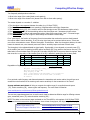
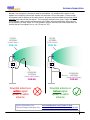
Wireless
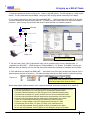
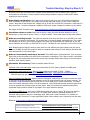
RELAY 2
Backhaul
RELAY 1
Ethernet
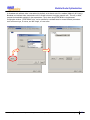
Fig. 3.1
Root and Relay Nodes
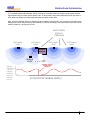
Mesh Networks provide long range connectivity by relaying packets from one mesh node to another, like a bucket
brigade. The end of the bucket brigade terminates at the root – which connects to the Ethernet(above). Relays
connect to the root or other relay nodes to form a wirelessly linked chain.
Upstream & Downstream
Upstream implies closer to the Ethernet. The root is upstream of relay 1.
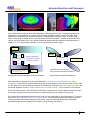
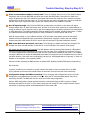
Wireless Uplinks and Downlinks. The Ethernet link is the uplink
(upstream link) connection for the root. The root has is a wired
uplink. Its “backhaul” is the wired network.
Ethernet
ROOT
DOWNLINK
Relays have wireless uplinks to an upstream downlink radio.
Downlink radios act like Access Points (AP) : they send out a beacon.
Uplink radios act like clients – they do not send out a beacon.
A wireless radio card in a laptop can inform you of the presence of
downlinks but not of uplinks. Downlinks beacon, Uplinks do not.
The uplink and downlink radios form a wireless backhaul path.
UPLINK
SERVICE
RELAY
AP radios operate in the 2.4GHz band to service 802.11b/g clients.
802.11a wireless devices may be serviced by the 5.8GHz downlink.
Thus, both 802.11a and 802.11b/g client access is supported.
Backhaul radios operate in 5.8GHz band to avoid interference with the
802.11b/g 2.4GHz AP radio (shown in pink, right).
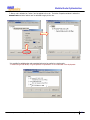
Fig. 3.2
To summarize, there are 4 types of “links” to Structured MeshTM products:
A wired uplink to provide Ethernet connectivity. This connects the root node to the wired network.
A wireless downlink to provide wireless connectivity for uplinks of other nodes. These are typically 5.8GHz.
A wireless uplink to connect to the downlinks of upstream mesh nodes. These are typically 5.8GHz.
An AP radio for clients. Typically 2.4GHz with support for both b and g clients and 2.4GHz uplinks.
In our standard offering Model MD4350 the 802.11a uplink, the 802.11a downlink and 802.11b/g service
are 3 separate radios – see Fig. 3.2.
HWIG D07 © 2005-2007 Meshdynamics. All Rights Reserved. Proprietary Information. Patented and Patents Pending
3